 Save
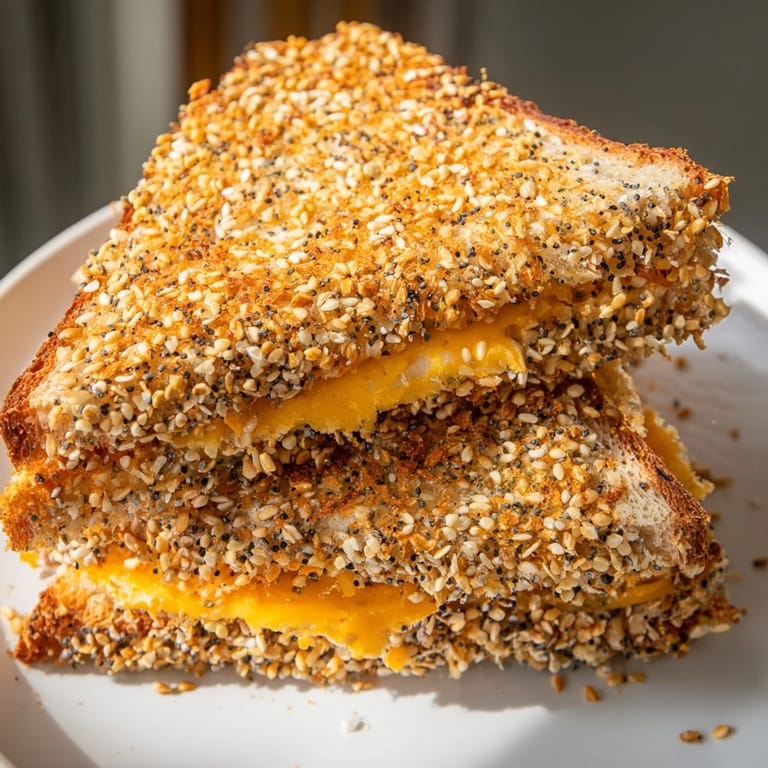
Save I discovered the magic of everything bagel seasoning on a Tuesday morning when I grabbed the wrong container of salt by accident. Instead of plain salt, I'd already shaken it all over my buttered bread for a grilled cheese. Rather than start over, I committed to the chaos—and that happy mistake transformed what could have been an ordinary lunch into something I'd chase forever after. The seasoning's savory crunch against melted cheese felt like discovering a secret menu item that should've existed all along.
My roommate came home from a rough day at work, and I was already halfway through heating the skillet when they collapsed on the kitchen counter. I slid the first sandwich in front of them still sizzling, and watching their face light up as they bit through the seasoned crust made me realize this wasn't just lunch—it was the edible version of a friend saying, "I'm here for you." We ate in quiet appreciation, and neither of us felt the need to say much of anything.
Ingredients
- Sourdough or white sandwich bread: Sourdough gives you tang and structure that stands up to butter and seasoning, but white bread works beautifully if you want pure richness.
- Sharp cheddar cheese: The sharpness cuts through the salt and keeps the dish from feeling one-note; mild cheddar fades into the background.
- Unsalted butter, softened: Softened butter spreads evenly and lets the seasoning stick without sliding off, so don't skip the softening step.
- Everything bagel seasoning: This is your star player—sesame, poppy, garlic, onion, and salt all at once, so the sandwich tastes seasoned from the outside in.
Tired of Takeout? 🥡
Get 10 meals you can make faster than delivery arrives. Seriously.
One email. No spam. Unsubscribe anytime.
Instructions
- Butter both sides of your bread:
- Lay out all four slices and spread softened butter on one side of each, using just enough to coat without soaking in. This is your adhesive for the seasoning and your ticket to golden crust.
- Season the buttered bread generously:
- Sprinkle everything bagel seasoning onto the buttered sides, pressing gently so it clings instead of sliding off into the skillet. You want visible seasoning on the outside—don't be shy here.
- Build your sandwiches:
- Flip two slices over and layer two cheese slices on each, then cap with the remaining bread, seasoned side facing outward. The seasoning on the outside is what you're after.
- Heat your skillet to medium:
- A large nonstick skillet is ideal, but any wide pan works—you want enough room to cook both sandwiches without crowding. Let it warm while you finish assembling.
- Cook until golden and melty:
- Place sandwiches in the skillet and cook for 3 to 4 minutes per side, pressing gently with a spatula so the bread makes full contact and the cheese melts evenly. Listen for the sizzle—that's your cue you're getting the crust you deserve.
- Rest and serve:
- Let the sandwiches cool for just a minute so the cheese sets slightly, then slice and serve. The warmth will keep the cheese soft but stable enough to enjoy.
 Save
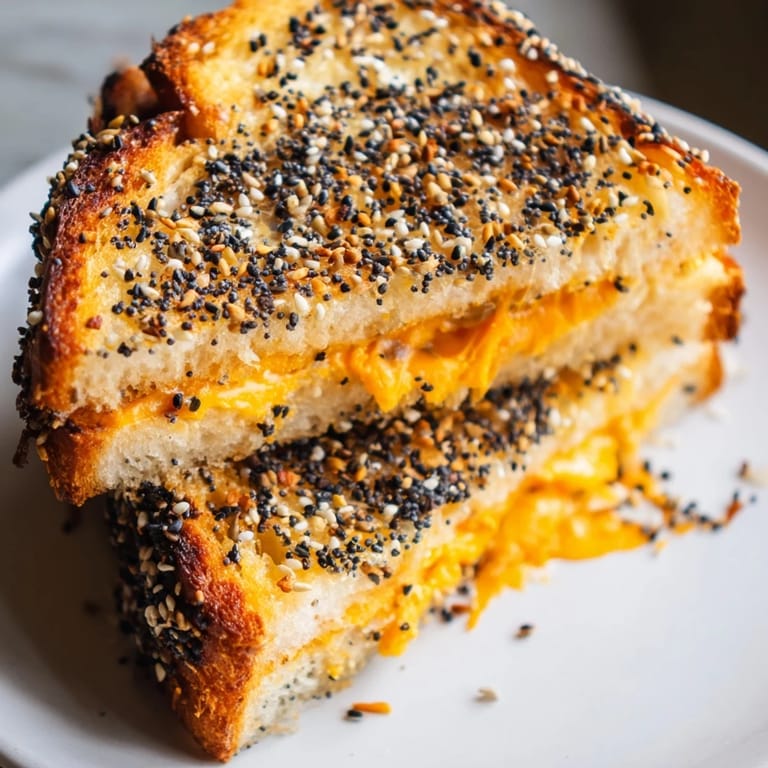
Save My kid asked why grilled cheese could taste fancy, and I realized in that moment that it wasn't the ingredients—it was the care. Suddenly this humble sandwich became a conversation starter about how seasoning and technique can elevate something so simple that everyone thinks they already know it. That's when I understood why I kept coming back to this version.
Why Everything Bagel Seasoning Changes the Game
Everything bagel seasoning isn't just a topping; it's a flavor multiplier that does the work of four different seasonings at once. Most grilled cheese recipes rely on salt and maybe pepper, but this seasoning brings garlic, onion, sesame, and poppy seeds to the party, each adding their own voice without overpowering the cheese. The combination tastes complex and intentional without requiring you to stand there measuring out six different things.
The Cheese Matters More Than You Think
Sharp cheddar is my go-to because the tanginess cuts through the saltiness of the seasoning and keeps the sandwich from tasting flat. Swiss or provolone work beautifully if you want something milder, and mozzarella gives you a creamier melt but less personality. The real secret is using cheese you actually enjoy eating plain—if you don't like it on its own, it's not going to suddenly become better sandwiched between bread.
Make It Your Own
The base is simple enough that additions feel natural rather than forced. Caramelized onions add sweetness and depth, thin tomato slices bring brightness, and a tiny spread of Dijon mustard adds a tangy kick without overwhelming anything. These aren't required; they're just directions the sandwich can go depending on what you have on hand or what you're craving that day.
- Caramelized onions and Swiss cheese is a combination that tastes like a fancy dinner you made at home.
- Thin tomato slices and sharp cheddar brings summery freshness, especially if you pair it with a cold drink.
- A whisper of Dijon mustard on the cheese adds complexity without changing what the sandwich is fundamentally about.
 Save
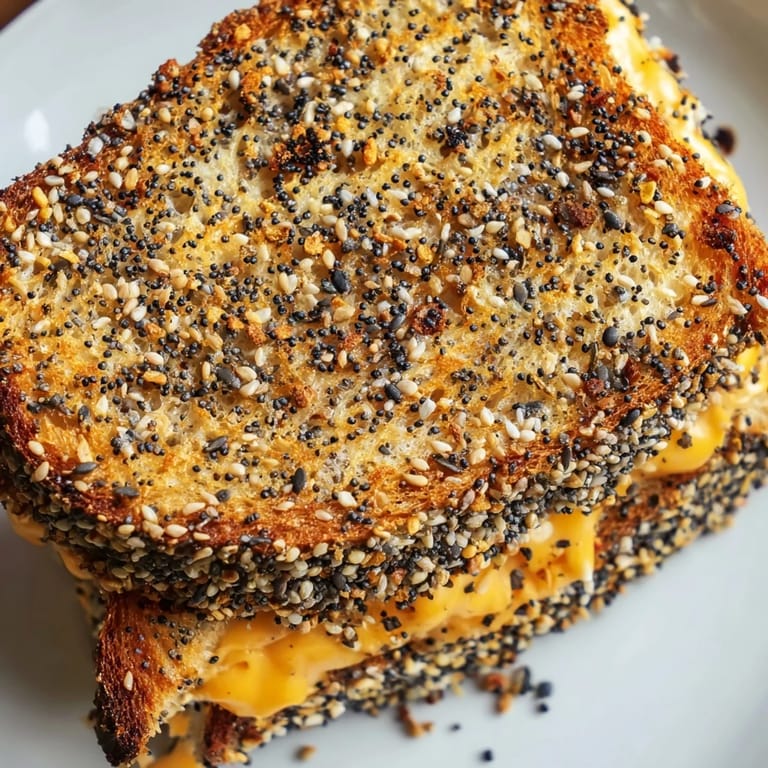
Save This sandwich exists in that perfect space where it's simple enough to make any weeknight but special enough that you don't feel like you're settling. It's the kind of food that reminds you why you love cooking in the first place.
Common Questions
- → What type of bread works best?
Sourdough or white sandwich bread provides a sturdy base and crisps nicely with the seasoning.
- → Can I use other cheeses?
Yes, Swiss, provolone, or mozzarella are great alternatives that melt well and complement the seasoning.
- → How do I get the bread crispy?
Coating buttered bread with everything bagel seasoning and cooking on medium heat in a nonstick skillet helps achieve a golden, crunchy texture.
- → What are good add-ins for extra flavor?
Thinly sliced tomatoes or caramelized onions layered inside enhance both taste and texture.
- → Can this be made vegetarian?
Yes, using vegetarian-friendly cheese and butter keeps the dish suitable for vegetarians.