 Save
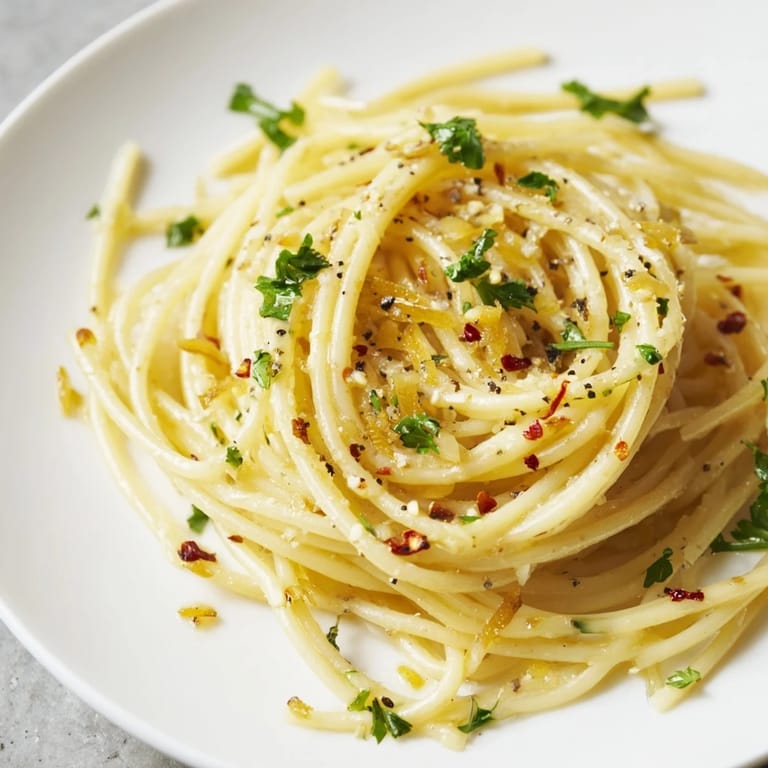
Save There's something almost meditative about watching garlic turn golden in hot oil—the kitchen fills with this warm, slightly nutty smell that makes you feel like you're actually cooking something real. I discovered aglio e olio one random Tuesday night when my fridge was nearly empty and I was too tired to think about anything complicated. Ten minutes later, I had the kind of pasta that somehow tastes both simple and elegant, the sort of dish that reminds you why Italian cooking doesn't need to be fussy to be perfect.
My partner came home to find me making this on a particularly hectic evening, and watched me stand there stirring gently, completely focused on not scorching the garlic. When we sat down to eat, they looked surprised—not because it was fancy, but because something so minimal could taste so satisfying. It became our go-to weeknight dinner, the kind you make when you want something that feels intentional but doesn't demand hours.
Ingredients
- 200g dried spaghetti: The pasta is your canvas here, and fresh or dried both work beautifully—dried spaghetti holds up wonderfully to the oil and garlic without getting mushy.
- 4 tbsp extra-virgin olive oil: This isn't the time to use budget olive oil; the quality of the oil is almost the entire dish, so choose something you'd actually want to taste on its own.
- 4 large garlic cloves, thinly sliced: Slicing by hand (not mincing) gives you those little golden fragments that add texture and prevent everything from turning into a paste.
- 1 tsp red chili flakes: Start here and adjust upward if you like heat; I've learned the hard way that you can always add more spice but you can't take it back.
- 2 tbsp fresh parsley, chopped: The green matters more than it seems—it brightens everything at the last second and adds a little freshness that cuts through the richness.
- Sea salt and freshly ground black pepper: Season generously and taste as you go; the pasta water does some of the seasoning work, but don't skip the final adjustment.
- 2 tbsp Parmesan cheese, freshly grated (optional): Grate it yourself if you can—the pre-grated stuff has anti-caking agents that make the texture less silky.
Tired of Takeout? 🥡
Get 10 meals you can make faster than delivery arrives. Seriously.
One email. No spam. Unsubscribe anytime.
Instructions
- Get Your Water Ready:
- Fill a large pot with salted water (it should taste like the sea) and bring it to a rolling boil before adding pasta. This is your seasoning happening from the start, not an afterthought.
- Cook the Spaghetti:
- Add spaghetti and stir it once so nothing sticks together. Cook until al dente according to the package—usually around 8 minutes—and before you drain it, scoop out about half a cup of that starchy water and set it aside; you'll need it later.
- Coax the Garlic to Golden:
- While the pasta cooks, pour olive oil into a large skillet and set it over medium-low heat. Add your sliced garlic and let it sizzle gently, stirring every few seconds—you're listening for that soft sizzle, not a violent fry, and watching for the garlic to turn pale gold but never brown.
- Build the Heat:
- Once the garlic smells incredible and looks just barely golden, sprinkle in the chili flakes and stir for about 10 seconds until the oil turns slightly orange and your kitchen smells like you mean business.
- Bring It Together:
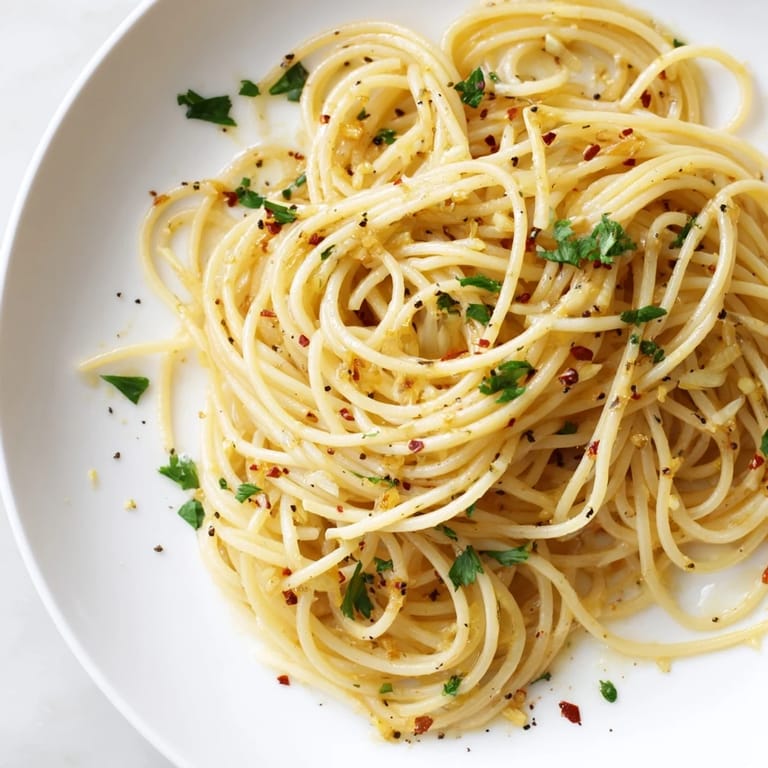
- Drain the pasta (keeping that reserved water close) and toss it directly into the skillet with the garlic oil. Use tongs or two forks to coat every strand, and if it feels too dry, splash in a little pasta water to loosen everything up until it glistens.
- Season and Serve:
- Taste it, adjust salt and pepper, and remove from heat before the oil gets too hot. Toss through the parsley, divide between two bowls, and top with cheese if you're using it—serve immediately while everything is still warm.
 Save
Save There was a moment, maybe the fifth time I made this, when I realized I wasn't following a recipe anymore—I was cooking by feel, adjusting the heat, tasting, knowing without checking when everything was ready. That's when the dish stopped being something I made and became something I understood.
The Magic of Simplicity
Aglio e olio taught me that sometimes the most impressive meals come from restraint, not abundance. With just a handful of ingredients, every single one has to pull its weight, which means you're forced to choose quality over quantity. It's the kind of cooking that builds confidence because there's nowhere to hide—no cream to cover mistakes, no complicated techniques to blame if something goes wrong. You're just there with your garlic and oil, learning to listen to your pan.
Playing with Heat and Timing
I've learned that the temperature of your skillet changes everything about this dish. Too hot and the garlic goes from fragrant to acrid in seconds; too cool and it just sits there instead of releasing its flavor. The trick is that medium-low hum where the oil is actively working but not aggressive. Once you feel the difference between a gentle sizzle and a worried fry, you'll never scramble this dish again.
When Leftovers Matter
This is genuinely better eaten fresh, but if you happen to have a portion left over, it transforms into something different—a little chilled, it becomes almost like a light pasta salad if you add a squeeze of lemon and a handful of extra parsley. I've also been known to reheat it gently in a pan with just a splash of water, never in the microwave, which turns the pasta into something mushy and sad.
- Eat it straight from the pan if you're cooking for yourself—there's something satisfying about not dirtying an extra bowl.
- If you're doubling the recipe, don't double the garlic and oil in a linear way; add it more carefully because the proportions shift with bigger batches.
- Lemon juice squeezed at the very end makes everything taste brighter, so keep a lemon nearby even if you're not sure you'll use it.
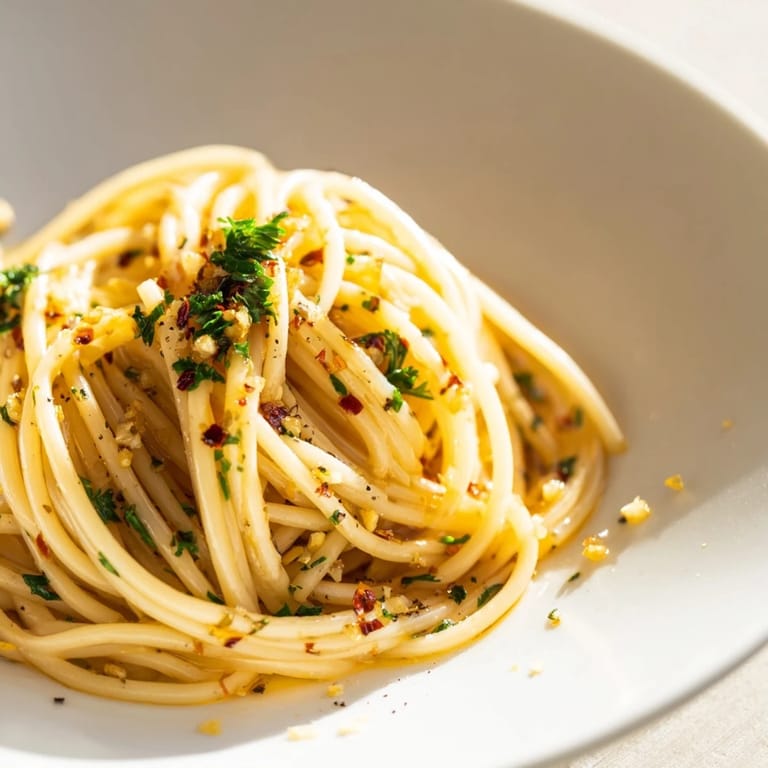 Save
Save This dish is proof that you don't need a recipe blog, a list of equipment, or hours of prep to make something worth eating. It's just you, some really good oil, and the discipline to wait and watch.
Common Questions
- → How do I prevent the garlic from burning?
Cook garlic gently over medium-low heat, stirring frequently until it just starts to turn golden, avoiding high heat which can cause bitterness.
- → Can I adjust the spiciness level?
Yes, modify the amount of red chili flakes to suit your preference, adding more for heat or less for subtle warmth.
- → What is the purpose of reserving pasta water?
Adding reserved pasta water helps loosen and emulsify the sauce, ensuring the spaghetti is evenly coated and silky.
- → Can I use gluten-free pasta for this dish?
Absolutely, gluten-free pasta can be substituted without impacting the flavor, accommodating dietary needs.
- → Is Parmesan necessary in this dish?
Parmesan adds a rich, savory finish but can be omitted or replaced with vegan alternatives for dietary preferences.