 Save
Save Last summer, I was hunting for something that felt both light and satisfying, and I stumbled onto this Greek chicken feta pasta while scrolling through old family recipes my mother had scribbled on the back of a napkin. The combination of lemon, feta, and yogurt seemed unusual at first, but the moment I tasted it sizzling in the skillet, I understood why she'd kept it hidden in her kitchen notes. Now whenever I make it, that same warm Mediterranean breeze seems to fill my kitchen, and suddenly dinner becomes less about feeding people and more about sharing something that tastes like warmth.
I made this for my neighbor Maria one evening when she stopped by asking what smelled so good, and she ended up staying for dinner without invitation. She took a forkful, closed her eyes for a moment, and then laughed because apparently it reminded her of a little taverna she'd visited in Athens thirty years ago. That night taught me that food sometimes bridges the gap between strangers and becomes a conversation, especially when it tastes like somewhere else entirely.
Ingredients
- Chicken breast, cut into bite-sized pieces: Smaller pieces cook faster and absorb the lemon-oregano marinade beautifully, creating pockets of flavor throughout the dish.
- Lemon zest and juice: The zest gives brightness that juice alone can't deliver, so don't skip it even if life feels busy.
- Dried oregano: This is the backbone of the Greek flavor profile, and honestly, fresh oregano is lovely but dried holds steady through the cooking process.
- Short pasta like penne or fusilli: These shapes trap the creamy sauce in their curves and crevices, making every bite substantial.
- Greek yogurt: Full-fat versions create a silkier sauce than low-fat, and the tang balances the richness of the feta beautifully.
- Feta cheese, crumbled: Buy it from the bulk bin if possible rather than pre-crumbled, as it melts more smoothly into the sauce.
- Baby spinach: It wilts in seconds, so add it near the end to preserve that fresh, barely-cooked texture.
- Reserved pasta water: This starchy liquid is what transforms separated ingredients into something cohesive and creamy.
Tired of Takeout? 🥡
Get 10 meals you can make faster than delivery arrives. Seriously.
One email. No spam. Unsubscribe anytime.
Instructions
- Marinate the chicken with intention:
- Combine your chicken pieces with olive oil, lemon zest, juice, minced garlic, oregano, salt, and pepper in a bowl and let it sit for at least 10 minutes. If you have time, let it marinate longer because the flavors deepen and the chicken becomes more tender as the acid works its magic.
- Get the pasta started:
- Bring a large pot of salted water to a rolling boil and add your pasta, cooking it until just al dente. Remember to reserve about half a cup of that starchy cooking water before draining, as it's your secret weapon for creating a silky sauce later.
- Sear the chicken until golden:
- Heat olive oil in your large skillet over medium-high heat, then add the marinated chicken and let it sit undisturbed for a minute or two before stirring. Cook until it's golden on the outside and cooked through inside, about 5 to 7 minutes total, then transfer it to a clean plate.
- Build the base with aromatics:
- In the same skillet, add your finely chopped red onion to the remaining oil and cook until it softens and turns translucent, about 2 to 3 minutes. The onion adds sweetness that balances the tangy yogurt sauce beautifully.
- Wilt the spinach gently:
- Add your baby spinach to the skillet and stir for just 1 to 2 minutes until it's barely cooked through. Fresh spinach releases its water quickly, so don't overthink this step.
- Bring everything together:
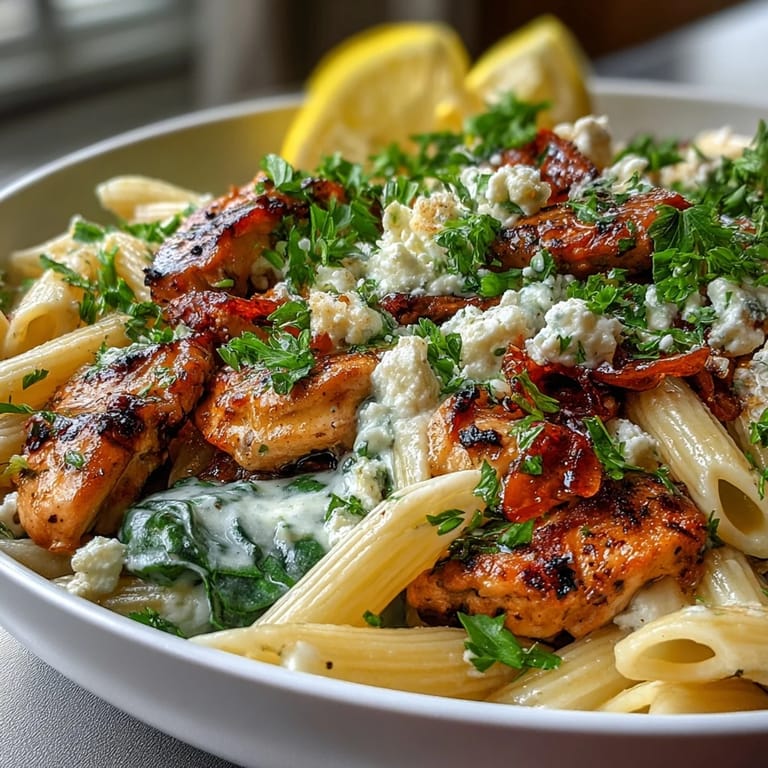
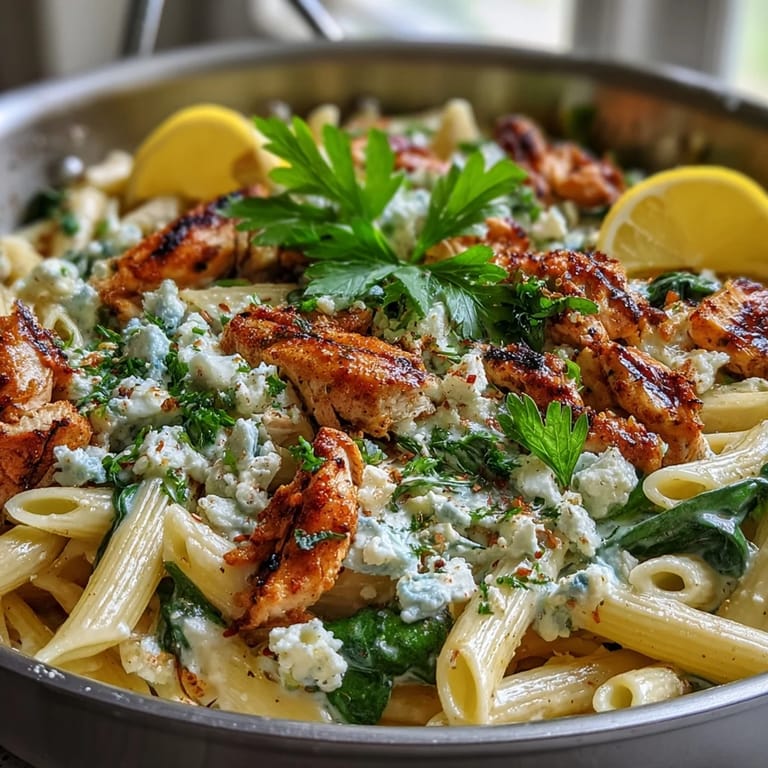
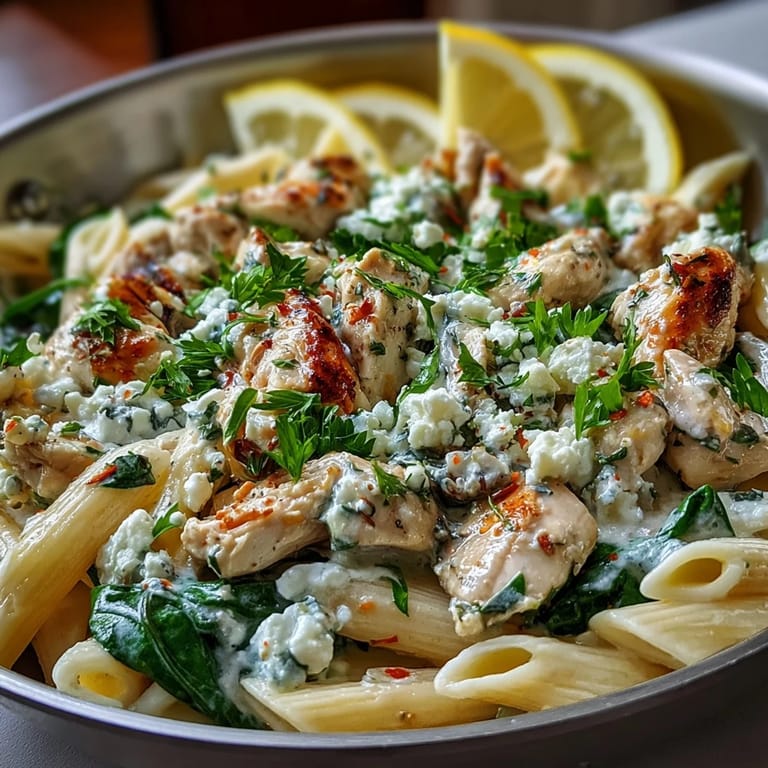
- Return the cooked chicken to the pan, then add your cooked pasta, crumbled feta, Greek yogurt, and about half a cup of that reserved pasta water. Lower the heat to medium-low and toss everything together until the sauce coats the pasta evenly and everything looks creamy and cohesive.
- Season and taste thoughtfully:
- Add black pepper, dill if you're using it, and adjust the salt as needed since the feta already contributes saltiness. If the sauce looks too thick, add a splash more pasta water until it reaches the consistency you love.
- Serve with celebration:
- Transfer to plates or a serving bowl and garnish generously with fresh lemon wedges and chopped parsley, then eat while everything is still warm and the sauce is at its creamiest.
 Save
Save 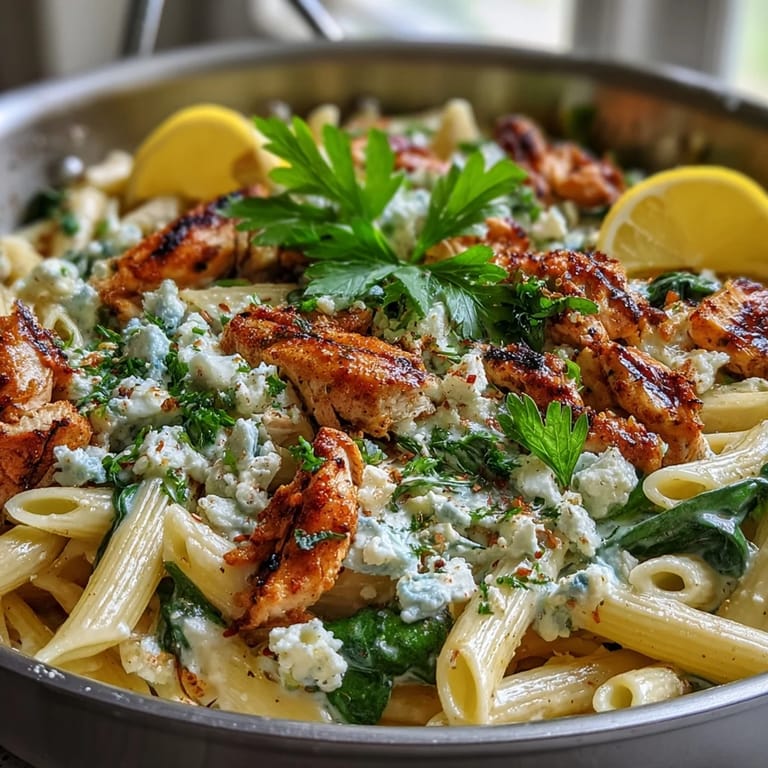 Save
Save My daughter once asked why I loved cooking this dish so much, and I realized it's because it transforms a regular weeknight into something that feels intentional and cared-for. There's something about the ritual of zesting a lemon, the sound of chicken sizzling, and the moment when everything comes together in the pan that reminds me cooking is really about showing up for the people you're feeding.
Why This Works as a One-Skillet Wonder
The genius of cooking everything in one skillet is that the flavors build on each other without getting lost. The chicken releases its juices into the oil, seasoning it for the onion and spinach that follow, and then the pasta absorbs all that developed flavor before the yogurt arrives to turn it silky and luxurious. By the time you plate it up, there's a coherence to the dish that separate components could never achieve.
Making It Your Own
This recipe is forgiving in the best way, which means you can play around with it once you've made it once and understand how the parts fit together. I've added sun-dried tomatoes on lazy afternoons when I didn't feel like washing extra cutting boards, stirred in Kalamata olives when I wanted something briny and bold, and even swapped in chicken thighs instead of breasts when I wanted the dish to feel richer and more indulgent. The foundation is solid enough to hold your improvisations.
Pairing and Storage Thoughts
Serve this with a crisp Greek white wine like Assyrtiko if you're in the mood to be fancy, or just with cold water and good conversation if you're not. The leftovers keep beautifully for up to three days in the refrigerator, though honestly the pasta soaks up more sauce as it sits, so you might want to add a splash of water or pasta water when you reheat it to get back to that creamy consistency you loved the first night.
- If you're cooking for someone with gluten concerns, swap in your favorite gluten-free pasta and the rest of the recipe stays exactly the same.
- Whole wheat pasta works wonderfully here and adds a nutty undertone that complements the feta and lemon.
- Make the marinade the night before if your morning is chaotic, and the chicken will be even more flavorful when you finally cook it.
 Save
Save  Save
Save This dish has become my answer to the question of what to cook when I want something that tastes like it took hours but actually took less than an hour. Every time I make it, someone asks for the recipe, and I'm always happy to share because good food deserves to be multiplied across tables and kitchens.
Common Questions
- → Can I make this ahead of time?
Yes, you can marinate the chicken up to 24 hours in advance. Cook the pasta and assemble everything, then reheat gently with a splash of water to restore the creamy sauce consistency.
- → What pasta works best?
Short pasta shapes like penne, fusilli, or rotini capture the creamy sauce beautifully. The nooks and crannies help hold onto the yogurt-feta coating. Whole wheat or gluten-free varieties also work well.
- → Can I use chicken thighs instead?
Absolutely. Boneless skinless chicken thighs stay juicier and add extra richness. Adjust cooking time slightly—thighs may need 2-3 minutes longer to cook through completely.
- → How do I prevent the yogurt sauce from curdling?
Keep the heat on medium-low when stirring in the yogurt. Remove the pan from direct heat if needed, and always temper the yogurt with warm pasta water before adding it to the hot skillet.
- → What can I add for extra flavor?
Kalamata olives, sun-dried tomatoes, or artichoke hearts complement the Greek profile. A pinch of red pepper flakes adds gentle heat, and fresh mint alongside parsley brightens the finish.
- → Is this freezer-friendly?
The cooked dish freezes well for up to 2 months. Thaw overnight in the refrigerator and reheat slowly, adding extra pasta water or yogurt to revive the sauce's creaminess.