 Save
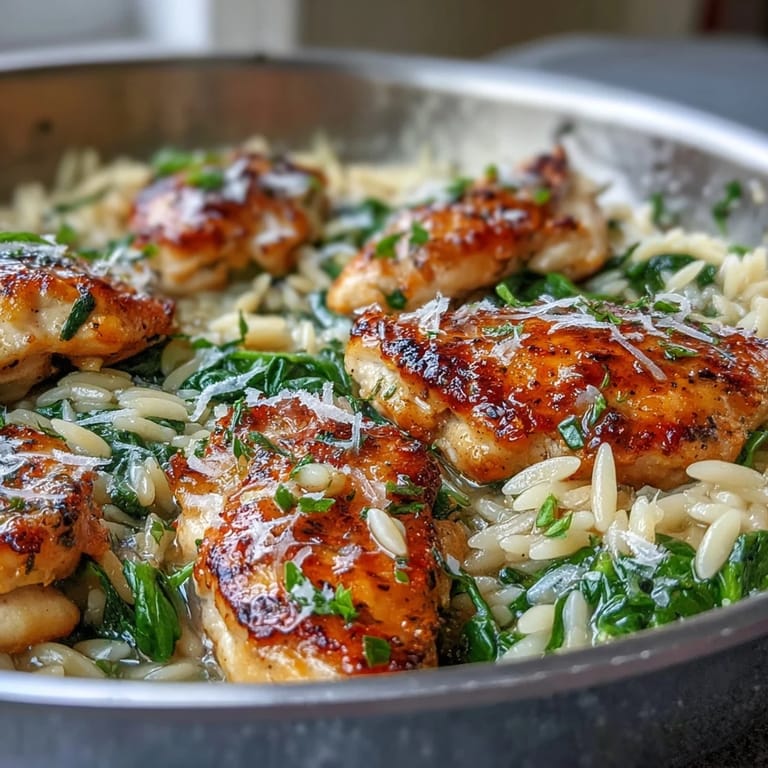
Save There's a particular Tuesday evening that comes to mind whenever I make this dish—not because it was special, but because it wasn't. I'd had a long day, the fridge felt bare, and I needed something that wouldn't demand much from me beyond chopping a few things. Twenty-five minutes later, my kitchen smelled like a Mediterranean vacation, and suddenly that ordinary evening turned into exactly the kind of comfort I didn't know I needed. That's when I realized the magic of a one-pot meal isn't just convenience; it's how quickly it can transform your whole mood.
I made this for my sister when she stopped by unexpectedly with her kids, and what struck me was how quickly the little ones asked for seconds—not begrudgingly, but genuinely excited about the bright yellow noodles swimming in that savory broth. My sister laughed and said it tasted like something you'd pay for at a nice restaurant, and I didn't tell her the whole thing cost less than takeout. That moment crystallized why I keep making it: because good food doesn't have to be complicated, and the best meals are the ones that bring people back to the table.
Ingredients
- Boneless, skinless chicken thighs or breasts (1.5 lbs): Thighs stay juicier than breasts, but honestly, either works—just cut everything into bite-sized pieces so they cook evenly and soak up all that broth.
- Kosher salt & freshly ground black pepper: Don't skip grinding the pepper fresh; it makes a noticeable difference in brightness compared to pre-ground.
- Olive oil (2 tbsp): This is your searing foundation, so use something you'd actually want to taste.
- Yellow onion & garlic (1 medium onion, 4 cloves): These are your flavor base—don't rush the mincing, and remember that garlic can burn quickly, so watch your heat.
- Lemon zest & juice: This is the soul of the dish, so use a real lemon, not bottled juice if you can help it.
- Orzo pasta (1½ cups): This rice-shaped pasta absorbs the broth beautifully, creating a creamy texture without any added cream—unless you want to add some, which I sometimes do.
- Low-sodium chicken broth (3 cups): Low-sodium lets you control the salt level and taste the chicken, not just salt.
- Dry white wine (½ cup, optional): It adds depth and a subtle complexity that makes people ask what your secret ingredient is.
- Fresh baby spinach (4 cups): Don't worry about how much it looks; it collapses down to almost nothing once it hits the heat.
- Parmesan cheese & fresh parsley: These finish the dish with a whisper of richness and brightness that shouldn't be skipped.
Tired of Takeout? 🥡
Get 10 meals you can make faster than delivery arrives. Seriously.
One email. No spam. Unsubscribe anytime.
Instructions
- Season your chicken pieces:
- Sprinkle the salt and pepper over the bite-sized pieces and let them sit for a moment while you get your pot ready.
- Sear the chicken until golden:
- Heat the olive oil in your deep skillet or Dutch oven over medium-high heat until it shimmers, then add the chicken pieces without crowding the pan. Let them sit undisturbed for a few minutes so they develop that beautiful golden crust, then stir and cook another 2-3 minutes. They don't need to be cooked through yet—just nicely browned on the outside.
- Build your flavor base:
- In the same pot with the chicken set aside, add the chopped onion and cook until it starts turning translucent and smells sweet, about 3 minutes. Add the minced garlic and lemon zest, stirring constantly for just a minute until the whole kitchen smells incredible.
- Toast the orzo:
- Pour in the dry orzo and stir it around for 1-2 minutes so it gets coated in the oil and starts to smell nutty. This toasting step is subtle but it deepens the flavor in a way that matters.
- Deglaze and simmer the wine:
- Pour in the white wine if you're using it, and use a wooden spoon to scrape up all those flavorful browned bits stuck to the bottom of the pot. Let it bubble and reduce for about a minute.
- Add the broth and lemon juice:
- Pour in the chicken broth and lemon juice, and bring everything to a gentle boil. You should see steam rising and little bubbles breaking the surface.
- Return the chicken and simmer:
- Add the reserved chicken and any juices back to the pot, then reduce the heat to medium-low, cover, and let everything simmer for about 10 minutes. Stir occasionally so nothing sticks to the bottom and the orzo cooks evenly.
- Wilt in the spinach:
- After 10 minutes, remove the lid, stir in the fresh spinach, and cook uncovered for 2-3 minutes until the spinach is soft and the orzo is tender but still has a slight bite to it.
- Finish with cheese and herbs:
- Take the pot off the heat, then stir in the Parmesan and parsley. Taste it and adjust with a pinch more salt, pepper, or a squeeze of fresh lemon juice if it needs it.
- Serve and enjoy:
- Ladle it into bowls while it's hot, top with extra Parmesan if you're feeling generous, and serve with fresh lemon wedges on the side so people can brighten their bowl however they like.
 Save
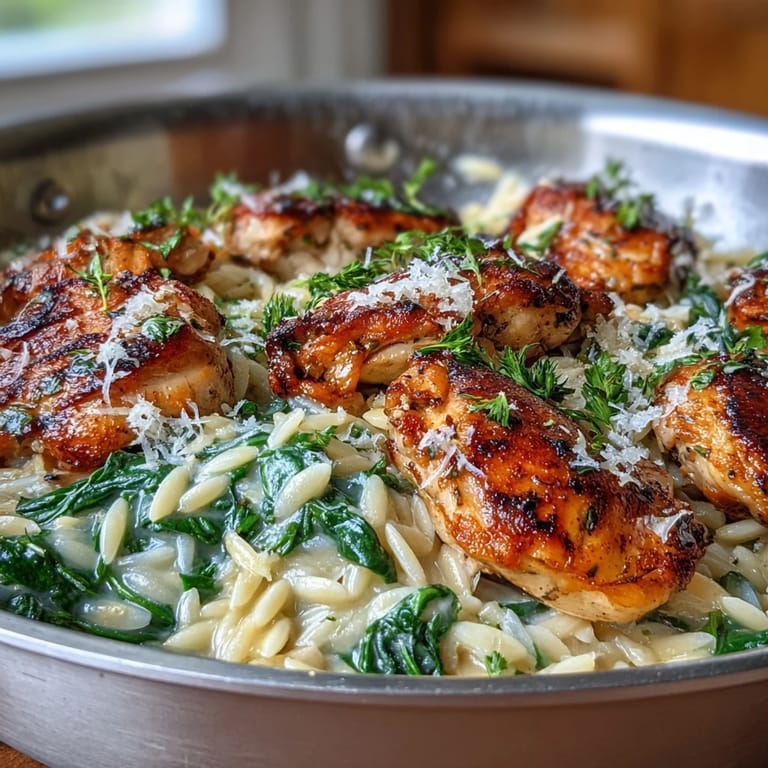
Save There was a moment last spring when my neighbor came over for dinner and took one bite, closed her eyes, and just sat with it for a second. When she opened them again, she had that look people get when food triggers a good memory, and she told me about a trip she took years ago to the Greek islands. I hadn't set out to take her back in time with pasta and chicken, but that's the quiet power of cooking something this honest—it doesn't have to be elaborate to reach people.
Why One-Pot Dinners Change Everything
I used to think one-pot meals meant sacrifice, like you were choosing convenience over flavor. Then I realized the opposite is true—when everything cooks together, the flavors actually deepen and marry in ways they wouldn't if you made them separately. The chicken seasons the broth, the orzo absorbs all that lemon and garlic, and by the time you're stirring in the spinach, you've created something greater than the sum of its parts. It's not lazy cooking; it's efficient cooking that doesn't compromise on taste.
The Art of Timing This Right
The tricky part with one-pot meals is that everything has to be ready at the same time, which sounds harder than it actually is. The key is respecting the timing of each element—the chicken needs that initial sear, the orzo needs that brief toast, and the spinach needs to go in last so it stays bright green instead of turning into mush. Once you've done it once, your hands know the rhythm, and it becomes second nature. Pay attention to how the dish looks and smells at each stage, and trust your instincts over the clock.
Variations and Flexibility
This dish is forgiving in the best ways, which is probably why I keep making it. Some nights I use kale instead of spinach because that's what I have, other times I'll add a splash of heavy cream at the end because I'm in the mood for something richer. If you're using rotisserie chicken to save time, just shred it and add it in the last couple of minutes so it doesn't overcook. The bones of the recipe are solid enough to handle improvisation.
- Try adding sun-dried tomatoes or roasted red peppers for a different flavor direction, stirring them in with the spinach.
- If you don't have white wine, use an extra cup of broth—you won't miss the complexity as much as you'd think.
- A pinch of red pepper flakes at the end gives it a subtle heat that some people find irresistible.
 Save
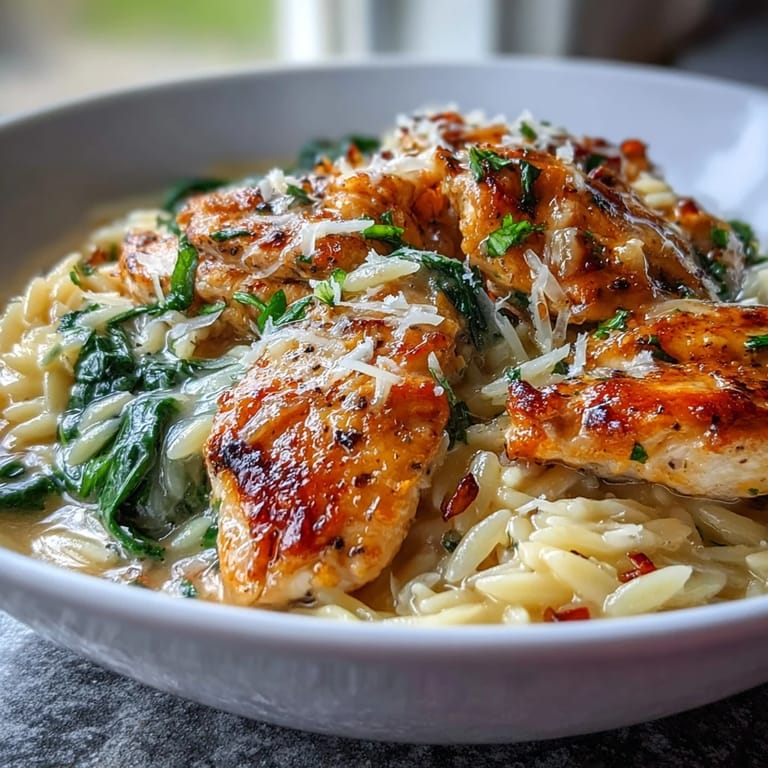
Save This is the kind of dinner that doesn't ask for much but gives back generously—in flavor, in simplicity, in the way it makes people linger at the table a little longer. Make it once and it becomes the recipe you turn to when life is too busy for anything complicated.
Common Questions
- → Can I use a different pasta instead of orzo?
Yes, you can substitute orzo with other small pasta shapes like stelline, acini di pepe, or even broken spaghetti pieces. Adjust the cooking time as needed and add more broth if the pasta absorbs liquid quickly.
- → Is the white wine necessary?
The white wine adds depth and helps deglaze the pan, but it's optional. Simply substitute with an equal amount of additional chicken broth for a non-alcoholic version that still tastes delicious.
- → Can I make this dish ahead of time?
This dish is best served fresh, as the orzo will continue to absorb liquid and become mushy. If meal prepping, store components separately and reheat with a splash of broth to restore creaminess.
- → What other greens can I use?
Kale, arugula, or Swiss chard work beautifully as substitutes for spinach. Just note that heartier greens like kale may need an extra minute or two to wilt completely.
- → How do I store leftovers?
Store in an airtight container in the refrigerator for up to 3 days. Reheat gently on the stovetop with a splash of broth or water to loosen the orzo, as it thickens considerably when chilled.