 Save
Save I discovered these teriyaki meatballs on a rainy weeknight when I had ground beef, leftover panko, and a half-empty bottle of mirin staring at me from the pantry shelf. What started as improvisation turned into something my family requests constantly—those glossy, caramelized meatballs that somehow taste like you spent hours on them, when really you're done in under an hour. The trick is letting the oven do most of the work while you build a sauce that's all shine and depth.
I remember making this for my neighbor after her surgery, and watching her face light up when she tasted one of those meatballs. She said it reminded her of a restaurant she loved, and I didn't tell her I'd invented it that afternoon—it felt better to let her think I'd been planning something special. That's when I realized these bowls have this quiet magic: they look impressive without being difficult.
Ingredients
- Ground beef or chicken (500 g): Chicken makes them lighter, beef gives deeper flavor; I've learned that mixing them together is a game-changer.
- Egg (1 large): Just enough binder to hold everything together without making them dense or rubbery.
- Panko breadcrumbs (40 g): The Japanese ones stay crispier than regular breadcrumbs, creating a delicate exterior.
- Garlic and ginger (2 cloves and 1 Tbsp): Fresh versions only—jarred versions turn bitter in the heat.
- Spring onions (2 for meatballs, 2 for garnish): The finely chopped ones disappear into the meat, while sliced garnish adds a sharp, fresh finish.
- Soy sauce (2 Tbsp in meatballs, 120 ml in sauce): Salt and umami backbone; the sauce needs good quality soy for complexity.
- Sesame oil (1 Tbsp): A little goes far—it's about aroma and richness, not saturation.
- Mirin (60 ml): The secret ingredient that makes sauce taste rounded and naturally sweet without being cloying.
- Rice vinegar (1 Tbsp): Cuts through richness with a subtle, clean tang.
- Brown sugar and honey (2 Tbsp and 1 Tbsp): Together they create depth; honey adds a whisper of floral sweetness.
- Cornstarch slurry (2 tsp each): Thickens the sauce to a glossy cling without making it gummy.
- Jasmine or sushi rice (240 g uncooked): The fragrant, slightly sticky base that catches and holds every drop of sauce.
- Cucumber (1 medium): Cool, crisp contrast that keeps the bowl feeling fresh rather than heavy.
- Sesame seeds and extra spring onions: Final garnish layer that adds crunch, color, and a professional finish.
Tired of Takeout? 🥡
Get 10 meals you can make faster than delivery arrives. Seriously.
One email. No spam. Unsubscribe anytime.
Instructions
- Start your rice first:
- If you're using a rice cooker, start it now so it's warm and ready when everything else finishes. If cooking on the stovetop, you have about 20 minutes before assembly.
- Prep and heat the oven:
- Line a baking sheet with parchment paper and set the oven to 200°C (400°F). This prevents sticking and makes cleanup almost effortless.
- Build the meatball mixture:
- In a large bowl, add the ground meat, egg, panko, minced garlic, grated ginger, finely chopped spring onions, soy sauce, sesame oil, salt, and pepper. Using your hands, mix gently until just combined—overworking makes them tough and dense, so stop as soon as everything is incorporated.
- Shape without overthinking:
- Wet your hands slightly to prevent sticking, then roll the mixture into 20–24 small meatballs about the size of walnuts. Arrange them on the prepared baking sheet in a single layer with a bit of space between each one.
- Bake until golden:
- Place in the oven for 15–18 minutes. You're looking for the tops to turn golden brown and the centers to cook through; a quick test is cutting one in half to check there's no pink.
- Make the sauce while they bake:
- In a small saucepan, combine soy sauce, mirin, water, brown sugar, honey, and rice vinegar. Bring to a simmer over medium heat, stirring occasionally until the sugar completely dissolves and the liquid is smooth.
- Thicken the glaze:
- Stir the cornstarch slurry (cornstarch mixed with water) into the simmering sauce and cook for 1–2 minutes until it turns glossy and coats the back of a spoon. You should see it thicken visibly and smell that rich, caramelized sweetness.
- Coat the meatballs:
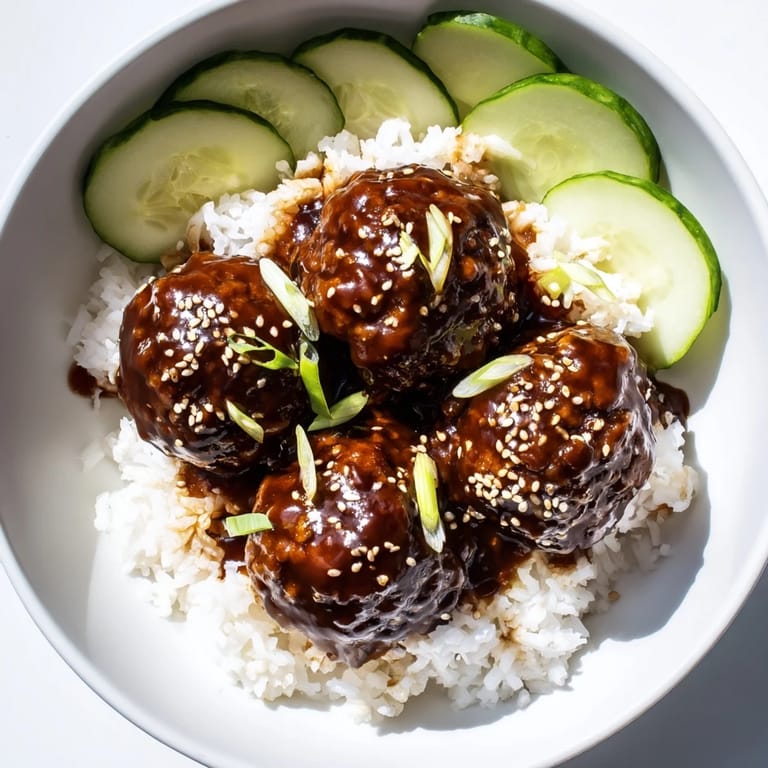
- Transfer the baked meatballs to a bowl and pour the warm teriyaki sauce over them, tossing gently until each one is coated and shiny.
- Assemble your bowls:
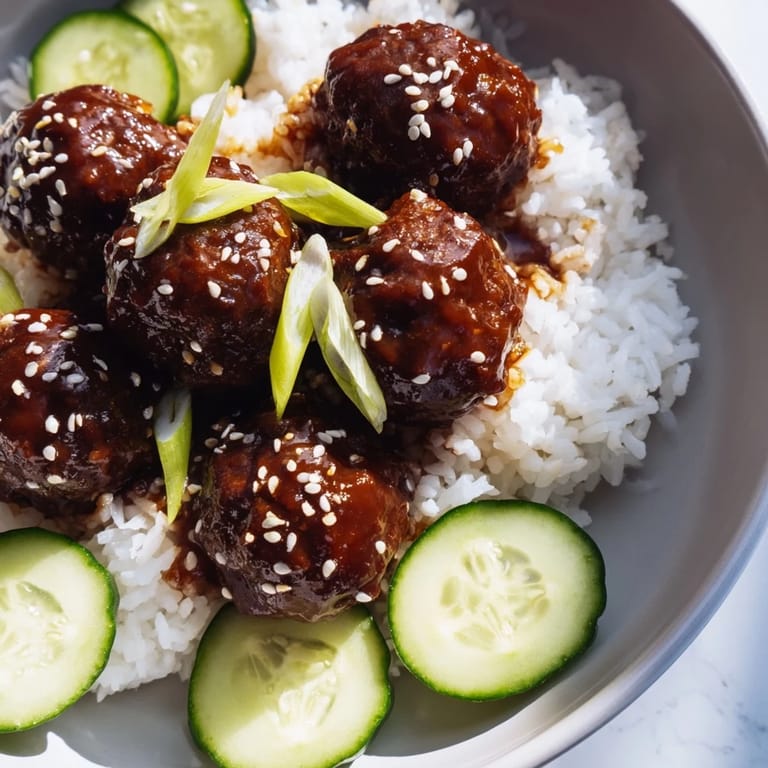
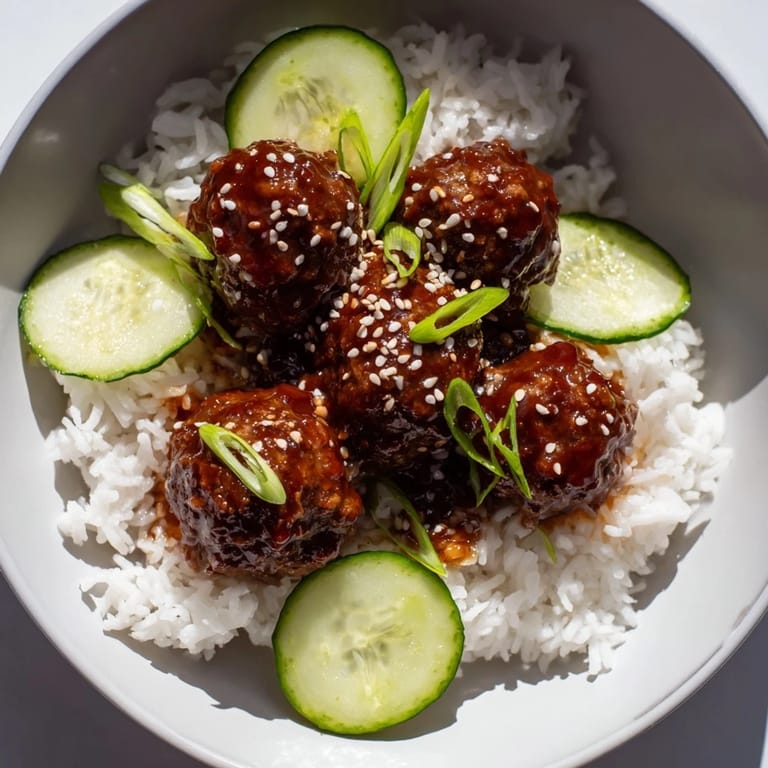
- Divide the cooked rice among four bowls, creating a small nest in the center. Top with the glazed meatballs, arrange thin cucumber slices on the side, sprinkle with toasted sesame seeds, and finish with sliced spring onions.
- Serve immediately:
- These are best eaten right away while the meatballs are still warm and the sauce is glossy, and the cucumber stays crisp.
 Save
Save There was an evening when my daughter's friend came over and asked for seconds of these meatballs before anyone else had finished firsts. That moment—watching someone unexpected fall in love with something I made—is when I realized this recipe wasn't just about feeding people, it was about creating something they'd remember and crave.
Why This Works as a Bowl
Rice bowls are forgiving by nature; the warm, neutral rice catches and absorbs all the glorious sauce from the meatballs while giving you a blank canvas to add whatever vegetables you want. The jasmine rice I choose is slightly sticky, which means it grabs the sauce instead of letting it pool at the bottom. I learned this after making the same dish over plain white rice and getting disappointed—the difference in texture and flavor-holding was remarkable.
Building Layers of Flavor
These meatballs work because they have three distinct flavor moments: the umami and warmth built into the meat mixture itself with soy sauce and sesame oil, the deep sweetness of the glaze, and then the bright, cold crunch of fresh cucumber and spring onions at the end. Each bite has contrast, so you never get bored, and that's exactly what keeps people coming back for more.
Making It Your Own
This recipe is a skeleton that wants to be dressed up in different ways depending on your mood or what's in your fridge. I've added steamed broccoli on busy nights when I needed more vegetables, scattered pickled ginger for tang, and once threw in edamame just to see what would happen—and it was perfect. The beauty is that the teriyaki sauce and rice base are strong enough to hold up to whatever you add.
- Substitute ground turkey or pork for a lighter or richer version without changing cook times.
- Swap the cucumber for shredded carrot, steamed snap peas, or even thin apple slices for a different kind of freshness.
- For gluten-free, use tamari instead of soy sauce and certified gluten-free breadcrumbs—the flavor stays almost identical.
 Save
Save Every time I make these bowls, I'm reminded that sometimes the most satisfying meals are the ones that feel effortless but taste like you really tried. This is that recipe—four bowls that look restaurant-ready but never make you feel frazzled in the kitchen.
Common Questions
- → What type of meat works best for the meatballs?
Ground beef or chicken provide juicy, flavorful meatballs, but ground turkey or pork can be used for variation.
- → How can I make the teriyaki sauce thicker?
Adding a cornstarch slurry made of cornstarch and water while simmering helps thicken the teriyaki sauce to a glossy finish.
- → Can I prepare the rice in advance?
Yes, cooking the rice ahead and keeping it warm ensures it’s ready to serve alongside the meatballs when needed.
- → What garnishes complement the bowls?
Thin cucumber slices, toasted sesame seeds, and additional spring onions add freshness, crunch, and subtle nuttiness.
- → Are there gluten-free alternatives for this dish?
Use tamari instead of soy sauce and gluten-free breadcrumbs to accommodate gluten sensitivities.