 Save
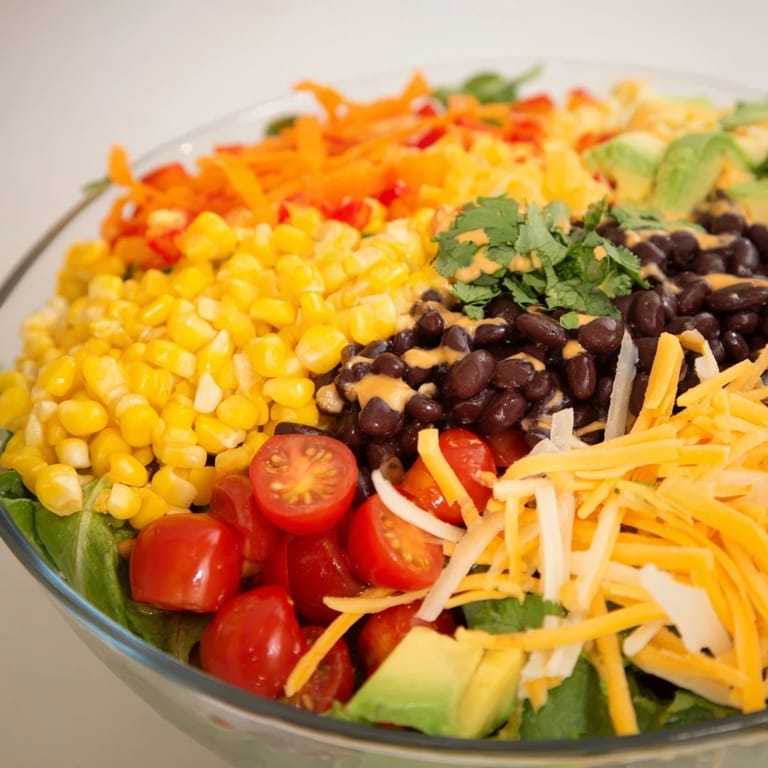
Save I discovered this salad on a trip to Arizona, watching the sky transform into bands of yellow, orange, and deep crimson as the sun dipped below the desert horizon. Standing on a friend's patio with a margarita in hand, I realized that same stunning gradient could be captured on a plate. That evening, I layered my first Southwest Sunset Palette, and everyone gathered around to admire it before we even took a bite. Now, whenever I make it, I'm transported back to that magical moment when food became art.
I'll never forget the first time I served this at a potluck, watching my usually quiet neighbor's face light up when she saw the layers. She said it tasted like "summer in the Southwest," and asked for the recipe three times. That's when I knew this wasn't just a salad—it was a memory maker.
Ingredients
- Yellow bell pepper (1 cup, diced): This is your sunrise—bright, sweet, and the first color that catches the eye. Choose peppers that are firm and glossy; they hold their shape beautifully in the layers.
- Orange bell pepper (1 cup, diced): The true sunset color. Orange peppers are slightly sweeter than red ones, adding a subtle depth that feels almost like caramel if you listen to them while you chew.
- Cherry tomatoes (1 cup, halved): These little jewels add juiciness and tang. I learned the hard way to halve them rather than leave them whole—whole tomatoes roll around and mess up your perfect layers.
- Romaine lettuce (1 cup, shredded): Keep it crisp by washing and drying it thoroughly, then storing it in the fridge until the last possible moment. A damp leaf will wilt under the weight of the dressing.
- Red onion (1 small, finely sliced): The sharpness here balances all that sweetness. Don't skip it, even if you think you don't like raw onion—the lime juice softens it into something magical.
- Avocado (1, sliced): Add this just before serving to prevent browning. A perfectly ripe avocado should yield slightly to pressure, like a gentle handshake.
- Corn kernels (1/2 cup, fresh or canned): If using canned, drain it really well. Fresh corn is stunning if it's in season, but frozen and thawed works beautifully too.
- Black beans (1 1/2 cups, cooked or canned): This is your foundation, your deepest color. Rinse canned beans thoroughly to remove the starchy liquid—that's what keeps them from being the star they deserve to be.
- Red chili pepper cheese (1 cup, shredded): This is the secret weapon. The spice hidden in the cheese means you get heat with every layer. If you can't find it, sharp cheddar with a pinch of chili powder does the trick, though it won't be quite the same.
- Fresh cilantro (1/4 cup, chopped): This herb is the final flourish, the garnish that says you care. Its brightness ties everything together.
- Lime juice (2 tablespoons): Fresh lime is non-negotiable. The acidity wakes up every single ingredient.
- Olive oil (2 tablespoons): Use a good quality oil; you can taste the difference when there are so few ingredients competing for attention.
- Ground cumin (1/2 teaspoon): This warm spice whispers "Southwest" without shouting. Toast it briefly in a dry pan first if you want to deepen its flavor.
- Salt and pepper (to taste): Season as you taste. The cheese is already salty, so go easy at first.
Tired of Takeout? 🥡
Get 10 meals you can make faster than delivery arrives. Seriously.
One email. No spam. Unsubscribe anytime.
Instructions
- Make the dressing first:
- In a small bowl, whisk together the lime juice, olive oil, cumin, salt, and pepper. This simple dressing is your secret—it's bright, it's balanced, and it loves every ingredient it touches. Set it aside and let the cumin settle.
- Prep like you're painting:
- Get out your cutting board and really take your time here. Each ingredient should be cut to roughly the same size so the layers feel intentional, not chaotic. Keep everything separate—this is your palette.
- Build your masterpiece:
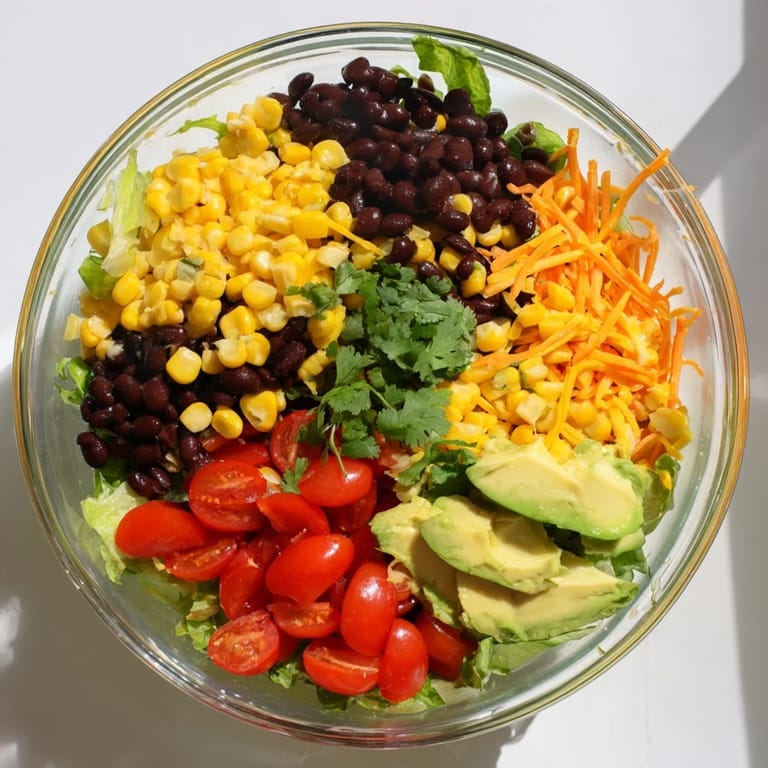
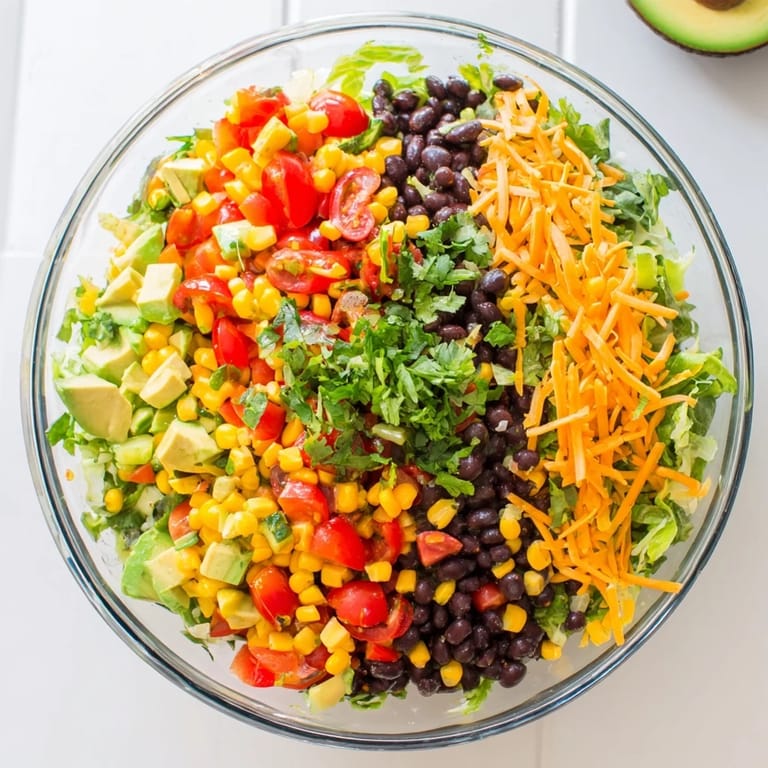
- Find a large glass serving bowl or trifle dish; glass is crucial because half the magic is seeing those layers. Start with the black beans as your foundation—spread them in an even layer across the bottom. They're deep, earthy, and they hold everything up, just like soil holds a desert garden. Next comes the yellow pepper, then the orange, then the corn—each layer should be distinct enough that someone looking at the bowl from the side can count the colors. Add the red chili cheese next; it'll nestle into the crevices like a secret. Then arrange the tomatoes, followed by the shredded lettuce on top. Finish with the avocado slices arranged like you're presenting something precious, because you are.
- Dress it gently:
- Pour that dressing over the whole thing slowly and evenly. Watch as it seeps down through the layers, bringing everything together without messing up your hard work.
- Add the final touch:
- Sprinkle the cilantro over the top like confetti. It's fresh, it's green, and it promises flavor.
- Serve with intention:
- Use a large spoon to scoop straight down through all the layers. Each serving should be a cross-section of the entire sunset—everyone gets a little bit of everything.
 Save
Save The moment that sealed this recipe's place in my regular rotation came when my daughter, who usually pushes vegetables around her plate, asked for seconds. She didn't even ask what was in it—she just wanted more of that beautiful sunset. That's when I knew I'd created something that nourishes more than just the body.
Why This Salad Feels Like More Than Food
There's something about serving food that's visually stunning that changes the entire mood of a meal. People slow down. They notice. They take photos. They talk about it days later. This salad does that without being fussy or pretentious—it's just honest ingredients arranged with intention. Every time I make it, I'm reminded that the way we present food is part of how we show people they matter to us.
The Art of Layering
Layering isn't just a technique; it's a mindset. When you build this salad, you're thinking about color, texture, and how flavors will mingle when they finally meet. It teaches you to slow down, to think about your ingredients as individuals before they become a whole. The same philosophy works in so many other dishes—think about it next time you're cooking.
Variations That Keep It Fresh
This salad is flexible enough to adapt to what you have on hand, but intentional enough that it never feels like you're improvising. The base of beans, peppers, and cheese is sacred, but everything else is negotiable. Over the years, I've learned what substitutions work beautifully and what ones fall flat.
- Add sliced jalapeños or a drizzle of hot sauce between the cheese and tomato layers if you want real heat.
- Swap the chili cheese for pepper jack if you love smoke, or vegan cheese if you're cooking for friends with dietary restrictions.
- Serve alongside tortilla chips for crunch and texture, or even crushed blue corn tortilla chips for extra color and flavor.
 Save
Save This salad reminds me why I love cooking—it's a conversation between creativity and ingredients, between technique and heart. Make it once, and you'll make it again.
Common Questions
- → What ingredients create the vibrant colors in this salad?
Yellow and orange bell peppers, cherry tomatoes, corn, and fresh avocado slices contribute to the vivid layers, highlighting a sunset-inspired palette.
- → How is the spicy flavor achieved in this dish?
Spicy red chili pepper cheese adds warmth and a subtle kick, easily swapped with sharp cheddar and chili powder for customization.
- → Can this salad be made gluten-free?
Yes, all primary ingredients like vegetables, black beans, and cheese are naturally gluten-free, but always check labels on canned or packaged items.
- → What dressing complements the layered ingredients best?
A simple dressing made with lime juice, olive oil, ground cumin, salt, and pepper enhances the fresh and bold flavors throughout the salad.
- → Are there suggestions to add protein or extra spice?
Adding grilled chicken or spiced ground beef between layers provides protein, while sliced jalapeños or hot sauce can boost the spiciness.