 Save
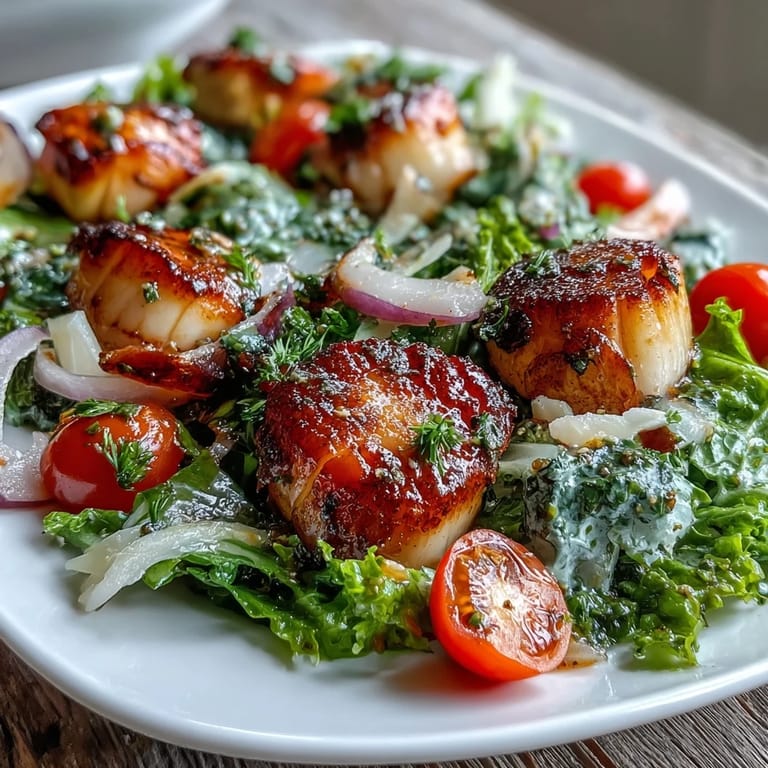
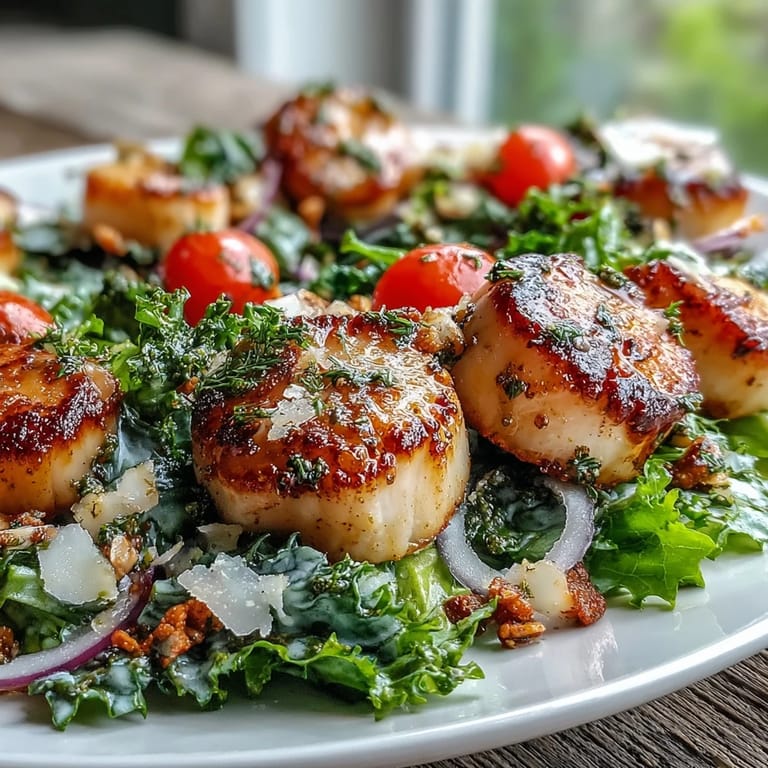
Save There's something about a perfectly seared scallop that makes you feel like you've cracked a secret in the kitchen. My friend Marco handed me a plate of these one evening after he'd spent maybe fifteen minutes total in his kitchen, and I was stunned at how restaurant-worthy it tasted. The golden crust, the tender sweetness inside, paired with that peppery escarole and bright pesto—it felt like cheating, honestly, because it looked so much more complicated than it actually was.
I made this for my sister's birthday dinner last spring, and watching her face light up when she took that first bite reminded me why cooking for people matters. She kept asking how I got the scallops so golden and perfect, and I realized that moment was less about the technique and more about showing up for someone with a dish that made them feel special.
Ingredients
- 16 large sea scallops, patted dry: The key here is truly dry scallops—moisture is your enemy when you want that beautiful golden crust, so don't skip the patting step even though it feels tedious.
- 1 tablespoon olive oil: Use a high-heat olive oil or finish with it at the last second so it doesn't break down and smoke out your kitchen.
- Salt and freshly ground black pepper: Taste as you go because the scallops themselves carry subtle flavor that salt can either enhance or overshadow.
- 1 large head escarole, washed and torn into bite-size pieces: Escarole has a slight bitterness that cuts through rich food beautifully, but if you can't find it, hearty arugula works in a pinch.
- 1 cup cherry tomatoes, halved: Summer tomatoes are ideal, but decent tomatoes year-round will still brighten the plate.
- 1/2 small red onion, thinly sliced: The thinness matters because raw onion can be sharp—thin slices distribute the flavor without overwhelming.
- 1/2 cup shaved Parmesan cheese: Use a vegetable peeler or mandoline to create actual shavings rather than grated cheese, which changes the texture entirely.
- 1/4 cup toasted pine nuts: Toast them yourself for two minutes in a dry pan if you have time—the difference in flavor is remarkable.
- 1/4 cup prepared basil pesto: Store-bought is honest work, but homemade pesto made with fresh basil from a farmers market tastes like summer in a spoon.
- 2 tablespoons fresh lemon juice: Squeeze it fresh because bottled lemon juice tastes like a ghost of what lemon should be.
- 3 tablespoons extra virgin olive oil: This goes into the vinaigrette, so use something you'd actually taste on bread.
- 1 teaspoon honey: It rounds out the acidity and adds a whisper of sweetness that makes people ask what the secret ingredient is.
Tired of Takeout? 🥡
Get 10 meals you can make faster than delivery arrives. Seriously.
One email. No spam. Unsubscribe anytime.
Instructions
- Start with the vinaigrette:
- Whisk together the pesto, lemon juice, olive oil, and honey in a small bowl, then taste and adjust the salt and pepper—this is your chance to nail the flavor before it meets the salad. Set it aside so the flavors can get to know each other while you handle the rest.
- Build your salad base:
- Toss the escarole, cherry tomatoes, and red onion together in a large bowl with about half the vinaigrette, using a light hand so you don't bruise the greens. Top it with shaved Parmesan and toasted pine nuts right before plating so everything stays crisp and distinct.
- Get your pan ready for the scallops:
- Heat 1 tablespoon of olive oil in a large nonstick skillet over medium-high heat until it shimmers and almost smokes—this is when you know it's ready. Pat those scallops dry one more time with a paper towel because moisture is the enemy of a good crust.
- Sear with confidence:
- Season the scallops on both sides with salt and pepper, then lay them in the hot pan in a single layer without moving them around—this is the hardest part because your instinct will be to fuss. After two to three minutes, flip them gently and give them another minute or two until they're just barely opaque in the center, which is when they're perfect.
- Bring it all together:
- Divide the salad among four plates and top each with four scallops while they're still warm. Drizzle the remaining pesto vinaigrette around everything and serve immediately so you get that contrast between warm scallops and cool, crisp greens.
 Save
Save There's a quiet satisfaction in plating something this beautiful, knowing it took less time than scrolling through your phone. This dish taught me that elegance doesn't require hours of work, just thoughtfulness about a few quality ingredients and the courage to let them speak for themselves.
Why Scallops Feel Special
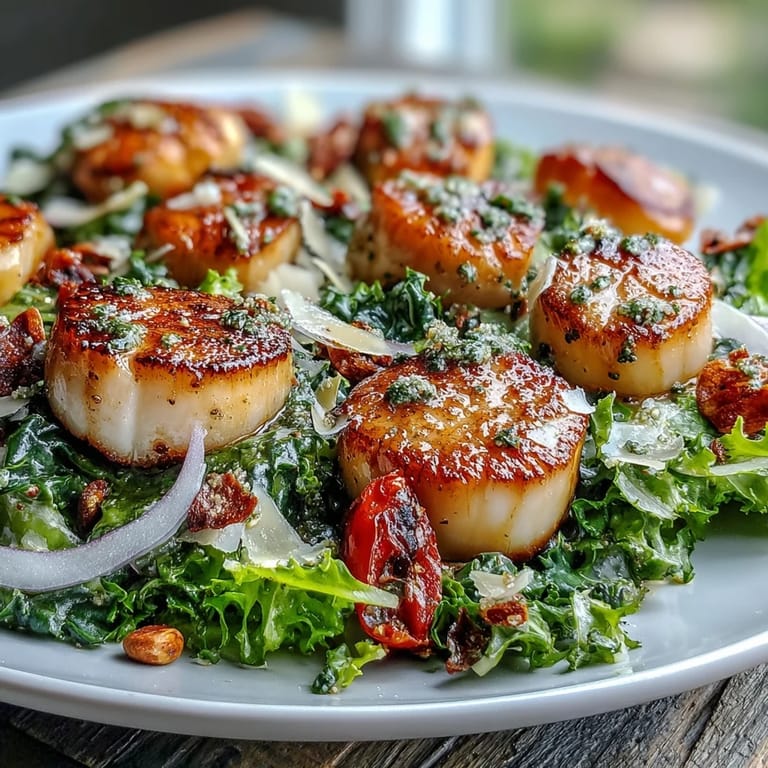
Scallops have this reputation for being fancy or difficult, but honestly they're forgiving once you understand the one rule: don't overcook them. What makes them feel restaurant-worthy is the contrast between that crispy exterior and the barely-translucent center, which is easier to achieve than you'd think if you trust your instincts and your timer.
The Power of Pesto as a Building Block
I used to think pesto was strictly for pasta, until I started playing with it as a vinaigrette base. The basil brings this fresh brightness that elevates simple greens and lets the scallops shine without competing with heavy flavors or complicated techniques. The honey in the vinaigrette is the quiet player here—it doesn't announce itself, but it balances the lemon and pesto in a way that makes everything taste intentional.
Timing and Confidence
This recipe works because everything comes together in under thirty minutes if you prep your ingredients before you start cooking. Having your scallops patted and seasoned, your salad components prepped, and your vinaigrette made means you can sear the scallops without stress and plate the whole thing while everything is still at its peak.
- Make the vinaigrette first so it has time to settle and the flavors meld together naturally.
- Pat the scallops so dry you'd think you're overdoing it—you're not.
- Have everything plated except the scallops, then sear them last so they hit the plate warm and perfect.
 Save
Save This is the kind of dish that reminds you why you cook in the first place—minimal effort, maximum reward, and a quiet kind of elegance that makes people feel like they matter. Make it for someone you want to impress, or make it for yourself on a Tuesday and feel a little bit fancy.
Common Questions
- → How do I get a perfect golden crust on scallops?
Pat the scallops very dry with paper towels before cooking. Use high heat and don't move them once placed in the pan. Let them sear undisturbed for 2-3 minutes until a golden crust forms naturally.
- → Can I substitute the escarole with other greens?
Yes, arugula or mixed greens work wonderfully as substitutes. Arugula adds a peppery bite, while mixed greens provide a milder flavor profile.
- → What wine pairs well with this dish?
A crisp Sauvignon Blanc or light Pinot Grigio complements the scallops beautifully. The acidity cuts through the richness while enhancing the pesto flavors.
- → Should I use homemade or store-bought pesto?
Either works well. Homemade pesto offers fresher, more vibrant flavor, but a high-quality store-bought version saves time and still delivers excellent results.
- → How can I tell when scallops are perfectly cooked?
Scallops are done when they're golden brown on both sides and just opaque in the center. They should feel firm but still slightly springy to the touch. Overcooking makes them tough and rubbery.
- → What are dry-packed scallops and why are they better?
Dry-packed scallops are untreated and contain no added water or preservatives. They sear better and develop a superior golden crust compared to wet-packed scallops, which release moisture and steam instead of searing.