 Save
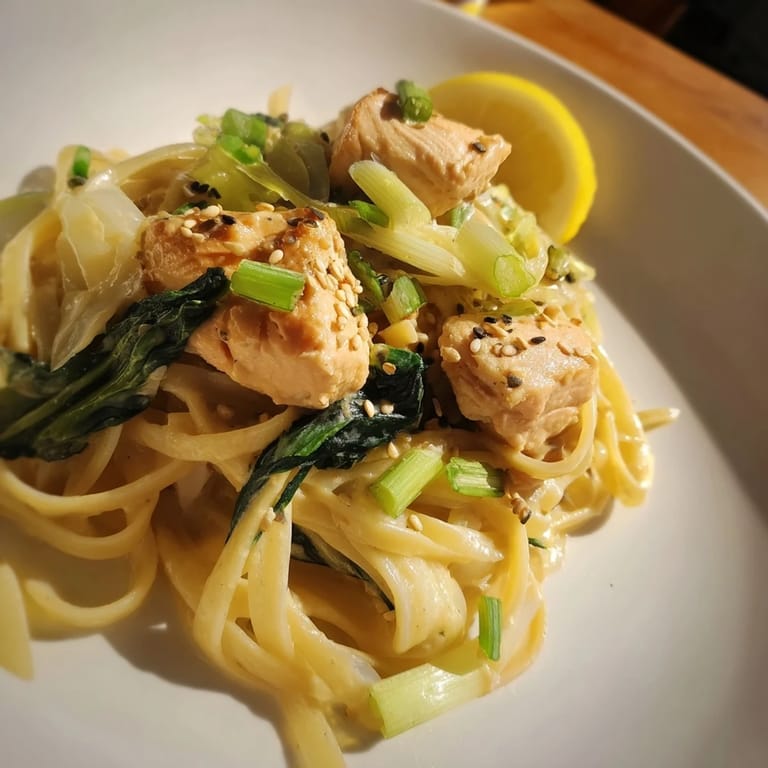
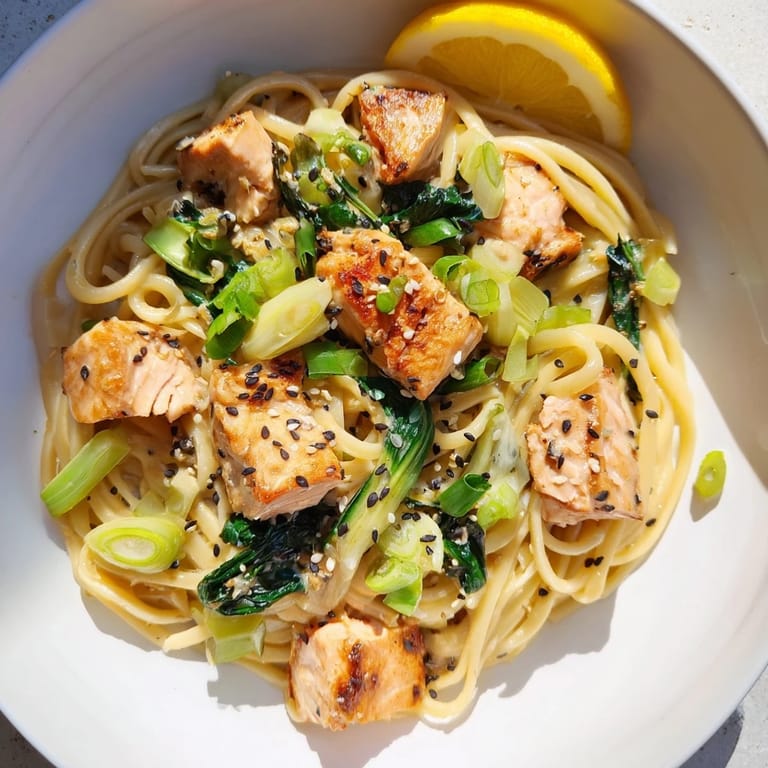
Save I discovered this recipe by accident on a Tuesday night when I had salmon in the fridge and remembered a small jar of miso paste sitting in the back. The combination seemed odd at first—Japanese umami mixed with Italian pasta—but the moment that creamy, savory sauce came together, I understood why fusion cooking works. Now it's become the dish I make when I want to feel like I'm doing something special without the stress, and honestly, it impresses people every single time.
I remember making this for my partner after a long week, and the smell alone—garlic blooming in butter, miso paste becoming fragrant, the cream swirling into that golden sauce—changed the whole mood of the evening. They came into the kitchen wondering what restaurant food had somehow appeared at home, and that's when I knew this recipe was a keeper.
Ingredients
- Salmon fillets, 400g: Cut into bite-sized pieces so they cook evenly and nestle perfectly into the pasta without falling apart.
- Linguine or spaghetti, 300g: Al dente pasta holds this rich sauce beautifully; avoid overly thick shapes that overpower the delicate fish.
- Baby bok choy, 2 heads: The slight bitterness balances the creamy sauce, and they soften just enough without becoming mushy.
- Garlic, 2 cloves: Mince it fine so it melts into the butter and doesn't compete with the miso's umami.
- Scallions, 2: Fresh and sliced thin, they brighten everything at the end.
- Unsalted butter, 60g: This is your sauce base, so quality matters—use good butter and it transforms everything.
- White miso paste, 2 tbsp: The star ingredient; it brings depth and saltiness that regular cream can't achieve alone.
- Soy sauce, 2 tbsp: Adds another layer of umami and ties the Japanese and Italian elements together.
- Mirin, 2 tbsp: The sweetness balances the miso's intensity and prevents the sauce from tasting one-dimensional.
- Heavy cream, 100ml: Creates that silky texture that makes the dish feel luxurious without being heavy.
- Sesame oil, 1 tsp: Just a touch adds a nutty warmth that lingers on the palate.
- Black pepper, ½ tsp: Freshly ground makes a noticeable difference in the final bite.
- Toasted sesame seeds and lemon wedges: Optional but recommended—they add texture and brightness that cuts through the richness.
Tired of Takeout? 🥡
Get 10 meals you can make faster than delivery arrives. Seriously.
One email. No spam. Unsubscribe anytime.
Instructions
- Start the pasta:
- Get a large pot of salted water boiling and cook the pasta according to package directions until al dente. The salt matters here—it's your only chance to season the pasta itself. Before draining, scoop out about ½ cup of pasta water; you'll use this later to adjust the sauce consistency.
- Sauté the aromatics:
- While pasta cooks, heat 1 tablespoon of butter and the sesame oil in a large skillet over medium heat. Add minced garlic and let it sizzle for about a minute until the smell is almost overwhelming—that's when you know it's ready, not when it's golden.
- Cook the salmon gently:
- Add salmon pieces to the skillet and cook for 2 to 3 minutes per side, resisting the urge to move them around too much. The fish should feel just barely firm when you press it; overcooked salmon becomes mealy and disappoints. Remove it to a plate and set aside.
- Build the miso sauce:
- Add the remaining butter to the same skillet and let it melt completely. Whisk in miso paste, soy sauce, and mirin, stirring until the miso is completely smooth with no lumps. This whisking step matters—lumpy miso paste in the final dish is a texture misstep.
- Finish the sauce base:
- Pour in heavy cream and black pepper, stirring gently to combine. The sauce should look pale and glossy at this point. Add the chopped bok choy and cook for 2 to 3 minutes until it softens but still has a slight bite.
- Bring everything together:
- Return the salmon to the skillet and gently fold everything together. Add the drained pasta and toss, adding reserved pasta water a splash at a time until the sauce coats everything silkily without pooling at the bottom.
- Serve right away:
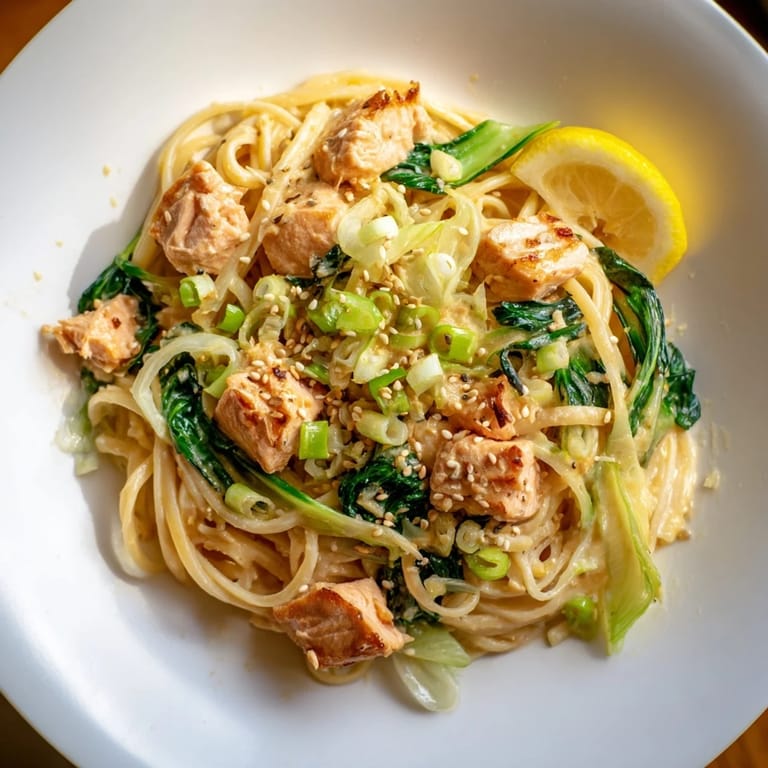
- Transfer to bowls immediately and garnish with scallions, toasted sesame seeds, and lemon wedges. The dish is best eaten while the pasta is still warm and the sauce is still clinging to every strand.
 Save
Save There was a moment while eating this with friends when someone said they couldn't believe salmon and miso belonged with Italian pasta, and then we all fell silent because the food was too good to interrupt. That's when I realized this dish isn't about fusion for its own sake—it's about flavors that genuinely make sense together, and that realization changed how I approach cooking.
Why Miso Transforms Pasta
Miso paste is umami in a jar, and pasta dishes almost always benefit from that salty, fermented depth. Instead of relying on parmesan or anchovies for richness, white miso brings a creaminess and complexity that makes people wonder what secret ingredient you used. I started experimenting with miso in other cream sauces after this, and it's never failed me.
The Salmon and Vegetable Balance
Salmon is rich on its own, so pairing it with a creamy sauce could easily tip into heaviness. The bok choy's slight bitterness and fresh texture cuts through that richness perfectly, and the lemon at the end brightens everything without needing an acidic sauce component. This balance is what keeps people coming back for a second bowl instead of feeling stuffed after one.
Making It Your Own
The beauty of this recipe is how forgiving it is once you understand the core technique. I've made it with spinach when bok choy wasn't available, added a pinch of chili flakes for heat, and even doubled the miso on nights when I wanted extra umami.
- If you prefer more vegetables, mushrooms or snap peas work beautifully in place of some or all the bok choy.
- For dietary variations, tamari replaces soy sauce for gluten-free, and gluten-free pasta cooks slightly differently so taste it a minute earlier.
- A squeeze of fresh lemon juice just before serving lifts all the flavors and prevents the cream from sitting too heavy on the palate.
 Save
Save This pasta reminds me that the best recipes are the ones that feel a little bit like an accident, like you stumbled onto something that shouldn't work but absolutely does. Make it once and it becomes yours.
Common Questions
- → What type of pasta works best with this dish?
Linguine or spaghetti are ideal as they hold the creamy sauce well, but any long pasta will complement the flavors.
- → Can I substitute bok choy with other greens?
Yes, spinach or Swiss chard can be used as alternatives, offering a similar tender texture and subtle earthiness.
- → How should the salmon be cooked to retain its tenderness?
Cook salmon gently in the skillet for 2–3 minutes per side until just cooked through to keep it moist and tender.
- → Is it necessary to reserve pasta water for the sauce?
Reserving pasta water helps adjust the sauce’s consistency, making it silkier and better at coating the pasta.
- → What flavor does the miso butter sauce add?
The sauce provides a savory umami depth with creamy richness, balanced by soy and mirin’s subtle sweetness.