 Save
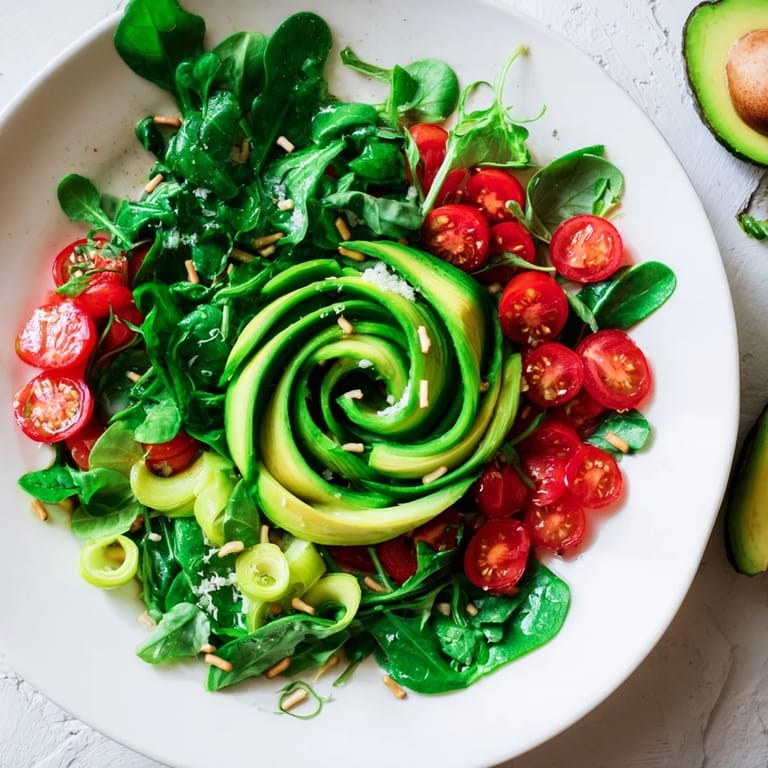
Save I discovered this salad on a day when everything felt too ordinary, when I'd been staring at the same tired greens in my crisper drawer and wondering if there was something more beautiful I could create. Then I got curious about the Golden Ratio—that mathematical pattern nature loves—and thought, why not let math guide my hands? The result was this salad that looks like it belongs in an art gallery, with each element placed with intention rather than chance.
The first time I made this for a small dinner party, a guest asked if I'd studied design, and I realized right then that food arranged with care becomes more than just sustenance. My friend picked up her fork slowly, wanting to preserve the spiral I'd spent time creating, and that hesitation told me everything. Watching someone torn between eating and preserving beauty because of something I'd arranged—that moment shifted how I think about plating.
Ingredients
- Mixed baby greens (arugula, spinach, watercress): Four cups creates a tender, peppery foundation that won't overpower the delicate arrangement—baby varieties stay crisp longer than larger leaves.
- Cherry tomatoes: One cup halved because their natural sweetness and small size fit the proportional system perfectly, and halving them reveals those jewel-like insides.
- Ripe avocado: One sliced just before serving so it doesn't brown, with its creamy richness balancing the bright acidity of everything around it.
- Yellow bell pepper: Thinly sliced for color contrast and a subtle sweetness that plays well with the other vegetables without overwhelming them.
- Cucumber: One small one, thinly sliced, because thin slices catch light differently and add delicate crunch without heaviness.
- Pomegranate seeds: Half a cup sprinkled strategically for their jewel-tone color and little bursts of tart flavor that wake up your palate.
- Feta cheese: Half a cup crumbled because its creamy, salty character grounds all the fresh vegetables and adds richness.
- Toasted pine nuts: A quarter cup because toasting them yourself releases their nutty aroma and creates better texture than raw.
- Extra-virgin olive oil: Three tablespoons of your best oil because you'll taste it directly in the dressing, so quality matters.
- Fresh lemon juice: One tablespoon squeezed right before whisking to keep that bright, sharp flavor alive.
- Honey: One teaspoon to smooth the dressing and add a whisper of sweetness without making it cloying.
- Dijon mustard: Half a teaspoon acts as an emulsifier and adds a subtle sharpness that ties everything together.
- Salt and pepper: To taste, but add them last so you can adjust without oversalting the vegetables.
Tired of Takeout? 🥡
Get 10 meals you can make faster than delivery arrives. Seriously.
One email. No spam. Unsubscribe anytime.
Instructions
- Create your spiral base:
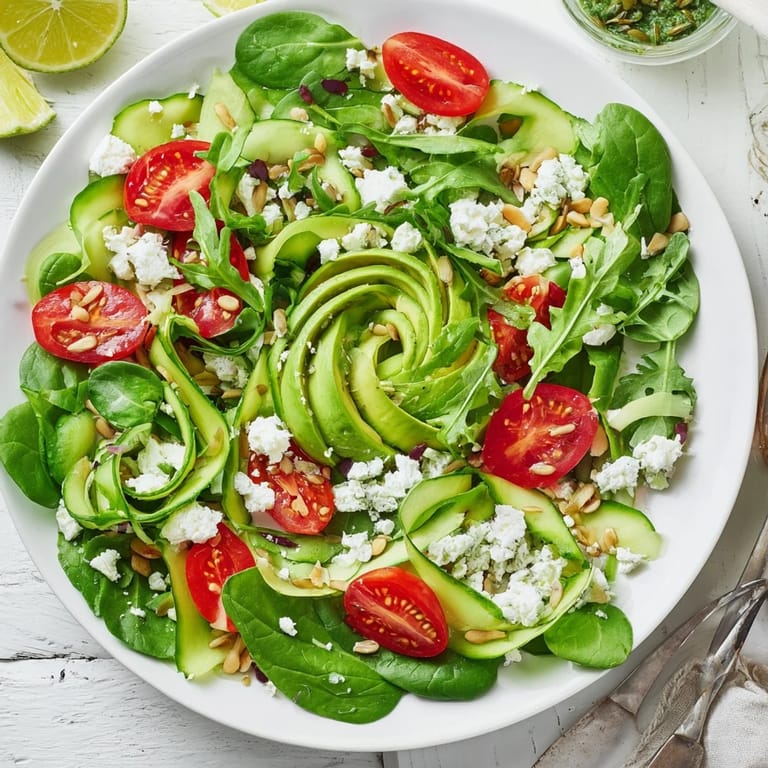
- Spread the mixed greens across a large platter in a loose, sweeping curve, like you're tracing the spiral of a nautilus shell. Don't be rigid about it—nature's spirals are forgiving, and your hands will find the rhythm.
- Begin with the focal point:
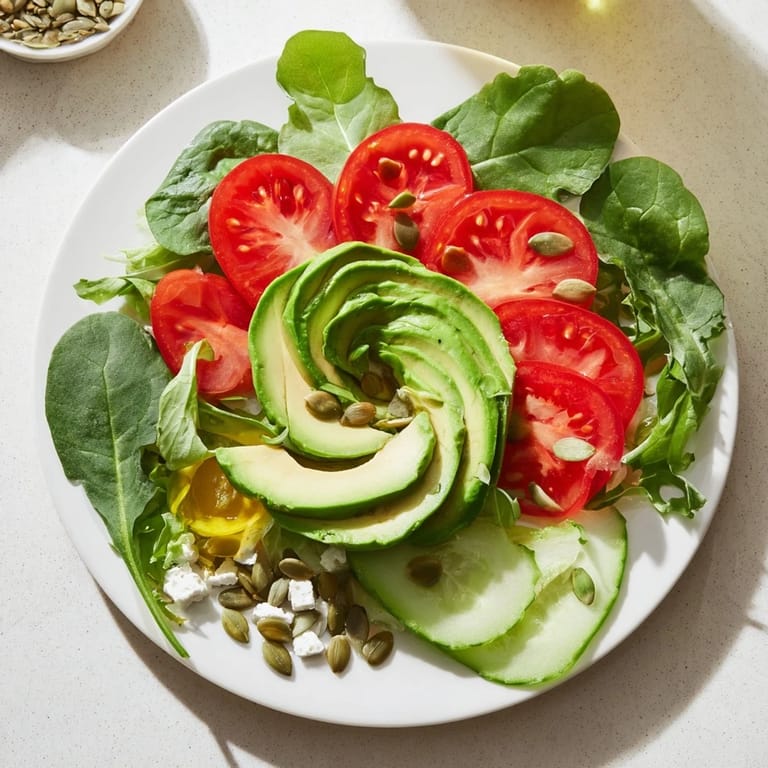
- Arrange your larger elements first (thick avocado slices, the biggest tomato halves) roughly two-thirds along your spiral's main axis, which is where your eye naturally travels. This creates that satisfying sense of balance the Golden Ratio promises.
- Layer outward with intention:
- As you move away from the focal point, introduce the smaller elements—thin bell pepper strips, delicate cucumber rounds, pomegranate seeds scattered like rubies. Each ingredient should feel like it has a reason for being exactly where it lands.
- Anchor with cheese and nuts:
- Sprinkle the crumbled feta and toasted pine nuts over the arrangement, concentrating them slightly near the focal area so they catch light and draw the eye. Their creamy and nutty presence grounds the whole composition.
- Whisk your dressing:
- In a small bowl, combine the olive oil, fresh lemon juice, honey, and Dijon mustard, whisking until the mixture emulsifies and becomes silky. Taste it, then season with salt and pepper—this is where balance lives.
- Finish with a gentle drizzle:
- Just before serving, drizzle the dressing evenly across the salad with a light hand, letting it pool slightly in the curves of your spiral. Bring it straight to the table so everyone sees it whole before the first fork touches it.
 Save
Save There was an afternoon when I made this salad alone, with no one coming to dinner, and I still took the time to arrange it carefully. I sat down at my table, looked at what I'd created, and felt something shift—a reminder that cooking beautifully matters even when the only person witnessing it is you.
The Mathematics of Beauty
The Golden Ratio isn't some obscure concept reserved for architects and artists—it's simply how nature tends to organize itself. Sunflower seeds spiral in it, seashells curve through it, and when you start noticing it, you see it everywhere. Using it as a guide for plating isn't pretentious; it's tapping into something your eye already recognizes as beautiful, even if you can't name it. The focal point sitting about sixty percent along your main axis, rather than dead center, creates a sense of movement and intrigue that makes people look longer.
Composing with Color and Contrast
The secret to a salad that stops conversation is thinking like you're painting. The deep greens of the base, the ruby pomegranate seeds, the buttery yellow of the bell pepper, and the pale green of avocado—they're arranged so each color breathes and isn't lost next to something similar. When you're choosing your vegetables, pick ones at their peak color, because a sad, pale tomato won't have the impact you need. The visual contrast is half the magic here, and it costs nothing but a moment of attention.
Timing and Temperature Tricks
This salad is all about freshness, and that means you need to treat time as an ingredient. Everything should be cold and crisp the moment it hits the platter, so chill your serving platter for five minutes before you begin assembling. If your greens are limp, give them an ice bath for a few minutes to wake them up. The moment dressing touches a salad, the vegetables begin releasing water and losing their structural integrity, so dressing at the very last second is what separates a stunning presentation from a sad pile.
- If you're serving grilled chicken or chickpeas for protein, char them first, then let them cool slightly so they don't wilt the greens where they land.
- A crisp white wine like Sauvignon Blanc cuts through the richness of the feta and avocado without overpowering the delicate vegetables.
- You can prep all your vegetables hours ahead and store them separately, then assemble and dress only when you're ready to serve.
 Save
Save Cooking this salad taught me that sometimes the most powerful meals are the ones that don't need heat, complexity, or apologies. A few perfect ingredients, an idea about how they might speak to each other, and the willingness to arrange them with care—that's enough.
Common Questions
- → What makes the salad visually appealing?
The ingredients are arranged following the Golden Ratio, creating an eye-catching spiral that balances color and shape.
- → Can I add protein to this dish?
Yes, grilled chicken or chickpeas can be added for extra protein while maintaining the salad’s lightness.
- → Are there any common allergens in the components?
This dish contains dairy from feta cheese and tree nuts from toasted pine nuts, which should be noted for allergy concerns.
- → What kind of dressing complements this mix?
A dressing of extra-virgin olive oil, fresh lemon juice, honey, and Dijon mustard offers a bright and balanced flavor.
- → How should the salad be served for best presentation?
Arrange ingredients on a large platter in a spiral pattern and drizzle dressing just before serving to maintain freshness and visual appeal.