 Save
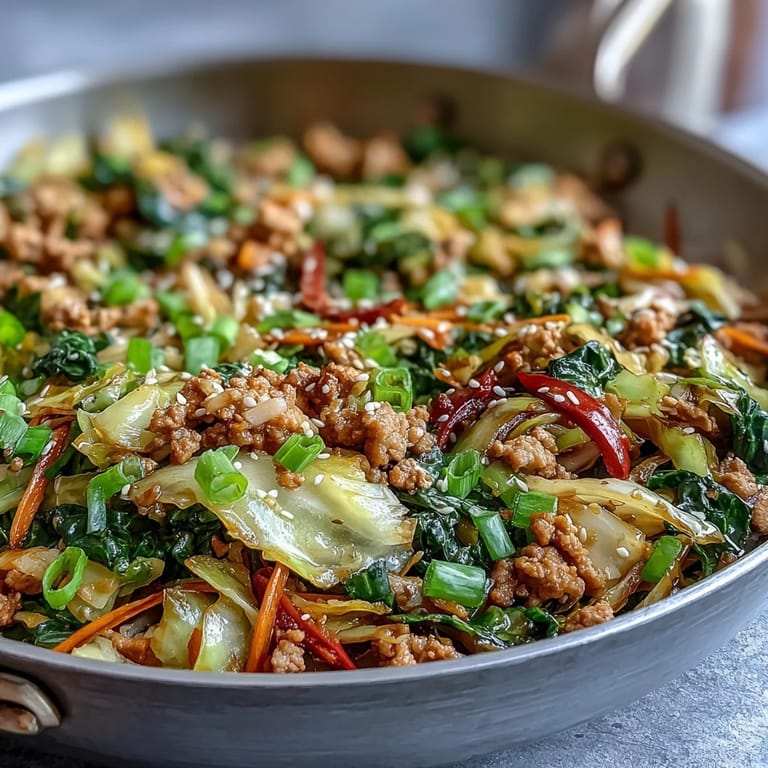
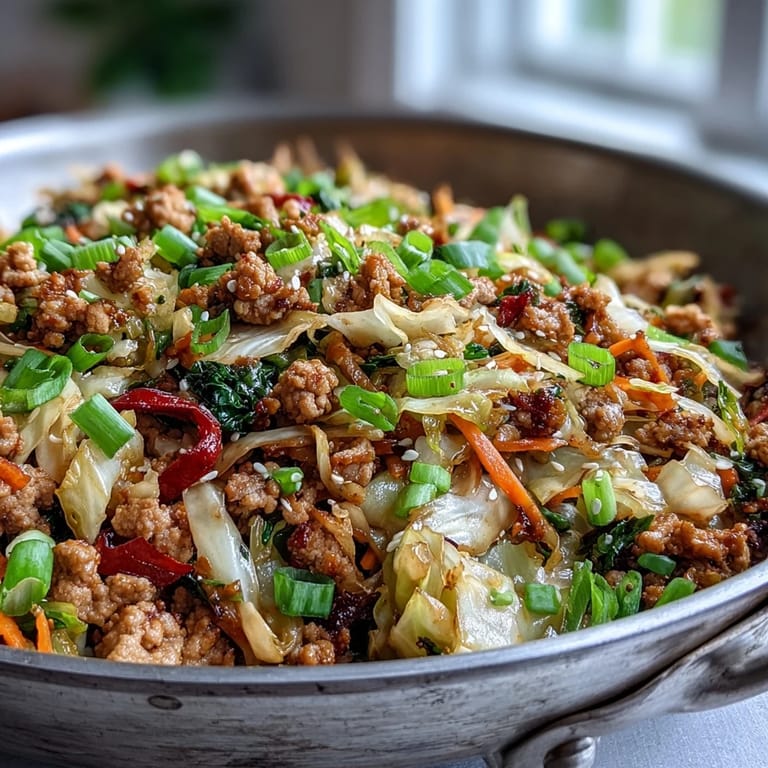
Save There's something about the sound of ground turkey hitting a hot wok that signals the start of something quick and honest. I landed on this stir-fry during a phase when I was tired of overthinking dinner—I wanted food that tasted vibrant without demanding hours in the kitchen. The cabbage became my secret weapon, shredding down to almost nothing and absorbing all those ginger and garlic notes while staying light enough that I didn't feel heavy afterward. It became the kind of meal I made on Tuesday nights without fanfare, just because my body felt better for it.
My roommate walked in one evening while I was finishing this, stopped mid-sentence, and asked if we could eat it together that night. That's when I realized this wasn't just another diet-friendly recipe—it was actually craveable. We sat with our bowls talking about work and life, and the food just disappeared, no one thinking twice about what was in it.
Ingredients
- Lean ground turkey (500 g): The foundation here, and worth buying the leanest version you can find because it browns better and won't make the dish feel greasy, which matters when you're building everything else around it.
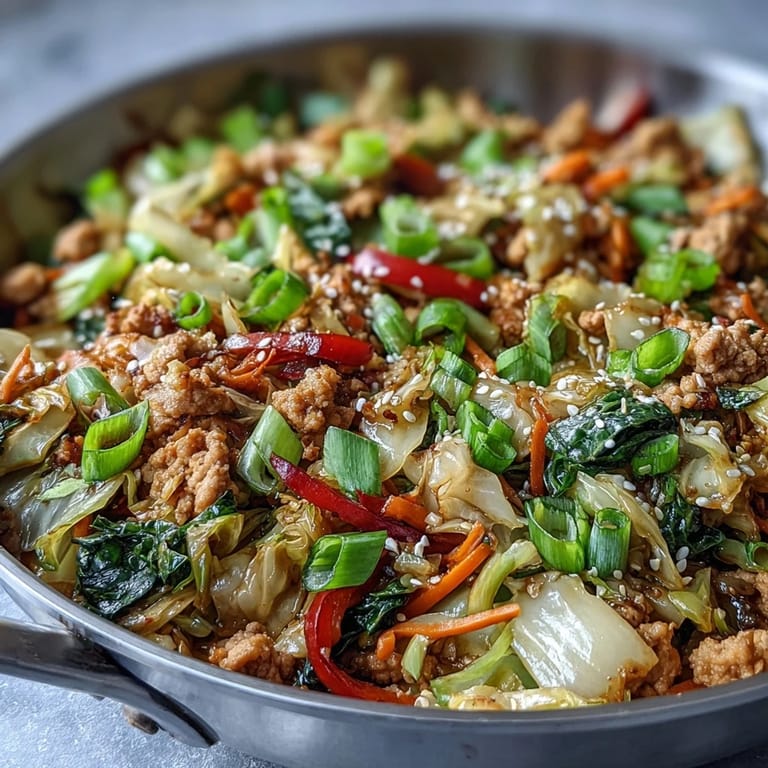
- Green cabbage, shredded (800 g): This is the volume player—it's what makes your plate look generous without adding calories, and it picks up every flavor in the pan if you don't shy away from cooking it.
- Carrots, julienned (2 large): They add natural sweetness and a bit of texture resistance that keeps the dish from feeling mushy, plus that color contrast makes everything feel more alive on the plate.
- Red bell pepper, thinly sliced (1): More volume and color, and the slight sweetness balances the savory notes without feeling out of place.
- Green onions, sliced (4): Use some cooked in, save some raw for the top—it's the difference between a good stir-fry and one that tastes bright and finished.
- Garlic and ginger (3 cloves and 1 tbsp): These two are why your kitchen smells like a proper meal; don't skip the ginger, it changes everything.
- Low-sodium soy sauce (3 tbsp): Swap for tamari if gluten matters to you, and honestly, I've never noticed a difference when the wok is doing its thing.
- Rice vinegar (1 tbsp): The hidden note that keeps this from tasting heavy or one-dimensional, even though it's a small amount.
- Sesame oil (1 tbsp): Quality sesame oil is worth the extra cost here because a little goes far and it's the signature flavor you'll taste in every bite.
- Chili flakes (1 tsp optional): Start conservative and add more if you want heat—I learned this the hard way on a night I got excited.
- Toasted sesame seeds (1 tbsp): The garnish that looks intentional and adds a toasted nuttiness that makes people ask what you did differently.
Tired of Takeout? 🥡
Get 10 meals you can make faster than delivery arrives. Seriously.
One email. No spam. Unsubscribe anytime.
Instructions
- Get your wok ready and add the turkey:
- Heat a large non-stick skillet or wok over medium-high heat until it's properly hot—not just warm. Add sesame oil and immediately follow with ground turkey, breaking it up with a spatula as it cooks. You're looking for that moment when it all turns golden and cooked through, usually around 5 minutes, and the aroma should tell you when you're close.
- Wake everything up with garlic and ginger:
- Once the turkey is done, add minced garlic and grated ginger and let them sauté for just 1 minute—any longer and you risk burning them, which tastes bitter. You'll notice the smell shift and intensify; that's exactly what you want.
- Add the vegetables and stir-fry:
- Toss in the cabbage, carrots, and bell pepper and keep everything moving for 5 to 7 minutes until the vegetables soften slightly but still have some resistance when you bite them. The cabbage will reduce dramatically, which is the whole point.
- Build the sauce and bring it together:
- Stir in soy sauce, rice vinegar, and chili flakes if you're using them, making sure everything coats evenly. Taste as you go and adjust the seasoning with salt and pepper, understanding that what tastes right in a spoon might be perfect in the full dish.
- Finish with brightness:
- Remove from heat, fold in the fresh green onions, and shower the whole thing with toasted sesame seeds and extra green onions. The freshness of the raw onions against the cooked savory flavors is what makes this feel complete.
 Save
Save This dish became my quiet victory on nights when I wanted to prove to myself that eating aligned with my goals didn't mean sacrificing flavor or satisfaction. There's dignity in a simple, well-made meal that actually fills you up.
The Magic of High-Volume, Low-Calorie Cooking
The real insight I've gathered about eating this way is that cabbage and similar vegetables aren't sacrifices—they're actually the smart play. When you build a meal around them, you get to eat a full, generous plate that leaves you satisfied, which is the opposite of deprivation. The turkey provides the protein your body actually needs, and everything else is just supporting that with flavor and texture. It took me a while to stop thinking of low-calorie food as inherently boring, but dishes like this one changed that entirely.
Variations That Keep It Interesting
Ground chicken works just as well as turkey, and honestly, some nights I swap it depending on what's in my freezer or what I'm in the mood for. Tofu and tempeh are legitimate alternatives if you want to shift the protein source, and they absorb the sauce flavors in a different but equally satisfying way. I've also experimented with adding mushrooms or zucchini when I had them, and the dish bends to accommodate without losing its identity.
Serving and Storing Smart
Serve this hot and fresh for the best texture, though it reheats reasonably well in a wok or skillet if you've got leftovers. I usually pair it with cauliflower rice or brown rice depending on how much volume I want, and honestly, it stands alone if you're really just after the protein and vegetables. Leftovers keep for 3 days in the fridge, making it perfect for meal prep without feeling like you're eating the same thing twice.
- If you're serving with rice, cook that first so the stir-fry doesn't get cold while you're finishing sides.
- A splash of sriracha or extra chili flakes on the table lets people dial in their own heat level without you guessing.
- The sesame seeds should go on just before serving; they lose their texture if they sit in the heat too long.
 Save
Save This stir-fry taught me that supporting your own health doesn't have to feel like punishment, and that a well-executed simple meal can be genuinely nourishing on every level. Make it, taste it, and trust that you've done something good for yourself.
Common Questions
- → Can I use other proteins instead of ground turkey?
Yes, ground chicken works seamlessly as a direct substitute. For plant-based options, try crumbled tofu or tempeh—adjust cooking time slightly as they absorb flavors faster than meat.
- → What can I serve with this stir-fry?
Steamed brown rice adds bulk, while cauliflower rice keeps carbs lower. The dish stands alone well too, thanks to the generous vegetable portion providing plenty of volume and fiber.
- → How do I prevent the cabbage from getting soggy?
Cook over medium-high heat and stir frequently. The vegetables should remain tender-crisp after 5–7 minutes—avoid overcooking or they'll release excess water and lose texture.
- → Is this dish freezer-friendly?
While cabbage can become watery after freezing, the stir-fry keeps well refrigerated for up to 3 days. For freezing, omit the sauce and add fresh when reheating for better texture.
- → How can I make this dish spicier?
Add sriracha, extra chili flakes, or fresh sliced chilies along with the garlic and ginger. The heat level is easily adjusted to taste—start with ½ tsp chili flakes if sensitive to spice.