 Save
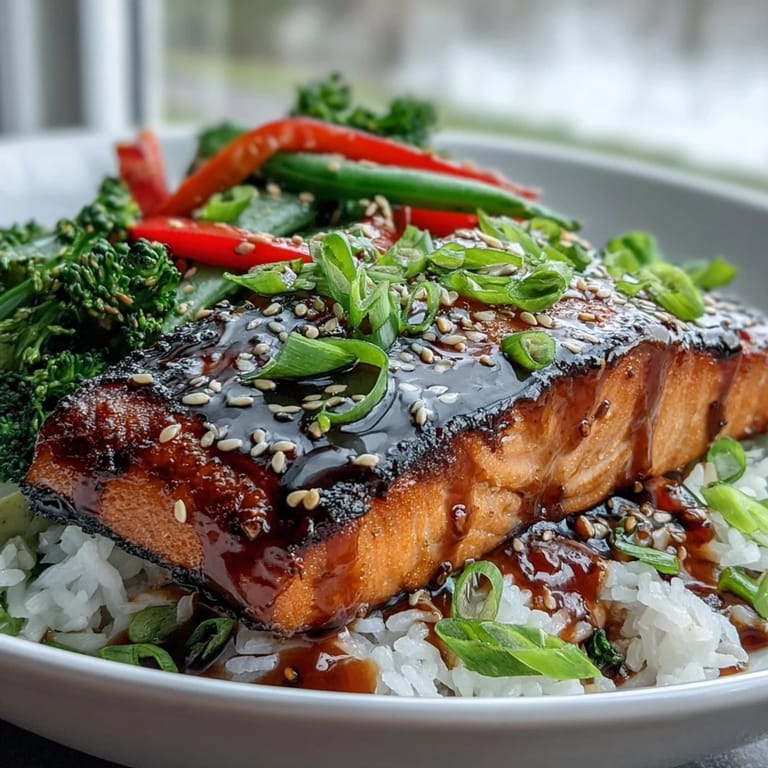
Save The smell of caramelizing teriyaki sauce hit me before I even flipped the salmon, and suddenly I understood why my neighbor always had her windows open when she cooked. I'd been intimidated by glazed fish for years, convinced it required restaurant-level precision, until a particularly uninspiring Tuesday night forced me to just try. The sauce bubbled, the salmon sizzled, and within twenty minutes I had something that looked like it belonged on a menu. My partner walked in, stopped mid-sentence, and asked if we were celebrating something. We weren't, but it felt like we should have been.
I made this for my brother after he spent a weekend helping me move furniture, and he ate two bowls before admitting he usually hates cooked carrots. There's something about the way the sauce clings to everything, the way the sesame seeds add that tiny crunch, that makes people forget their usual preferences. He texted me three days later asking for the recipe, which is the highest compliment he's ever paid my cooking. Now it's my go-to for when I want to feed someone well without spending the whole evening in the kitchen.
Ingredients
- Salmon fillets: Skin-on holds together better during flipping, but skinless works if you prefer, just be gentle when you turn them.
- Soy sauce: The backbone of the teriyaki, and using low-sodium gives you control over the saltiness without losing depth.
- Mirin: This sweet rice wine adds a gloss and subtle complexity you won't get from sugar alone, and it's worth keeping a bottle around.
- Brown sugar: Helps the sauce thicken and caramelize on the salmon, creating those glossy, sticky edges that make it look professional.
- Rice vinegar: Cuts through the sweetness with a gentle tang, balancing the sauce so it doesn't feel cloying.
- Sesame oil: Just a little adds a toasty, nutty warmth that makes the whole dish smell like a night out.
- Garlic and ginger: Fresh is essential here, the sharpness mellows into the sauce and makes it taste alive, not bottled.
- Cornstarch slurry: This is what transforms a thin liquid into a sauce that clings to the salmon, don't skip it or you'll have a puddle instead of a glaze.
- Bell pepper, carrot, broccoli, sugar snap peas: Any mix works, but these hold their color and crunch, making the bowl look as good as it tastes.
- Jasmine or sushi rice: Short-grain rice is stickier and more fun to eat with chopsticks, but jasmine is fluffier and just as satisfying.
- Sesame seeds and spring onions: Optional, but they add a fresh, final flourish that makes you feel like you know what you're doing.
Tired of Takeout? 🥡
Get 10 meals you can make faster than delivery arrives. Seriously.
One email. No spam. Unsubscribe anytime.
Instructions
- Cook the rice:
- Rinse it until the water runs clear, then simmer with the lid on and resist the urge to peek. Let it steam off the heat for five minutes, and it'll be perfectly fluffy every time.
- Make the teriyaki sauce:
- Whisk everything together in a small saucepan and bring it to a gentle simmer, stirring until the sugar dissolves and the sauce thickens slightly. Add the cornstarch slurry at the end and watch it turn glossy and cling to the back of a spoon.
- Sear the salmon:
- Season with salt and pepper, then lay the fillets skin-side down in a hot, lightly oiled skillet. Let them sizzle undisturbed for three to four minutes, flip once, and cook until just opaque in the center.
- Glaze the salmon:
- Brush the teriyaki sauce generously over the fillets and let them cook for one more minute. The sauce will caramelize slightly, creating a sticky, flavorful coating.
- Stir-fry the vegetables:
- Heat your wok or skillet until it's almost smoking, add a splash of oil, and toss the vegetables quickly over high heat. They should stay bright and crisp, not soggy or dull.
- Assemble the bowls:
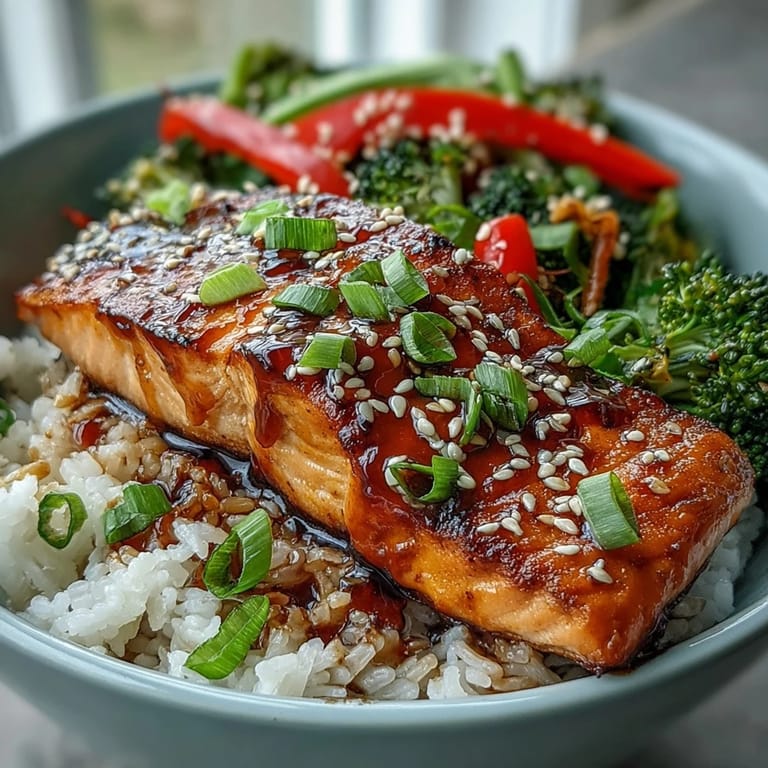
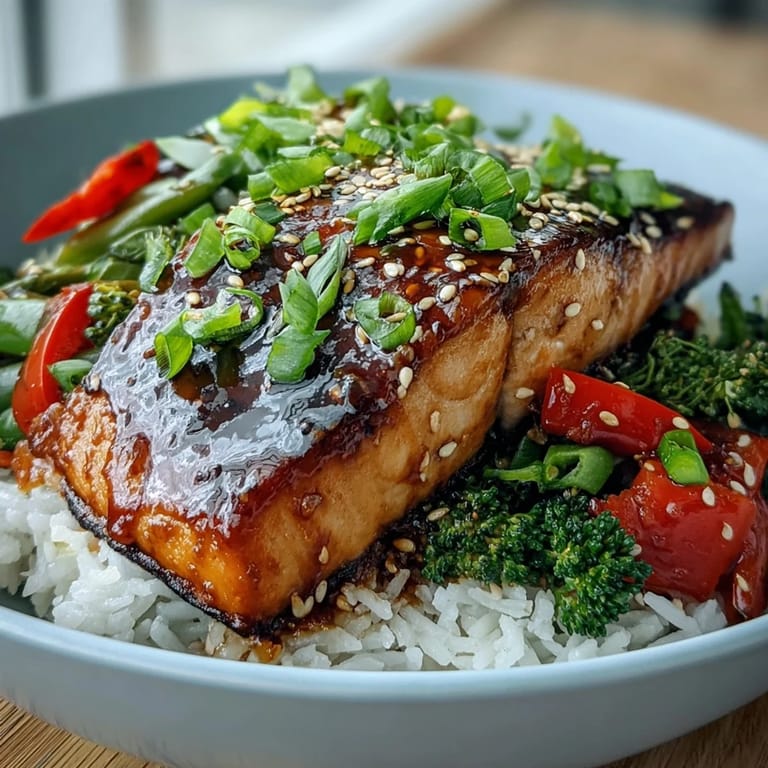
- Divide the rice among bowls, arrange the vegetables on one side, and place the glazed salmon on top. Drizzle extra sauce over everything and finish with sesame seeds and spring onions.
 Save
Save The first time I served this to friends, one of them quietly scraped every last grain of rice from her bowl and asked if I'd mind if she licked the sauce off the plate. I laughed, but I understood, there's something about that glossy, savory-sweet glaze that makes you want to savor every bit. It's become the meal I make when I want to remind people that weeknight cooking doesn't have to feel like a chore.
Choosing Your Salmon
I used to buy whatever salmon was on sale until I noticed the difference between wild and farmed, not in a snobby way, but in how it cooked. Wild salmon is leaner and can dry out faster, so watch your timing, while farmed has more fat and forgives a little overcooking. Skin-on fillets hold together better and get crispy if you sear them right, but skinless is easier if you're nervous about flipping. Either way, look for bright, firm flesh that doesn't smell fishy, and you'll be fine.
Customizing Your Vegetables
The vegetables listed are my favorites, but I've used zucchini, mushrooms, baby corn, and even asparagus when that's what I had. The key is cutting everything into similar-sized pieces so they cook evenly, and adding denser vegetables like carrots or broccoli first. Softer ones like snap peas or spinach go in last, just for a quick toss. It's a forgiving recipe, and whatever's in your crisper drawer will probably work.
Storing and Reheating
Leftovers keep in the fridge for up to three days, and I store the components separately so the rice doesn't get soggy. Reheat the salmon gently in a skillet with a splash of water to keep it moist, or microwave it on medium power. The vegetables can be eaten cold in a grain bowl or warmed quickly in a hot pan. Extra teriyaki sauce is gold, I've used it on chicken, tofu, and even roasted sweet potatoes.
- If marinating the salmon ahead, don't go longer than 30 minutes or the texture gets mushy.
- Double the sauce recipe and keep half in a jar for quick weeknight stir-fries.
- Use a nonstick or well-seasoned skillet to avoid the salmon sticking and tearing when you flip it.
 Save
Save This bowl has become my answer to the question of what to make when I want something satisfying but don't want to be stuck in the kitchen all night. It's proof that a little planning and some good sauce can turn simple ingredients into something worth sitting down for.
Common Questions
- → Can I use frozen salmon fillets?
Yes, frozen salmon works well for this dish. Thaw completely in the refrigerator before cooking and pat dry with paper towels to ensure proper searing.
- → How do I store leftovers?
Store components separately in airtight containers in the refrigerator for up to 3 days. Reheat gently and assemble bowls when ready to serve.
- → Can I make the teriyaki sauce ahead?
Absolutely. Prepare the sauce up to 5 days in advance and store in the refrigerator. Reheat gently before brushing onto the salmon.
- → What vegetables work best?
Any crisp vegetables that hold their shape during stir-frying work well. Try zucchini, mushrooms, baby corn, snow peas, or bok choy based on seasonal availability.
- → Is this suitable for meal prep?
Yes, this bowls perfectly for meal prep. Cook rice, vegetables, and salmon in batch, then portion into containers. The flavors actually develop more after sitting.
- → Can I make this gluten-free?
Yes, simply substitute the regular soy sauce with tamari or a certified gluten-free soy sauce alternative.