 Save
Save Last spring, a friend arrived at my kitchen door with a handful of pansies from her garden, asking if I could make something beautiful for her daughter's birthday tea. I'd never attempted a naked cake before, but something about the combination of those jewel-toned flowers, bright lemon, and cloud-soft cream felt exactly right. That afternoon taught me that the best desserts aren't always about technical perfection—they're about moments that feel effortless and luminous, even when you're nervously tempering egg yolks for the first time.
What really surprised me was how quiet the kitchen became while assembling this cake—no rushing, no stress, just the soft sound of the offset spatula gliding through cream and the visual satisfaction of watching those delicate flower petals catch the afternoon light. My friend's daughter took one bite and closed her eyes, which told me everything about whether the risk of trying something new had been worth it.
Ingredients
- All-purpose flour (2 1/2 cups): This is your cake's foundation, and measuring by weight rather than volume keeps it tender and prevents the dense crumb that comes from too much flour packed into a measuring cup.
- Baking powder and baking soda (2 tsp and 1/2 tsp): They work as a team here—the baking powder gives gentle lift while the soda reacts with buttermilk to create subtle tang that enhances the lemon without overpowering it.
- Unsalted butter, softened (1 cup): Room-temperature butter creams into sugar with ease, trapping tiny air pockets that make the cake light and tender instead of dense.
- Granulated sugar (1 3/4 cups): Beyond sweetness, it helps cream into the butter and creates the structure that keeps layers from crumbling.
- Eggs, room temperature (4 large): Cold eggs resist blending smoothly into the batter, so letting them sit out for 15 minutes makes an actual difference in texture.
- Vanilla extract (2 tsp): This rounds out the lemon brightness rather than competing with it, adding depth you can't quite identify but absolutely taste.
- Buttermilk (1 cup): The acidity here is crucial—it reacts with baking soda and softens the crumb in a way regular milk simply cannot.
- Lemon zest (1 from cake, 2 from curd): Fresh zest carries the essential oils that give real lemon flavor; jarred zest loses its brightness weeks before you use it.
- Freshly squeezed lemon juice (3/4 cup): Fresh juice matters far more than bottled here since the curd's entire personality depends on it.
- Egg yolks (4 for curd): Yolks alone create silky curd; whole eggs would make it grainy and unstable.
- Heavy cream (2 cups): Cold cream whips faster and holds peaks longer than cream straight from the shelf.
- Powdered sugar (1/3 cup for cream): It dissolves instantly into cream, unlike granulated sugar which can create a grainy texture.
- Edible flowers (1–2 cups): These are the finale, the jewelry on your cake—source them from specialty grocers or growers you trust, never from florists or garden centers.
Tired of Takeout? 🥡
Get 10 meals you can make faster than delivery arrives. Seriously.
One email. No spam. Unsubscribe anytime.
Instructions
- Prepare your stage:
- Preheat to 350°F (175°C) and grease three 8-inch pans with parchment circles on the bottoms—this small step saves you from frustration when you're trying to turn warm cakes out. Line the sides too if you're new to cake baking; it feels like insurance and it is.
- Mix your dry team:
- Whisk flour, baking powder, baking soda, and salt together in a medium bowl so the leavening agents are evenly distributed throughout—lumpy dry mixes lead to uneven rising. Set aside.
- Cream butter and sugar into clouds:
- Beat softened butter with sugar for about 3 minutes until the mixture looks pale and fluffy, which means you've incorporated enough air for a tender crumb. This step cannot be rushed or skipped.
- Build your batter carefully:
- Add eggs one at a time, beating after each addition so they fully incorporate and don't create a separated, slick mixture. Stir in vanilla and lemon zest, letting the zest's oils release into the batter.
- The critical alternating pattern:
- Add dry ingredients and buttermilk in three additions—dry, wet, dry, wet, dry—starting and ending with dry. Mix until just combined; overmixing develops gluten and creates a tough, rubbery cake that defeats the purpose of all this care.
- Divide and smooth:
- dd>Pour batter evenly into pans and smooth the tops with an offset spatula so the cakes bake evenly. Uneven surfaces can lead to doming in the center, which means trimming later.
- Bake with patience:
- Set a timer for 25 minutes and check at 28 minutes with a toothpick—you're looking for no wet crumbs, but a few moist ones are perfectly fine and actually preferable. The cakes continue cooking slightly as they cool.
- Cool gradually:
- Let cakes rest in pans for 10 minutes (this firms them up without cooling them so much they stick), then turn onto racks to cool completely. Rushing this means warm cake can tear apart when you assemble.
- Make the lemon curd:
- Set a heatproof bowl over simmering water without letting the bowl touch the water—this gentle heat is essential so the egg yolks thicken without scrambling. Whisk constantly until the mixture coats the back of a spoon and you can draw a line through it with your finger (8–10 minutes), then whisk in butter until silky and cool completely.
- Whip cream to peaks:
- Beat cold cream with powdered sugar and vanilla until stiff peaks form—the moment when the peaks stand straight up rather than curling over. Refrigerate until assembly to keep it stable.
- Stack with intention:
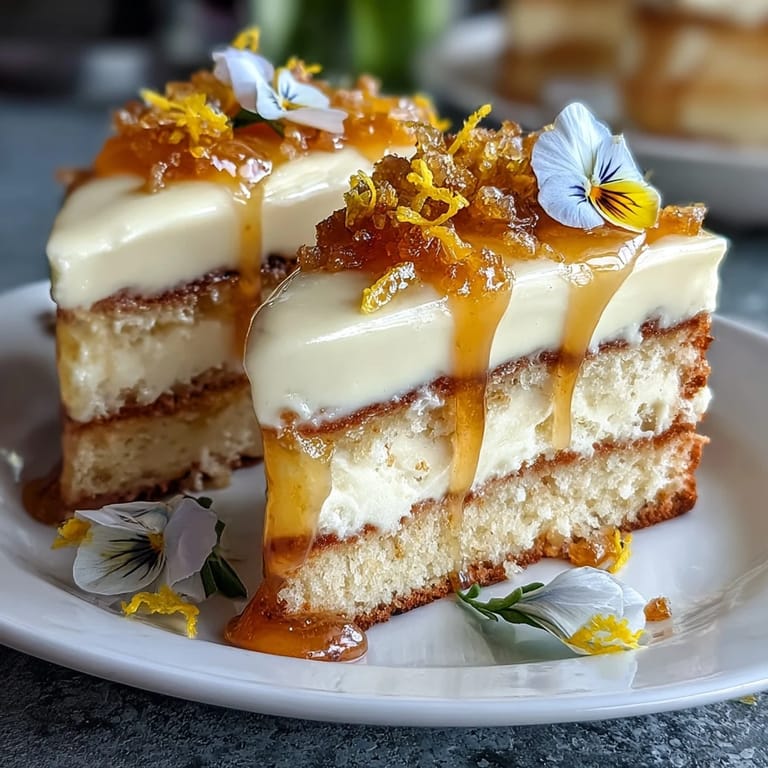
- Place the first cake layer on your serving plate, spread with half the lemon curd, then layer whipped cream. Repeat with the second layer, crown with the third cake, and finish with a generous layer of cream on top—this is your canvas for flowers.
- The final flourish:
- Just before serving, arrange edible flowers artfully across the top and scatter lemon zest curls if using. The flowers look freshest and most vibrant when they haven't sat in cream for hours.
 Save
Save That evening, after everyone had gone home and I was washing dishes, I found a text from my friend saying her daughter had asked if she could have this cake for her birthday every year. There's something profound about creating something beautiful enough that people want to remember it, want to relive it, want to ask for it again.
Why Spring Flavors Matter Here
Spring baking is its own category because the season itself is about lightness and renewal—heavy chocolate cakes feel wrong when the world is blooming. Lemon curd brings brightness without being sharp, whipped cream adds luxury without weight, and edible flowers complete the story by literally bringing the garden onto your plate. This cake tastes like the season feels, which is the whole point of seasonal baking.
Assembly Timing and Tricks
The timing of assembly matters more than most recipes admit—assemble too early and the cake absorbs moisture and becomes soggy, but assembling less than an hour before serving means the flavors haven't quite melded. I've learned to assemble about 2–3 hours ahead, then chill before serving, which lets the components marry while maintaining structure and appearance.
Storage and Serving Wisdom
This cake keeps beautifully in the refrigerator for up to two days, covered loosely so it doesn't dry out or absorb odors from other foods. Bring it to room temperature for about 30 minutes before serving so the cake is tender and the flavors come through fully, rather than tasting muted and cold.
- If you're making this a day ahead, skip the flowers and curd until a few hours before serving so both taste fresh.
- Substitute mascarpone for half the whipped cream if you want richness and a slight tang that echoes the lemon.
- This pairs beautifully with sparkling wine, elderflower cordial, or even a delicate herbal tea.
 Save
Save Making this cake is an exercise in gentle patience and beautiful presentation, and somehow that combination is exactly what spring deserves. Serve it with people you love and watch their faces light up when they see those flowers nestled in the cream.
Common Questions
- → What flowers are safe to use for decorating?
Use pesticide-free, edible flowers such as pansies, violets, marigolds, and nasturtiums to ensure safety and flavor harmony.
- → Can the lemon curd be made ahead of time?
Yes, lemon curd can be prepared in advance and refrigerated to enhance flavor and ease assembly.
- → How do I achieve a light sponge texture?
Properly cream butter and sugar until fluffy, and avoid overmixing batter once dry ingredients are added to maintain lightness.
- → What is the best way to assemble the layers?
Alternate spreading lemon curd and whipped cream between cooled sponge layers, finishing with whipped cream and flower decoration on top.
- → How can I make the whipped cream more stable?
Chill the mixing bowl and beat cream until stiff peaks form; adding mascarpone can also increase stability and richness.