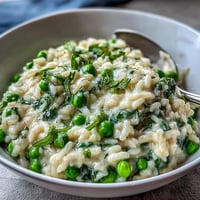
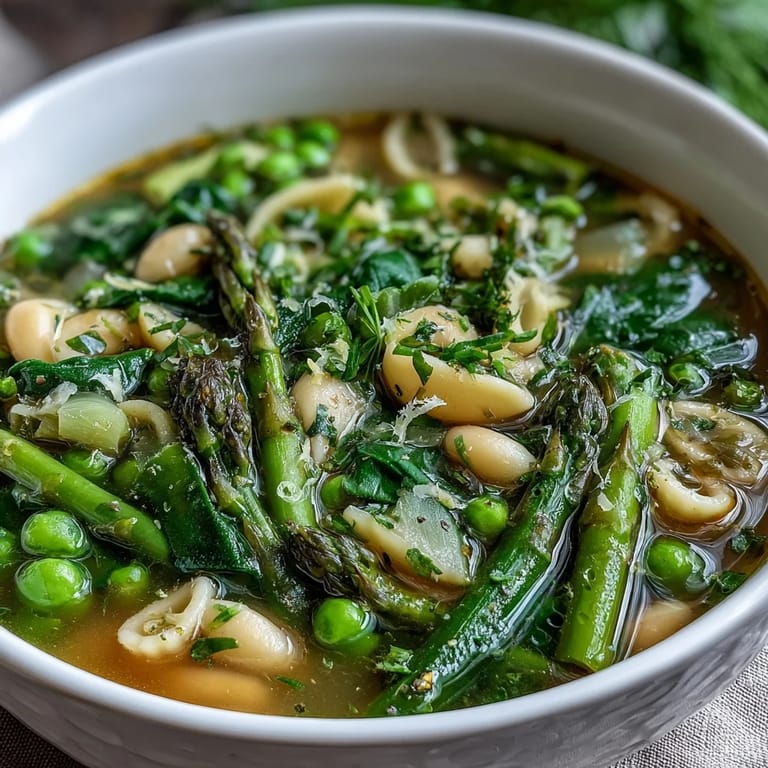
 Save
Save There's something about the first warm day of spring that makes me crave soup, which sounds backwards until you've had this one. I was standing in the farmers market, overwhelmed by how many green things suddenly existed again after months of root vegetables, when I noticed someone loading asparagus into their basket with the kind of excitement usually reserved for chocolate. That's when I realized I could make minestrone feel like spring itself—bright, hopeful, and somehow light despite being genuinely filling.
I made this for my neighbor one April evening when she was moving through that rough space between jobs, when everything feels uncertain. She came over skeptical about soup in spring, but halfway through her bowl she got quiet in that good way, the kind where you know the food is doing what food does best—giving your hands and mind a break from worry. She asked for the recipe before she even finished, and now she texts me photos of her versions with whatever vegetables she finds at the market.
Ingredients
- Olive oil: This is your starting point, the foundation that coaxes flavor from every vegetable that follows—don't skip it or rush past it.
- Onion, carrots, celery: The holy trinity of soup-making; together they create a savory base that tastes like home, whatever that means to you.
- Garlic: One minute of cooking time transforms it from sharp to mellow and sweet, which is why timing matters here.
- Zucchini: It disappears into the broth almost completely, adding body and subtle flavor without announcing itself.
- Asparagus: Added late so it stays bright green and slightly tender rather than turning to mush; this is where you taste spring.
- Peas: Frozen ones work beautifully and are honestly better than out-of-season fresh peas, which is a secret the grocery stores don't advertise.
- Baby spinach or Swiss chard: A final handful of green that wilts in seconds and adds iron and vibrancy at the last moment.
- White beans: They provide protein and a creamy texture without any cream at all, making this filling enough for a complete meal.
- Small pasta: Ditalini or shells catch broth in their curves and give you something substantial to chew; they also won't go mushy if you have leftovers.
- Vegetable broth: Use low-sodium so you control the salt level and can taste the vegetables instead of just salt.
- Thyme, oregano, bay leaf: Dried herbs work perfectly here and infuse the entire pot with Mediterranean warmth.
- Lemon zest and fresh parsley: These wake everything up at the end, cutting through the richness and making you feel like you're eating something alive and fresh.
Tired of Takeout? 🥡
Get 10 meals you can make faster than delivery arrives. Seriously.
One email. No spam. Unsubscribe anytime.
Instructions
- Build your flavor foundation:
- Heat the olive oil over medium heat and add your onion, carrots, and celery together. You'll know they're ready when the kitchen smells sweet and the vegetables have softened at their edges—this takes about five minutes, and it's worth not rushing.
- Wake up the garlic:
- Add your minced garlic and let it cook for just one minute until it becomes fragrant and golden; any longer and it turns bitter, which I learned the hard way in my early cooking days.
- Begin the spring transformation:
- Toss in the diced zucchini and cook for two more minutes, letting it soften slightly before you add the broth. This small step helps it integrate into the soup rather than stay watery.
- Create the soup base:
- Pour in your vegetable broth and add the thyme, oregano, and bay leaf. Bring everything to a gentle boil—you want movement but not aggressive bubbling, which helps vegetables cook evenly.
- Add substance and starch:
- Stir in the white beans and pasta, then reduce the heat to a simmer. Let this cook for about ten minutes, stirring occasionally so nothing sticks to the bottom.
- Introduce the green vegetables:
- Add the asparagus and peas, then cook for five to seven minutes until the pasta is tender and the asparagus still has a slight bite. Taste a piece of asparagus—it should bend easily but not fall apart.
- Finish with brightness:
- Stir in your spinach or Swiss chard along with the lemon zest and fresh parsley. Cook for just two more minutes until the greens have wilted into soft, dark ribbons. Taste and season generously with salt and pepper.
- The final touch:
- Remove the bay leaf before serving and ladle the soup into bowls. A sprinkle of Parmesan and a tiny drizzle of excellent olive oil on top transforms each bowl into something special.
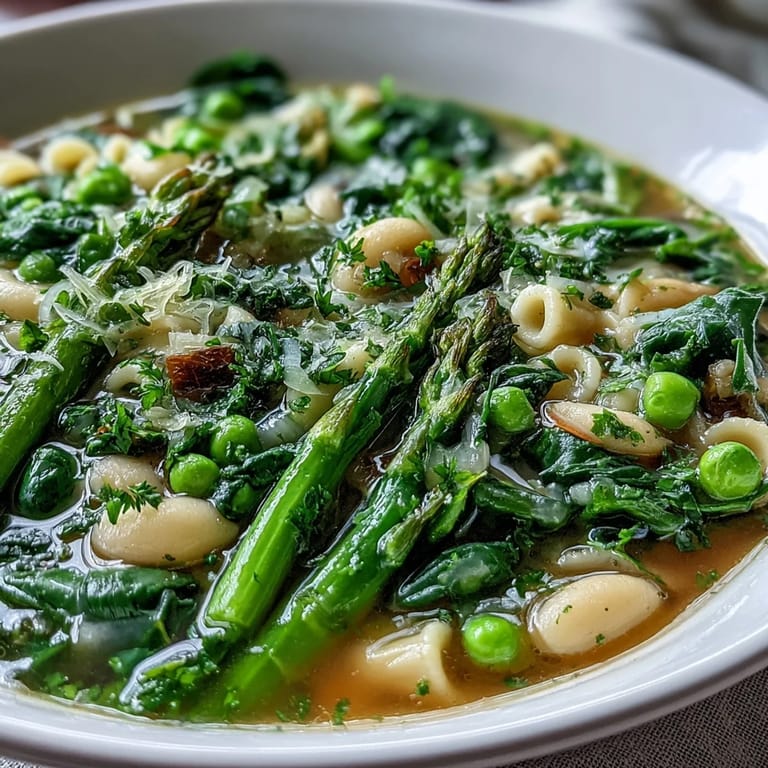 Save
Save My daughter brought home a friend from school who claimed to hate vegetables, and I served this soup almost as a quiet experiment. By the end she was asking what the green things were because she actually wanted seconds, and that moment of watching someone discover they like something they thought they didn't—that's why I keep making this soup year after year.
When to Make This
Spring is the obvious answer, but honestly this soup works whenever you need something comforting that doesn't make you feel heavy. I've made it in early summer when the season is turning, in fall when I'm craving something green before everything becomes root-based, and even in winter when I substitute heartier vegetables and pretend spring is coming soon. The beauty of minestrone is how it bends to whatever's available and whatever you're craving—it's forgiving that way.
How to Make It Your Own
This recipe is a starting point, not a rule book, and the best versions happen when you cook what your market has that day or what's taking up space in your vegetable drawer. I've made it with green beans instead of asparagus, with fava beans mixed in with the white beans, with torn kale replacing the spinach, and each version tastes different but equally right. The structure stays the same—vegetables first, broth and herbs next, tender vegetables and greens at the end—and everything else is negotiable.
Storing and Serving
This soup keeps beautifully in the refrigerator for up to four days, and the flavors actually deepen as it sits, which is one of the reasons I often make a double batch. Freezing works too if you leave out the pasta—add fresh pasta when you reheat so it doesn't get waterlogged. Serve it with crusty bread for soaking up broth, with a simple salad on the side, or honestly just on its own in a quiet moment when you need something warm and green and good.
- Add a squeeze of fresh lemon juice to your bowl right before eating for extra brightness that makes everything taste younger.
- A piece of good bread and this soup are all you need for lunch or a simple dinner, no second act required.
- Leftover soup makes the next day infinitely better, so make extra and thank yourself later.
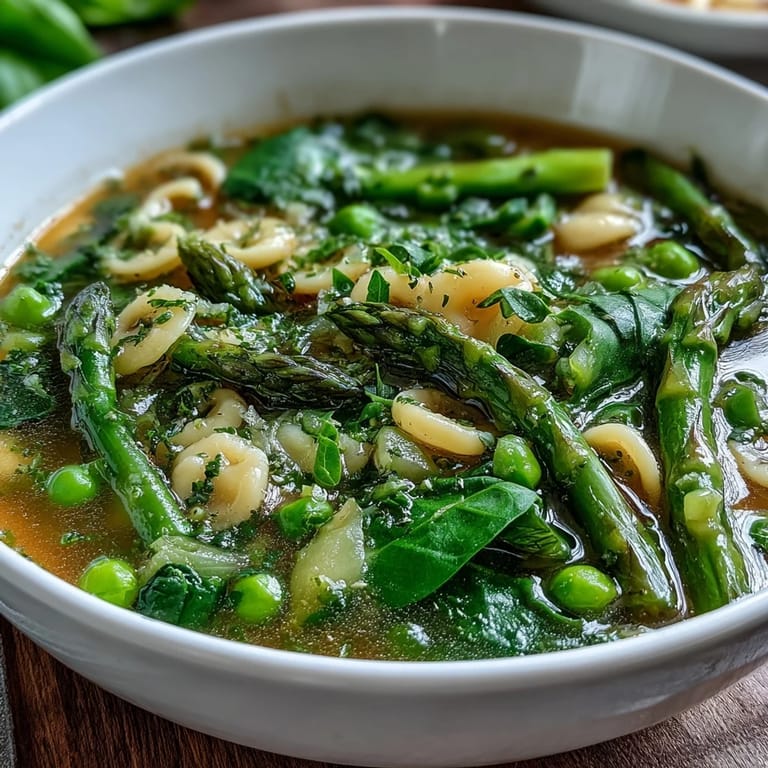 Save
Save This soup reminds me that sometimes the most nourishing meals are the simple ones, made with attention but without stress. It's the kind of recipe that brings people together around a warm bowl and somehow makes everything feel a little bit better.
Common Questions
- → Can I make this dish vegan?
Yes, simply omit the Parmesan cheese or substitute with a plant-based alternative for a fully vegan option.
- → What pasta types work best here?
Small pasta shapes like ditalini or small shells blend well, and gluten-free pasta can be used if needed.
- → How do I keep the asparagus crisp?
Add asparagus in the last 5-7 minutes of cooking to maintain a tender-crisp texture.
- → Can I substitute other vegetables?
Yes, spring vegetables like fava beans or green beans can replace or complement the asparagus and peas.
- → What herbs enhance the flavor best?
Dried thyme and oregano provide a classic aroma, while fresh parsley added at the end brightens the dish.
- → Is this suitable for gluten-free diets?
Use gluten-free pasta to adapt the dish for gluten-free dietary needs.