 Save
Save There's something about pulling a lemon cake out of the oven on the first truly warm day of spring that feels like the kitchen itself is celebrating. My sister called that morning asking what I was bringing to her birthday brunch, and I realized I had only a few hours to create something that tasted like sunshine and felt festive enough for a milestone. This sheet cake became my answer—tender, bright, and honestly, the kind of dessert that makes people pause mid-conversation to ask for the recipe.
I'll never forget watching my nephew dig his fork into that first slice at the garden table, the afternoon sun catching the berries on top. He closed his eyes and said it tasted like what springtime should taste like if springtime could be a dessert. That moment made the extra steps of making the curd from scratch feel entirely worthwhile.
Ingredients
- All-purpose flour (2 ½ cups): The foundation of everything—make sure it's not packed down when you measure, or your cake will be dense and tight.
- Baking powder and baking soda (2 ½ tsp and ½ tsp): This combination gives you a tender crumb with just enough lift; don't skip the baking soda as it reacts with the acidity in the lemon juice.
- Salt (½ tsp): A small amount that amplifies the vanilla and lemon without announcing itself.
- Unsalted butter (1 cup for cake, ¼ cup for curd): Room temperature butter creams to fluffy peaks; cold butter won't incorporate properly and you'll end up with a gritty texture.
- Granulated sugar (2 cups for cake, ½ cup for curd): Choose pure white sugar—brown sugar will shift the flavor profile and darken the crumb.
- Eggs (4 large for cake, 4 yolks for curd): Room temperature eggs emulsify better and create a silkier batter; set them out while you prep other ingredients.
- Vanilla extract (1 tbsp for cake, 1 tsp for frosting): Use real vanilla, not imitation—it's worth the cost when you're making something this delicate.
- Whole milk (1 cup): Room temperature milk blends seamlessly into the batter without shocking the butter and eggs.
- Lemon zest (1 for cake, 2 for curd): Zest before juicing so you can use the whole fruit; a microplane gets the finest, most flavorful shreds.
- Fresh lemon juice (⅓ cup): Fresh is non-negotiable for the curd—bottled juice will give you a sharper, one-note flavor.
- Heavy cream (2 cups, chilled): The colder it is when you start whipping, the faster you'll reach stiff peaks.
- Powdered sugar (½ cup): This dissolves instantly into whipped cream without grittiness.
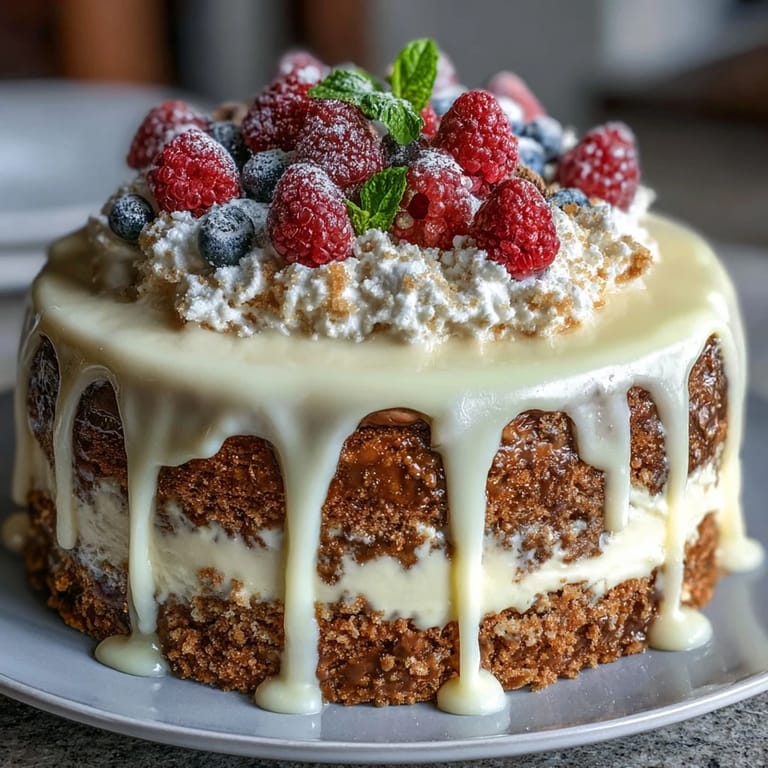
- Fresh berries and optional decorations: Choose whatever looks best at the market that day—strawberries, raspberries, and blueberries all work beautifully.
Tired of Takeout? 🥡
Get 10 meals you can make faster than delivery arrives. Seriously.
One email. No spam. Unsubscribe anytime.
Instructions
- Prepare and preheat:
- Get your oven to 350°F and line a 9x13-inch pan with parchment paper, letting it overhang the edges slightly so you can lift the finished cake out cleanly. A quick spray of nonstick cooking spray keeps the parchment from shifting around.
- Mix the dry ingredients:
- Whisk flour, baking powder, baking soda, and salt together in a medium bowl—this distributes the leavening evenly and prevents lumps from hiding in the final batter. Set it aside and don't overthink this step.
- Cream butter and sugar:
- Beat softened butter with sugar for 3 to 4 minutes until the mixture looks pale, fluffy, and creamy. This is where air gets incorporated into the cake, so take your time and don't rush it.
- Add eggs one by one:
- Drop each egg in individually, beating well after each addition so it fully combines before the next one goes in. If you add them all at once, you'll end up with a broken, separated batter.
- Mix in vanilla and lemon zest:
- Stir in vanilla and the zest from one lemon, making sure the bright speckles are distributed throughout. You'll see the batter lighten slightly and smell that citrus edge.
- Alternate wet and dry:
- Add about a third of the dry mixture, mix gently, then add some milk, then more dry, then more milk, ending with dry ingredients. Start and end with flour so the batter emulsifies properly and doesn't get tough from overmixing.
- Pour and bake:
- Spread the batter evenly into your prepared pan and bake for 28 to 32 minutes until a toothpick inserted in the center comes out clean with maybe a crumb or two clinging to it. Let it cool completely in the pan on a rack before you touch it.
- Make the lemon curd:
- Whisk egg yolks, sugar, lemon juice, and zest in a small saucepan and cook over medium-low heat, stirring constantly, for 5 to 7 minutes until it thickens enough to coat the back of a spoon. Remove from heat, whisk in cubed butter until smooth, then transfer to a bowl and press plastic wrap directly onto the surface so a skin doesn't form.
- Whip the cream:
- Pour cold heavy cream into a chilled bowl, add powdered sugar and vanilla, and whip until stiff peaks form—when you lift the beater, the peaks should stand straight up without drooping. Don't overwhip or you'll end up with butter, which honestly isn't the worst problem but isn't what you want here.
- Slice and layer:
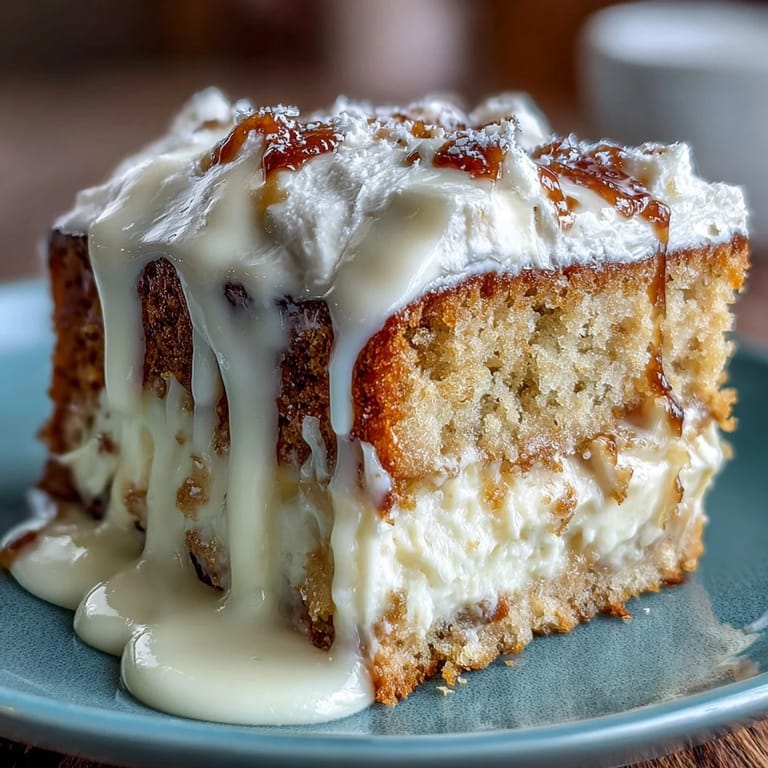
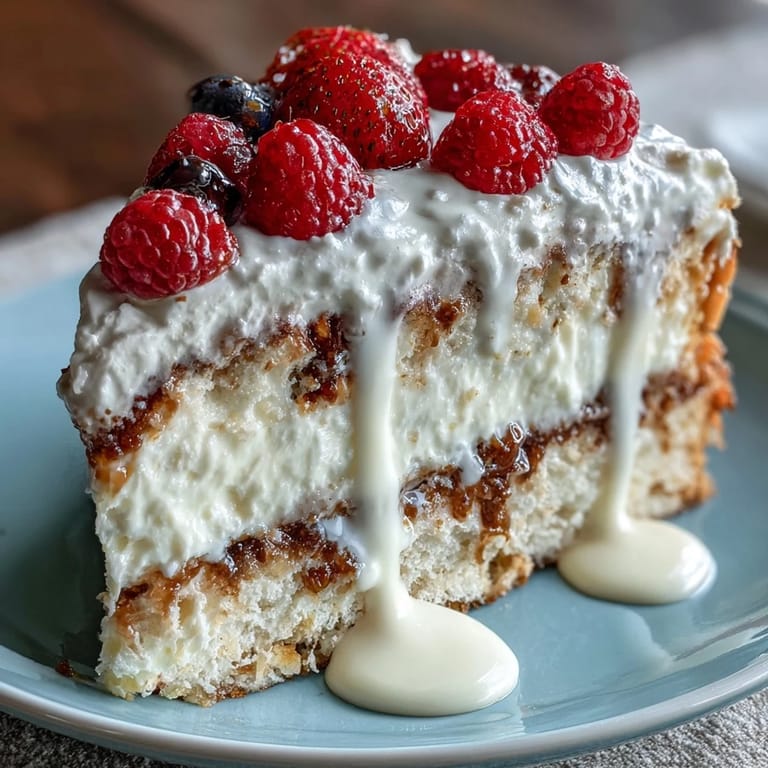
- Once everything is completely cool, use a serrated knife to carefully slice the cake horizontally into two even layers. Lift off the top layer and spread chilled lemon curd over the bottom layer in an even coat.
- Assemble and frost:
- Replace the top layer and spread whipped cream frosting over the entire cake, creating gentle swirls if you're feeling decorative. Scatter fresh berries, edible flowers, or lemon zest curls across the top.
- Chill before serving:
- Refrigerate the assembled cake for at least an hour so the frosting sets and the layers stay intact when you cut. Your knife will glide through cleanly and each slice will look as good as it tastes.
 Save
Save My neighbor knocked on the kitchen door while I was decorating, drawn by the smell of lemon and butter wafting through the open window. She stayed for twenty minutes asking questions, and I realized that the best part of making a cake like this is how it draws people in—it's generous, it smells incredible, and it tastes like someone cared enough to make something from scratch.
Why This Cake Works for Spring Celebrations
Spring birthdays and garden parties call for something bright and not too heavy, and this cake hits that sweet spot perfectly. The vanilla crumb is delicate enough that you won't feel weighed down after dessert, but substantial enough that the cake holds together beautifully when you slice it. The lemon curd adds complexity and that tart-sweet balance that tastes entirely different from a cake with just lemon zest stirred into the batter.
Making the Lemon Curd Like a Pro
The curd is where this cake gets its personality, so it's worth understanding what's happening in the pan. As the mixture heats, the egg yolks emulsify with the butter and lemon juice, trapping air and creating that silky, glossy texture that tastes far richer than the ingredients suggest. If you've never made curd before, it's worth practicing once to understand how it should look and feel—that moment when you run a spatula across the back of a wooden spoon and it leaves a clear trail is the moment you know you're done.
Troubleshooting and Small Adjustments
If your cake sinks in the middle, your oven might be running hot or you might have opened the door too early—resist the urge to peek until the last few minutes. If your whipped cream deflates or splits, you've either overwhipped it or it wasn't cold enough to start; this is why chilling the bowl and beaters for ten minutes before you begin makes such a difference. If your cake layers split unevenly, use a long serrated knife and mark a line with a toothpick before you cut, then saw gently with a sawing motion rather than pressing down.
- Store leftover cake covered in the refrigerator for up to three days—the cream frosting keeps it fresh and prevents the cake from drying out.
- You can make the lemon curd a day ahead and keep it chilled, which actually gives the flavors time to deepen and meld together.
- If you're short on time, absolutely use store-bought lemon curd and spend your energy on making the cake and frosting from scratch.
 Save
Save This cake has a way of making ordinary afternoons feel celebratory, which might be the truest measure of whether a recipe is worth keeping. Make it for someone's birthday, or make it just because the lemons looked too beautiful to pass by at the market.
Common Questions
- → How do I achieve a tender vanilla crumb?
Use softened butter and room temperature eggs, beating the butter and sugar until pale and fluffy. Alternating addition of dry ingredients with milk helps maintain moisture and tenderness.
- → What is the best way to prepare the lemon curd filling?
Whisk egg yolks, sugar, lemon juice, and zest over medium-low heat until thickened. Remove from heat and stir in butter until smooth. Chill well before layering.
- → How can I ensure clean cake slices after assembly?
Chill the assembled cake for at least an hour and use a serrated knife to slice carefully for neat, clean cuts.
- → Can I substitute the whipped cream frosting?
Yes, but a whipped cream frosting provides lightness and balances the tangy lemon curd best. Powdered sugar and vanilla enhance sweetness and flavor.
- → What decorations complement the flavors best?
Fresh berries and edible flowers add natural sweetness and a festive appearance, while lemon zest curls enhance citrus aroma.