 Save
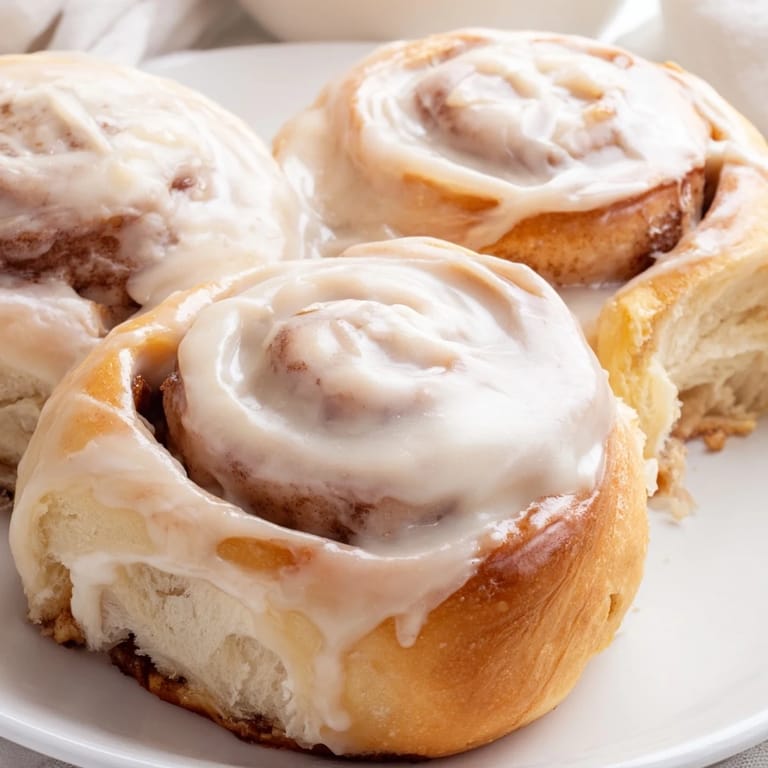
Save There's something about the smell of cinnamon rolls baking that makes a kitchen feel like home, even if you've only just moved in. I discovered this recipe on a grey Saturday morning when I was determined to prove to myself that I could actually make something from scratch, not just buy them from the bakery down the street. The dough came together easier than I expected, and watching it rise in the bowl felt like a small magic trick that actually worked.
I'll never forget bringing these to my roommate's birthday brunch, still warm from the oven and packed in a cake box. Everyone went quiet for a moment after the first bite, and then someone asked if I'd buy them every week. That's when I realized the recipe had passed the most important test: it made people genuinely happy, not just full.
Ingredients
- All-purpose flour (4 cups): The base that holds everything together; measure by spooning into your cup rather than scooping directly from the bag, or you'll end up with a dense dough that fights back.
- Active dry yeast (2 1/4 tsp): This is non-negotiable for that perfect rise; make sure it's not expired or you'll be watching the dough sit there like a brick.
- Warm milk (1 cup): The temperature matters more than you'd think; too hot kills the yeast, too cold and it'll sulk and refuse to do its job.
- Granulated sugar (1/3 cup): Part goes in the dough for flavor and feeding the yeast, part goes in the filling for that essential cinnamon-sugar balance.
- Unsalted butter, melted (1/3 cup for dough): Use actual melted butter, not softened; it distributes through the dough more evenly and makes everything tender.
- Eggs (2 large, room temperature): Cold eggs won't incorporate properly, so pull them out about 20 minutes before you start mixing.
- Salt (1 tsp): This tiny amount keeps the yeast from going wild and prevents the rolls from tasting flat.
- Packed light brown sugar (2/3 cup for filling): The molasses gives depth; don't use dark brown unless you want an almost coffee-like intensity.
- Ground cinnamon (2 1/2 tbsp): This is a generous amount, but it's what makes them taste like those rolls you've been craving.
- Unsalted butter, very soft (1/4 cup for filling): This needs to be soft enough to spread without tearing the dough; sit it on the counter for 10 minutes if it's straight from the fridge.
- Cream cheese (4 oz, softened): This is the secret to a glaze that tastes like actual indulgence rather than just sweet milk.
- Unsalted butter, softened (1/4 cup for glaze): Same deal as the filling butter; soft matters.
- Powdered sugar, sifted (1 cup): Sifting prevents lumps that announce themselves when you bite into the glaze.
- Vanilla extract (1/2 tsp): A tiny bit that makes the glaze taste more like itself.
- Milk (2-3 tbsp): This gets you the right consistency for the glaze; start with 2 and add more if needed.
Tired of Takeout? 🥡
Get 10 meals you can make faster than delivery arrives. Seriously.
One email. No spam. Unsubscribe anytime.
Instructions
- Wake up the yeast:
- Pour warm milk into a large bowl and sprinkle the yeast over it with a tablespoon of sugar. It'll look quiet at first, then suddenly small bubbles will appear across the top like a science experiment coming to life. Wait 5 to 7 minutes for that frothy crown.
- Build the dough:
- Once the yeast is ready, stir in the remaining sugar, melted butter, eggs, and salt. Add the flour gradually, stirring until you have a shaggy mess that's ready to be worked. This part goes faster if you use a stand mixer with a dough hook, but your arm gets a decent workout if you go by hand.
- Knead until smooth:
- Turn the dough onto a floured surface and knead for 6 to 8 minutes. You'll feel it transform under your hands from rough and sticky to smooth and bouncy. It should spring back slightly when you poke it.
- Let it rise:
- Grease a bowl, plop the dough in, cover it with a tea towel, and find a warm spot. A sunny windowsill works, or inside a slightly warm oven with the light on. After about an hour, it should have doubled in size and feel airy when you gently poke it.
- Roll it out:
- Punch down the dough with a satisfying fist, then turn it onto a lightly floured surface. Roll it into a 16x12-inch rectangle, using a ruler if you're the precise type or just eyeballing it if you're not.
- Spread and fill:
- Spread the very soft butter evenly over the dough, then sprinkle the brown sugar and cinnamon mixture across the whole thing. Make sure you get into the corners so every roll has that cinnamon goodness.
- Roll and slice:
- Starting from one long edge, roll the dough tightly into a log and pinch the seam shut. Using a sharp knife or even dental floss, slice it into 12 equal pieces. Dental floss works because it cuts through the dough without compressing the layers like a knife sometimes does.
- Second rise:
- Arrange the rolls cut side up in a greased 9x13-inch baking dish. Cover and let them rise again for 35 to 45 minutes until they're nearly doubled and touching each other. They should look puffy and ready.
- Bake:
- Preheat your oven to 350°F. Slide the pan in and bake for 22 to 25 minutes until the tops are golden brown. The kitchen will smell incredible long before they're done.
- Make the glaze:
- While the rolls bake, beat together the softened cream cheese and butter until fluffy, then add the sifted powdered sugar, vanilla, and milk until you have a consistency that spreads easily. Taste it if you need to; it should make you happy.
- Finish:
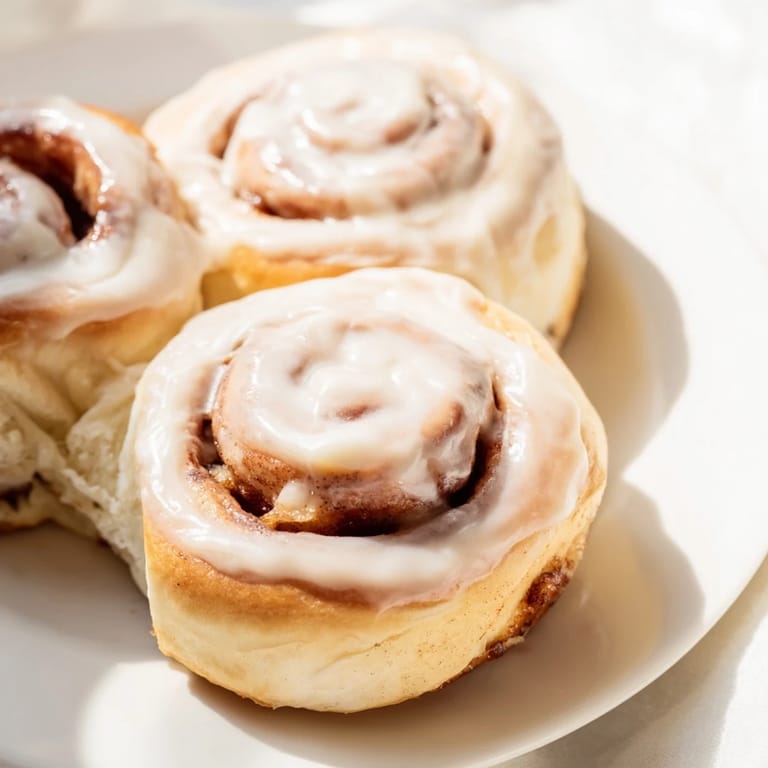
- Let the rolls cool for about 10 minutes, then spread the glaze generously over the warm rolls. Serve them warm, ideally with coffee nearby.
 Save
Save There was this one time I made these for a friend who was going through a rough patch, and when they took a bite, they just sat there in my kitchen eating two more before saying anything. Food doesn't always fix things, but sometimes it reminds you that someone cares enough to spend two and a half hours making sure you have something good to eat.
Making Them Ahead
The beauty of these rolls is that they actually improve with planning. Shape them the night before, cover the pan with plastic wrap, and slide it into the fridge. In the morning, pull them out, let them come to room temperature for about an hour, and bake as usual. The cold fermentation gives the dough more flavor, and you get the fresh-baked magic without the early morning rush.
Customizing the Filling
The basic cinnamon and brown sugar is perfect on its own, but I've learned that the filling is where you can have fun without ruining anything. Chopped pecans or walnuts add texture, raisins bring a chewy sweetness, and I once tried a tiny pinch of cardamom that nobody expected but everyone loved. Just remember that the total amount of filling ingredients should stay roughly the same so the rolls bake evenly.
Serving and Storage
These rolls are at their absolute best served warm with the glaze still slightly soft. They're also unexpectedly good cold straight from the fridge the next day, though reheating them gently for a minute or two brings back that fresh-baked feel. Store them covered on the counter for a day or two, or wrap and freeze them for up to a month.
- If you're reheating, wrap them loosely in foil and warm at 300°F for about 5 minutes so they don't dry out.
- The glaze can be made ahead and stored in the fridge; just let it come to room temperature before spreading so it's easy to work with.
- A cup of good coffee or chai is the only acceptable pairing for these rolls.
 Save
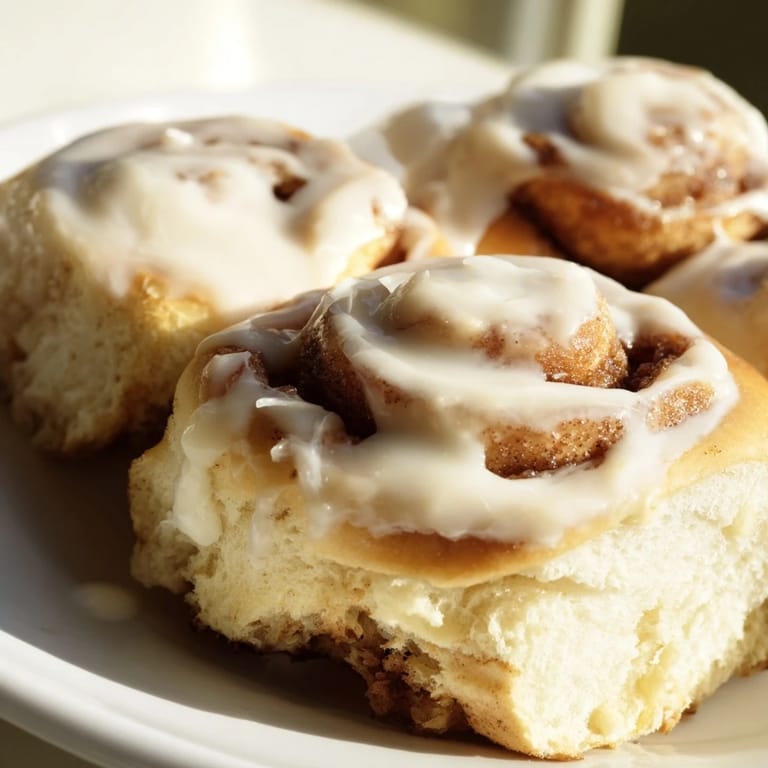
Save There's something deeply satisfying about pulling a pan of these rolls from the oven knowing you made them from flour and patience. They're the kind of recipe that becomes part of your regular rotation once you realize how much joy they bring to people.
Common Questions
- → What makes these cinnamon rolls soft and fluffy?
The dough is kneaded until smooth and elastic, then allowed to rise twice, which creates a light and airy texture.
- → Can I prepare the rolls ahead of time?
Yes, after shaping, cover and refrigerate overnight. Let them rise at room temperature for an hour before baking.
- → What is the role of the cream cheese glaze?
The glaze adds a creamy, tangy sweetness that complements the cinnamon filling and enhances the overall flavor.
- → Are there any ingredient substitutions for extra softness?
Using bread flour instead of all-purpose flour can improve the softness and chewiness of the rolls.
- → Can additional fillings be added to these rolls?
Yes, chopped pecans or raisins can be mixed into the cinnamon sugar filling for extra texture and flavor.