 Save
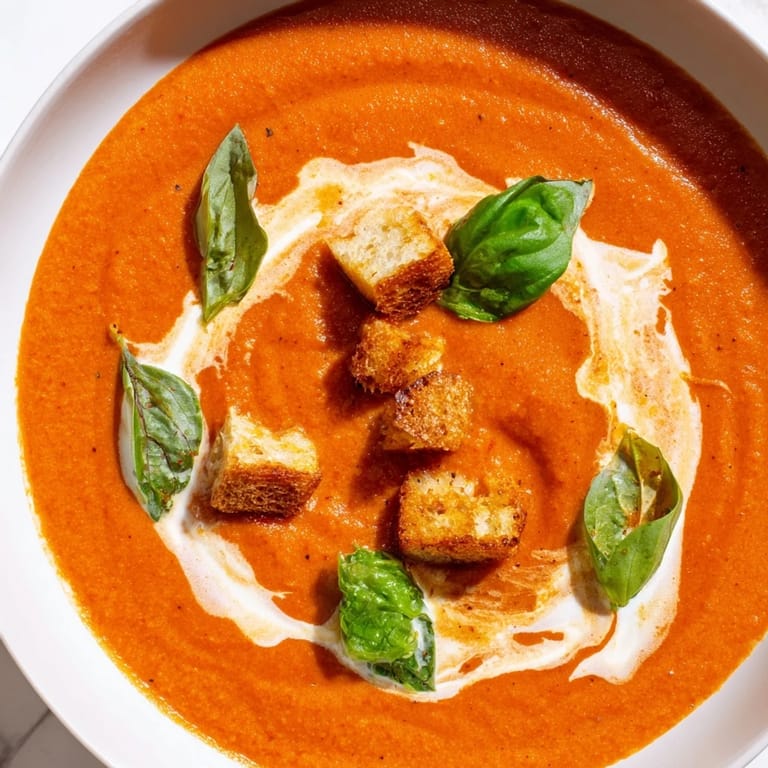
Save One October afternoon, I was wandering through a farmer's market when a vendor handed me a perfectly ripe tomato still warm from the sun. That small moment sparked an idea: what if I roasted tomatoes instead of simmering them? What if I let them caramelize until they turned almost jammy? That experiment led to this soup, and now whenever the weather turns cool, this is what I reach for.
I made this for my neighbor on a gray November evening when she'd mentioned feeling under the weather. The steam rising from the pot seemed to fill her whole kitchen with warmth, and she practically glowed as she took that first spoonful. That's when I knew this recipe was something special—it had moved beyond just being delicious to being genuinely comforting.
Ingredients
- Ripe tomatoes (1.5 lbs): Look for tomatoes that yield slightly to pressure; roasting concentrates their sweetness and creates a caramel depth that canned tomatoes can't match.
- Whole garlic bulb: Roasting transforms garlic from sharp and aggressive into something creamy and sweet; don't skip this step or use pre-minced.
- Yellow onion: The wedges caramelize alongside the tomatoes, adding natural sweetness that balances the acidity beautifully.
- Olive oil (2 tbsp): Use a good quality oil; it's one of the few ingredients you truly taste here.
- Heavy cream (1/2 cup): This is where the magic happens—swirl it in just before serving for that irresistible richness.
- Vegetable broth (2 cups): The liquid backbone; homemade broth will make this soup taste even more soulful, but quality store-bought works perfectly.
- Salt, pepper, and optional seasonings: The sugar balances acidity if your tomatoes lean tart, while smoked paprika adds a subtle depth if you want to experiment.
Tired of Takeout? 🥡
Get 10 meals you can make faster than delivery arrives. Seriously.
One email. No spam. Unsubscribe anytime.
Instructions
- Set your oven and prep the vegetables:
- Preheat to 400°F. Halve your tomatoes and cut the onion into chunky wedges—these will shrink as they roast, so don't worry about size. Slice the very top off the garlic bulb to expose the cloves, drizzle it generously with olive oil, and wrap it tightly in foil so it steams gently while roasting.
- Season and roast:
- Toss the tomato halves and onion wedges with olive oil, salt, and pepper on a baking sheet. Arrange them cut-side up so they caramelize. Place your foil-wrapped garlic on the sheet too. Roast for 35 to 40 minutes until the tomatoes are deeply browned at the edges and the garlic smells absolutely irresistible.
- Release the roasted garlic:
- Once everything cools slightly, squeeze each garlic clove out of its papery skin—they should slip out easily. This is oddly satisfying and marks the turning point where raw ingredients become soup.
- Blend until silky:
- Transfer the roasted tomatoes, onions, and garlic to a blender, add your vegetable broth, and blend until completely smooth. Work in batches if your blender is small so nothing spills. The mixture should look like liquid velvet.
- Finish and taste:
- Pour everything into a large pot over medium-low heat, stir in the cream and any smoked paprika you're using, and let it simmer gently for 10 minutes while you taste and adjust. Add a pinch of sugar if acidity is too bright, more salt if it needs it.
- Serve warm:
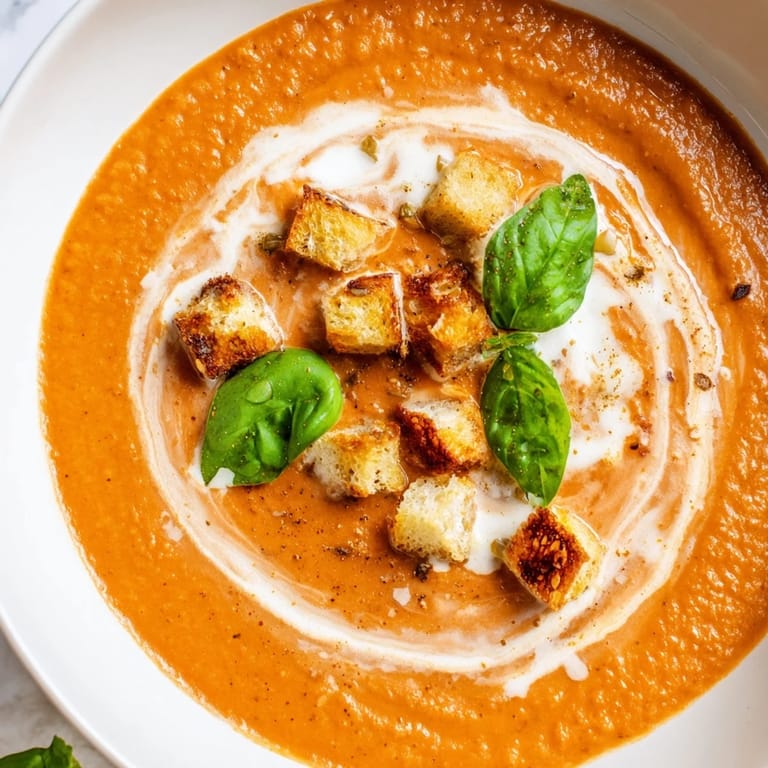
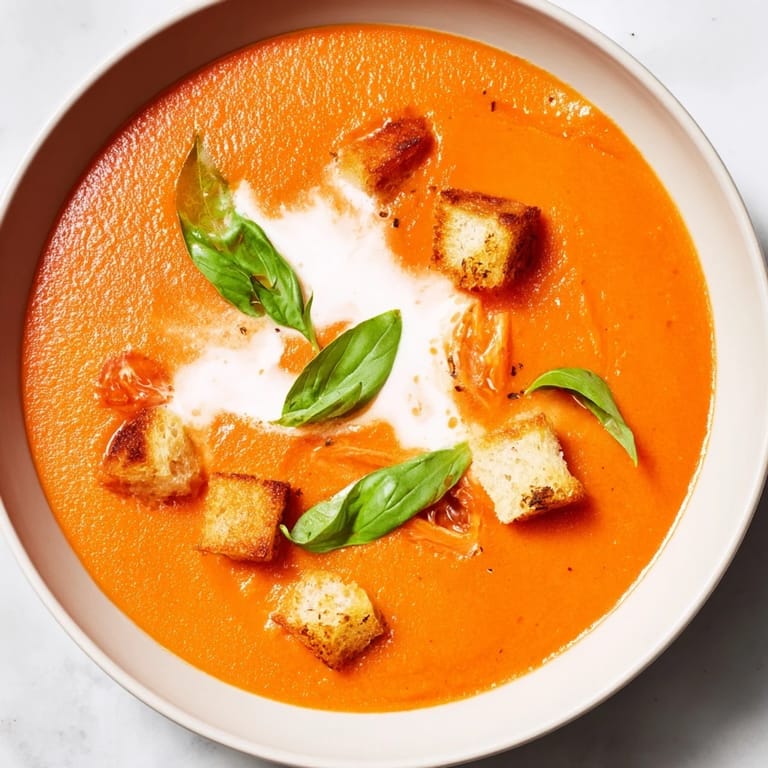
- Ladle into bowls and crown each one with fresh basil, crispy croutons, or toasted bread if you like texture against the silkiness.
 Save
Save I've learned that soup has a special power in a kitchen. It softens the edges of difficult days and brings people together without fuss. This creamy roasted garlic tomato soup became that for me—the dish I make when I want to give someone comfort without ceremony.
Why Roasting Makes All the Difference
The difference between simmering tomatoes and roasting them is the difference between boiling and building. When you roast, the natural sugars concentrate and caramelize, the water evaporates, and you're left with a depth of flavor that no amount of cream can manufacture. The garlic, sitting alongside everything, becomes almost butter-like—sweet and mellow instead of sharp. This method takes longer than blending raw tomatoes, but it rewards you with something genuinely special.
The Cream Moment
There's a small ritual I've developed with this soup: I make it almost entirely without cream, taste it, balance it perfectly, and then—just before serving—I swirl in that half cup of heavy cream like I'm finishing a painting. It transforms something already good into something luxurious. The cream doesn't overpower the roasted tomato flavor; it softens it, rounds it out, and makes each spoonful feel like a small celebration.
Variations That Keep It Fresh
Once you understand the bones of this recipe, you can play with it endlessly. Some days I add a splash of balsamic vinegar for depth, other times a pinch of red pepper flakes if I'm in a more assertive mood. In autumn, I sometimes roast a few fresh sage leaves alongside the garlic and let them float on top. The recipe is forgiving enough to bend without breaking.
- Swap the heavy cream for coconut cream or cashew cream if you're cooking for vegan friends—it's equally delicious, just different.
- Toast your bread for garnish in a skillet with a little garlic butter so it becomes an actual component, not just an afterthought.
- Serve alongside a grilled cheese sandwich and you've created the kind of meal people remember.
 Save
Save This soup has become my answer to the question, What's for dinner on a chilly evening? It's simple enough for a weeknight and elegant enough to serve when company arrives. Make it once and you'll understand why it earned a permanent spot in my kitchen rotation.
Common Questions
- → How does roasting affect the ingredients?
Roasting caramelizes the natural sugars in tomatoes and garlic, intensifying their sweetness and adding depth to the flavor profile.
- → Can I use a blender or immersion blender?
Both work well; a blender ensures a silky texture, while an immersion blender offers easy blending directly in the pot.
- → What substitutes work for heavy cream?
Plant-based creams like coconut or cashew cream can create a creamy texture suitable for dairy-free preferences.
- → How to balance acidity in the soup?
A small amount of sugar or smoked paprika helps round out acidity, creating a smoother, well-balanced taste.
- → Can I add spice to this dish?
Yes, a pinch of chili flakes adds a gentle heat that complements the roasted garlic and tomato flavors.