 Save
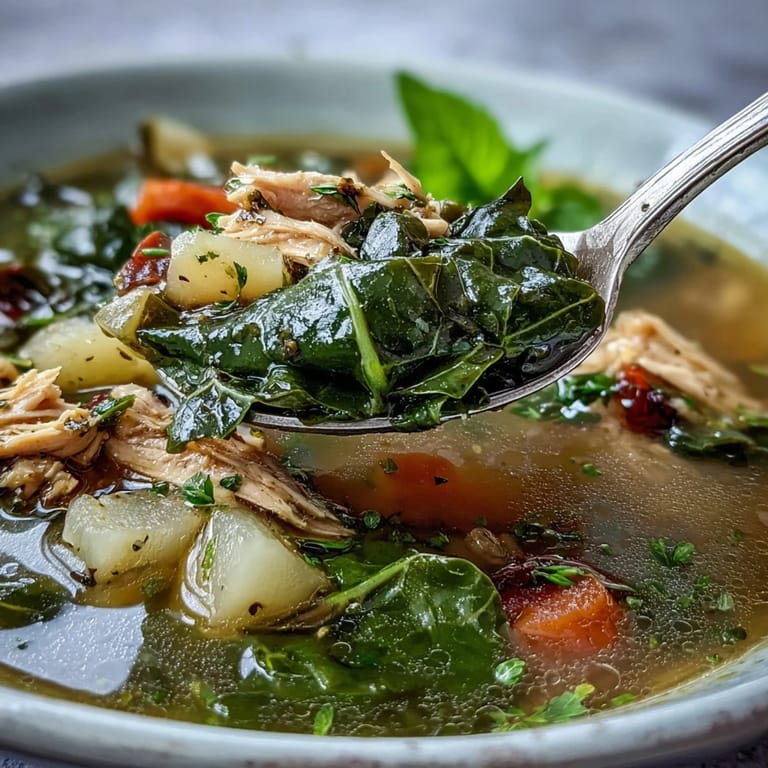
Save There's something about a bowl of collard greens and chicken soup that stops you mid-afternoon and makes you pause. My neighbor brought this over during a particularly gray November, and I watched the steam rise from the pot while she ladled it into bowls, telling me how her grandmother made it with whatever was in the garden. The broth caught the light, golden and honest, filled with tender shreds of chicken and those deep green leaves that somehow taste better when simmered low and slow. I've made it countless times since, and it never fails to feel like coming home.
I made this for my sister after her surgery, when she was tired of takeout containers and wanted something that tasted like it came from someone who cared. Watching her eat slowly, deliberately, asking for seconds—that's when I understood why soup matters. It wasn't fancy or complicated, just attentive and warm, and somehow that meant everything in that moment.
Ingredients
- Boneless, skinless chicken breasts (2) or thighs (3): Thighs stay juicier if you have the time, but breasts work beautifully and shred into perfect tender pieces once cooked through.
- Yellow onion (1 large), diced: This is your flavor foundation—don't rush the sautéing, as those softened layers build the entire character of the broth.
- Carrots (2) and celery stalks (2), sliced: These create the classic aromatic base and add natural sweetness that balances the earthiness of the greens.
- Medium potatoes (2), peeled and diced: They thicken the soup naturally while adding substance without heaviness, and they soften into tender bites.
- Collard greens (4 cups), stems removed and chopped: The real star—their robust, slightly mineral flavor deepens as they simmer and becomes almost buttery.
- Garlic cloves (3), minced: Add this after the softer vegetables so it doesn't burn and turn bitter, releasing its gentle warmth into the broth.
- Low-sodium chicken broth (8 cups): The liquid gold that holds everything together; taste your broth beforehand because some are saltier than others.
- Bay leaf, dried thyme, and dried oregano: These three herbs work quietly together, creating depth without announcing themselves.
- Olive oil (2 tablespoons) and salt and pepper: The oil should shimmer before the onions hit the pot, and seasoning should be adjusted at the very end when you can actually taste everything together.
Tired of Takeout? 🥡
Get 10 meals you can make faster than delivery arrives. Seriously.
One email. No spam. Unsubscribe anytime.
Instructions
- Build Your Aromatic Base:
- Heat the olive oil until it shimmers and smells warm, then add the diced onion, carrots, and celery all together. You'll hear them sizzle gently as they hit the hot oil—that sound means everything is starting right. Let them soften for five to six minutes, stirring occasionally, until the onions turn translucent and the whole pot smells like the beginning of something good.
- Wake Up the Garlic:
- Stir in the minced garlic and let it cook for just one minute, long enough to become fragrant but not long enough to brown. This brief moment is crucial—burnt garlic tastes acrid and will haunt the entire pot.
- Bring in the Chicken and Broth:
- Add the raw chicken breasts or thighs directly to the pot, then pour in all the broth, potatoes, bay leaf, thyme, and oregano. Season gently with salt and pepper—remember your broth already carries saltiness, so go easy. Bring everything to a rolling boil, then lower the heat and let it simmer uncovered for twenty minutes, until the chicken is cooked through and no longer pink inside.
- Shred and Return:
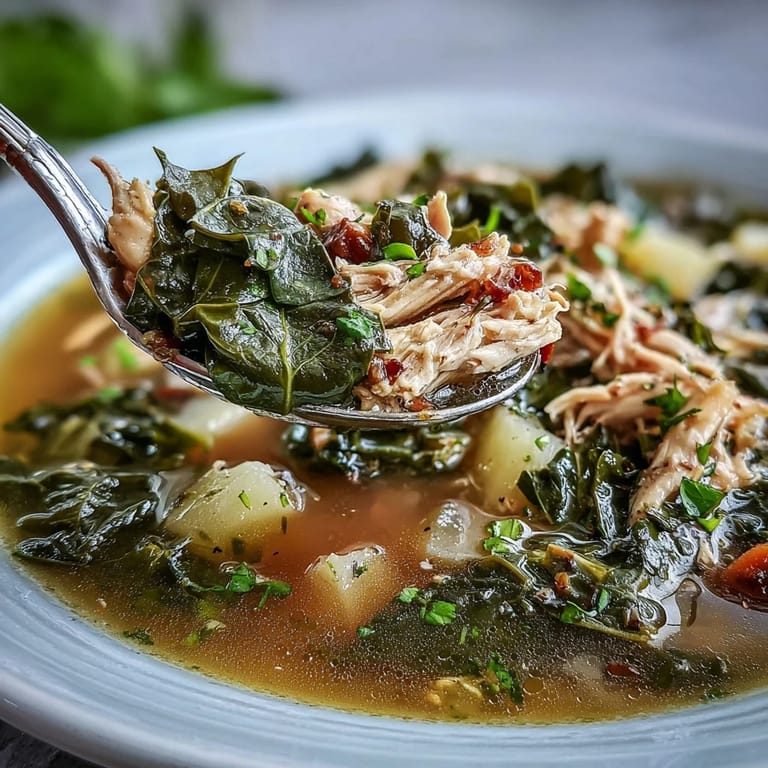
- Carefully remove the chicken using tongs or a slotted spoon and place it on a cutting board to cool slightly. Using two forks, pull and shred it into bite-sized pieces, then return it to the simmering pot.
- Finish with the Greens:
- Add all those chopped collard greens to the pot—they'll look like you've added way too much, but trust the process as they wilt and shrink into tender ribbons. Simmer for another ten to fifteen minutes until the greens taste silky and have surrendered completely to the broth.
- Taste and Adjust:
- Fish out the bay leaf, then taste a spoonful of broth alone. This is your moment to decide if you need more salt, a crack of black pepper, or perhaps a whisper of something else. Some people finish with a squeeze of lemon juice or a pinch of red pepper flakes—that's entirely up to you.
 Save
Save My daughter once asked why I made soup instead of something faster, and I realized I couldn't explain it in words she'd understand then. Years later, when she came home from college exhausted and I made this, she sat at the kitchen counter and ate it slowly, and I saw it click for her—some foods are about time and presence, not speed. That's what this soup is.
The Magic of Collard Greens
Collard greens have a reputation for being heavy or old-fashioned, but in this soup they're anything but. Their slightly earthy, almost sweet flavor becomes gentle when they're simmered in broth, losing any hint of bitterness and instead offering a silky texture that coats your mouth. I've watched people who claim they don't like greens ask for another bowl, which tells you everything about how transformation works in a pot.
Make It Your Own
This soup is deeply forgiving and actually improves when you personalize it. Some mornings I finish with a splash of apple cider vinegar for brightness, other times I add a handful of white beans or corn kernels for extra heartiness. One winter I stirred in a tablespoon of hot sauce at the end, and it completely changed the mood without overwhelming anything else.
Storage and Second Servings
This soup actually tastes better the next day once all the flavors have mingled overnight in the refrigerator. It keeps beautifully for four or five days in a covered container, and freezes well for up to three months—though the potatoes can become slightly softer on thaw, which honestly doesn't bother most people. Reheat gently on the stove rather than microwaving if you want to restore some life to it.
- Freeze it in individual portions so you can thaw exactly what you need on a particular tired evening.
- If you're freezing ahead, slightly undercook the collard greens since they'll soften more during reheating.
- Add fresh herbs like parsley or dill right before serving if you want to brighten everything up after it's been frozen.
 Save
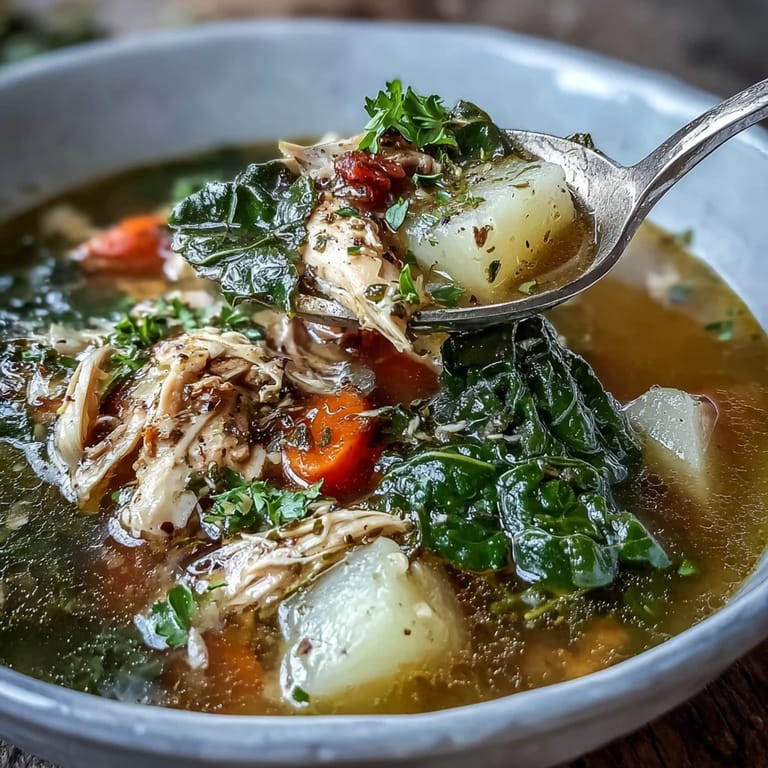
Save This soup has become my answer to almost everything—a long day, a sick friend, a moment when you need to slow down. Make it, eat it slowly, and notice how the world shifts just slightly when you're holding something warm in your hands.
Common Questions
- → Can I use different greens instead of collard greens?
Yes, kale or Swiss chard make excellent substitutions. Add them during the last 10-15 minutes of cooking as they cook similarly to collard greens.
- → How do I store leftovers?
Store in an airtight container in the refrigerator for up to 4 days. The flavors often improve the next day as the ingredients continue to meld together.
- → Can I make this soup in a slow cooker?
Absolutely. Sauté the vegetables first, then add everything to your slow cooker. Cook on low for 4-6 hours or high for 2-3 hours, shredding the chicken before serving.
- → Is this soup freezer-friendly?
Yes, it freezes beautifully. Cool completely before transferring to freezer-safe containers. Thaw overnight in the refrigerator and reheat gently on the stove.
- → What can I serve with this soup?
Crusty bread, cornbread, or oyster crackers pair wonderfully. A simple side salad also complements the heartiness of the soup for a complete meal.