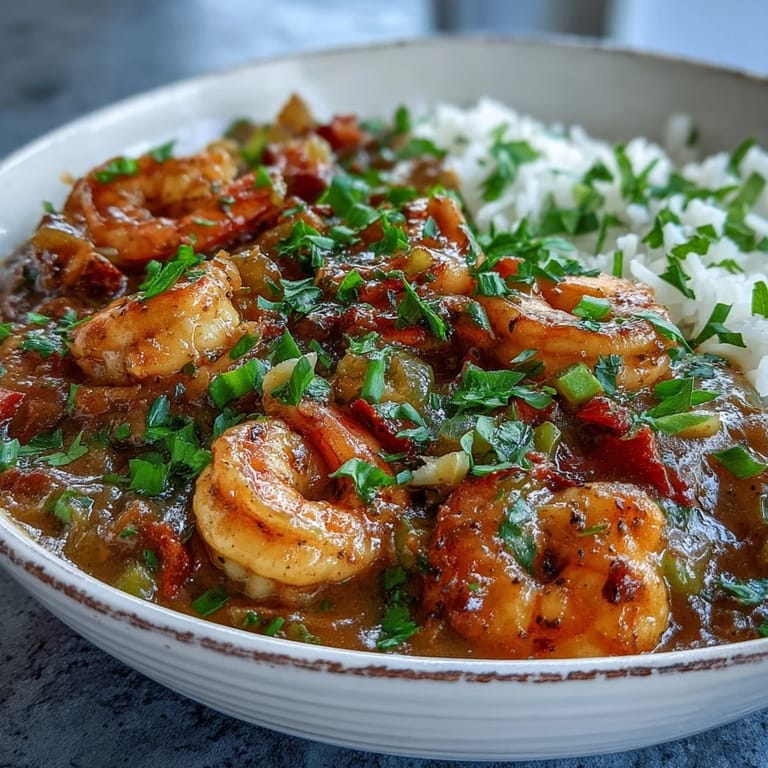
 Save
Save My first attempt at étouffée ended with a phone call to my grandmother at midnight, panicking because my roux had turned into an angry blackened mess. She laughed and told me that's how every Louisiana cook learns patience. Now I can tell exactly when that flour hits copper, the moment the kitchen fills with that nutty, toasty perfume that means you're about to make something special.
I made this for a dinner party last fall when my friend Sarah mentioned she'd never had proper Cajun food. She took one bite and actually went quiet, which never happens. Now she requests it every time she visits, and I've learned to double the recipe because people always want seconds.
Ingredients
- Vegetable oil: Neutral oils work best here since youre cooking it so long
- All-purpose flour: The foundation of your roux, dont be tempted to skip or reduce this
- Onion, green bell pepper, celery: This holy trinity forms the aromatic backbone of the dish
- Garlic: Add it after the roux colors so it doesnt turn bitter
- Shrimp or crawfish: Fresh is ideal but frozen thawed works perfectly fine
- Seafood stock: Makes a huge difference, but chicken stock is an acceptable backup
- Worcestershire sauce: Adds that subtle umami depth people cant quite identify
- Cajun seasoning: Adjust this to your heat tolerance, remember you can always add more
- Cayenne pepper: The background heat that builds slowly
- Bay leaf: Dont forget to fish it out before serving
- Salt and black pepper: Season at the end since the roux cooking time concentrates flavors
- Cooked white rice: The canvas that soaks up all that gorgeous sauce
- Green onions and parsley: Fresh finishes that cut through the richness
Tired of Takeout? 🥡
Get 10 meals you can make faster than delivery arrives. Seriously.
One email. No spam. Unsubscribe anytime.
Instructions
- Make your roux:
- Heat the oil in a heavy pot over medium heat, then whisk in the flour gradually. Stir constantly and dont walk away, watching for that color shift from pale to peanut butter to deep copper.
- Add the vegetables:
- Throw in the onion, bell pepper, and celery once the roux is ready. Cook them until they soften and the mixture smells incredible, about 5 to 7 minutes.
- Bloom the garlic:
- Stir in the minced garlic and let it cook for just a minute until fragrant. You want it to release its aroma without burning.
- Add the liquid:
- Pour in the seafood stock gradually, whisking constantly to smooth out any lumps. The mixture will thicken dramatically.
- Season and add shrimp:
- Add the shrimp, Worcestershire sauce, Cajun seasoning, cayenne, bay leaf, salt, and pepper. Give everything a good stir to combine.
- Simmer to perfection:
- Let it bubble gently on low heat for 20 to 30 minutes, stirring now and then. The sauce will thicken and the shrimp will turn pink.
- Final adjustments:
- Taste and add more seasoning if needed, then fish out the bay leaf. The flavors should be bold and balanced.
- Finish and serve:
- Ladle over mounds of hot rice and sprinkle with green onions and parsley. Watch everyone lean in when they smell it.
 Save
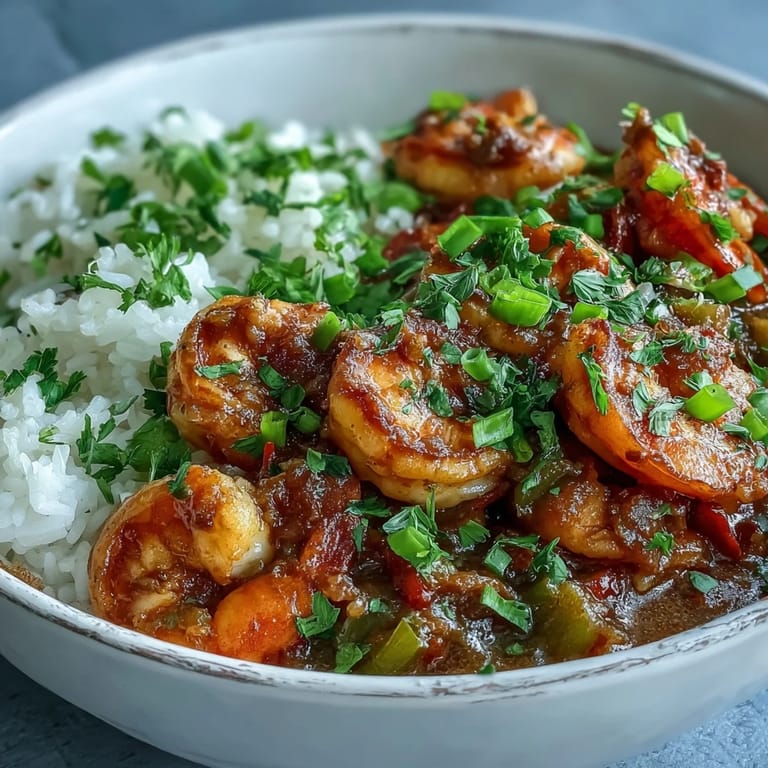
Save This dish has become my go-to when life feels overwhelming. Something about the slow, meditative process of stirring that roux grounds me, and ending up with something that brings such joy feels like a small victory.
Getting The Roux Right
I've found that medium-low heat is safer than medium, especially for beginners. A slower roux is less likely to burn and gives you more control. Keep your whisk moving in small circles, paying attention to the edges where flour tends to scorch first.
Making It Ahead
Étouffée is one of those magical dishes that improves overnight. Make it up to two days in advance, but hold off on adding the shrimp until you reheat it. The sauce develops this incredible depth as the flavors meld together.
Serving Suggestions
A crusty baguette is essential for mopping up the last bits of sauce. I also like a simple green salad with a bright vinaigrette to cut through the richness. Some people insist on cornbread, but I think rice is nonnegotiable.
- Have hot sauce available for guests who want more heat
- Beer is the traditional pairing, especially something light and cold
- A squeeze of fresh lemon right before serving brightens everything
 Save
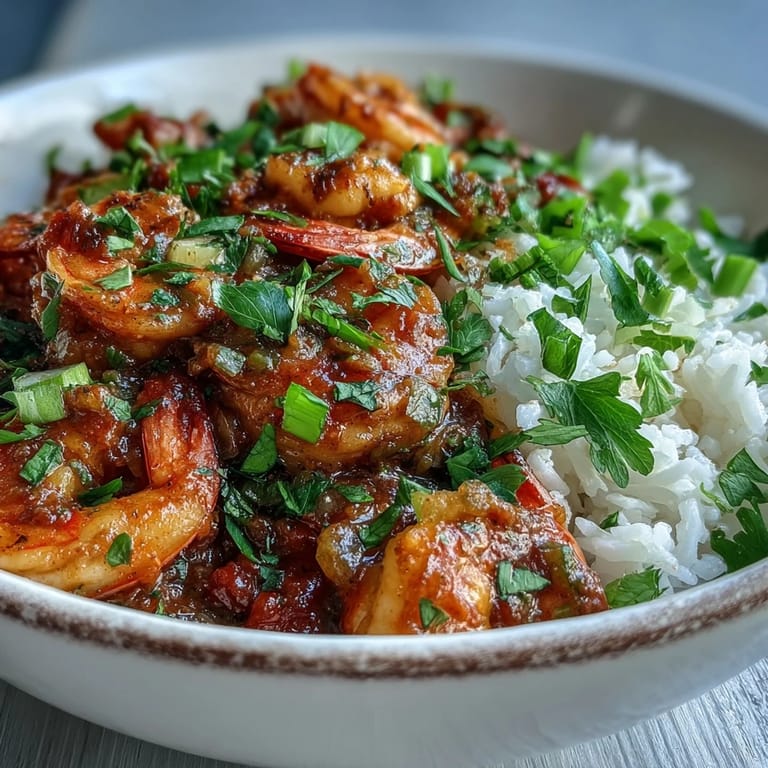
Save There's something about a bowl of étouffée that feels like a warm hug from someone who knows exactly what you need.
Common Questions
- → What is the most crucial step for a rich Étouffée?
Creating a dark, flavorful roux is absolutely essential. It provides both the thickness and the deep, nutty base flavor that defines an authentic Étouffée. Stir it constantly and patiently until it reaches a dark chocolate color.
- → Can I substitute the shrimp with other ingredients?
Yes, absolutely! While shrimp is classic, you can easily use crawfish for a traditional touch, or chicken, sausage, or even mushrooms for a different protein. Adjust cooking times as needed for your chosen ingredient.
- → How can I make this dish gluten-free?
To make it gluten-free, substitute the all-purpose flour in the roux with a high-quality gluten-free flour blend. Ensure your seafood or chicken stock is also certified gluten-free. The rest of the ingredients are naturally gluten-free.
- → What is the 'holy trinity' of ingredients in Cajun cooking?
The 'holy trinity' refers to the foundational aromatic vegetables: diced onion, green bell pepper, and celery. These three ingredients are sautéed together as a base for many Cajun and Creole dishes, including Étouffée, providing a core layer of flavor.
- → Can Étouffée be prepared in advance or does it taste better the next day?
Étouffée often tastes even better the next day! The flavors have more time to meld and deepen as it rests. You can prepare it fully, store it in the refrigerator, and gently reheat it on the stovetop before serving. It's a great make-ahead option.
- → How do I adjust the spice level to my preference?
The spice level in this dish primarily comes from the Cajun seasoning and cayenne pepper. Start with the suggested amounts, then taste and add more cayenne pepper gradually if you prefer a spicier kick. For a milder dish, simply reduce or omit the cayenne.