 Save
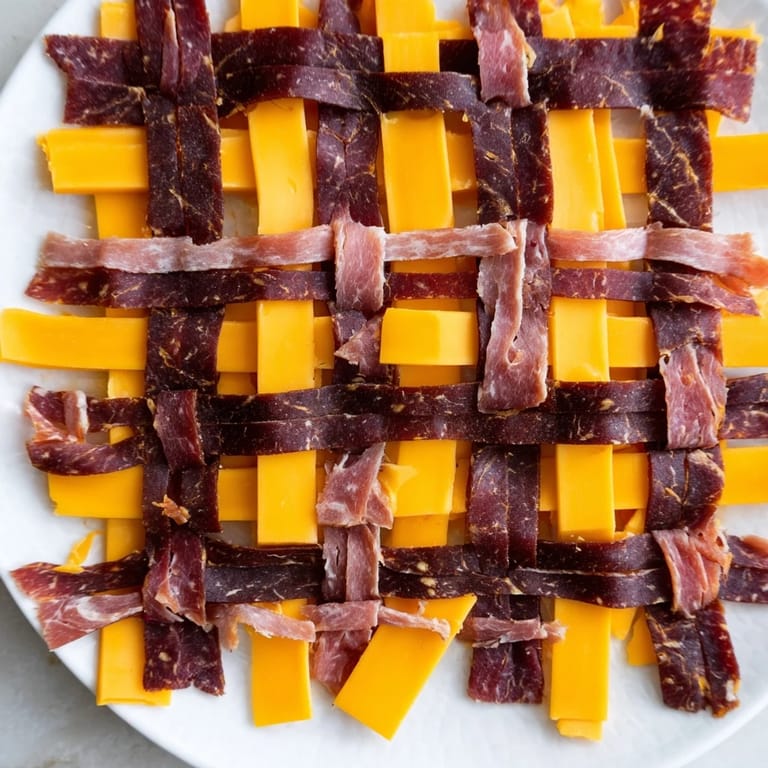
Save I discovered The Tartan Plaid while scrolling through party ideas on a rainy Sunday, and something about the description made me smile—weaving cheese and jerky like an actual craft project felt wonderfully silly and totally doable. My first attempt happened on a Tuesday night when I needed something to bring to a friend's game night, and I remember standing in my kitchen, cheese strips in one hand and jerky in the other, thinking this was either going to look impressive or completely fall apart. Spoiler: it didn't fall apart, and everyone asked for the recipe before dessert even arrived.
The moment I knew this would become a regular in my entertaining rotation was when my dad, who barely eats anything that isn't meat or potatoes, looked at the plaid arrangement and actually said it was cool before he even tasted it. We stood around my kitchen counter together, and he started pointing out which strips of cheese were catching the light differently, like we were admiring a painting. That's when I realized this appetizer works because it's genuinely fun to look at and eat, not because I'm trying to be fancy.
Ingredients
- Beef jerky: The backbone of your plaid—choose one with good color contrast since you're building a visual pattern, and slightly thicker strips hold the weave better than paper-thin ones.
- Turkey jerky: Milder and lighter in color, this creates the visual separation in your grid and keeps things interesting flavor-wise.
- Pork jerky: The rich middle ground that ties the beef and turkey together, both visually and on your palate.
- Sharp cheddar cheese: That bright orange-yellow really pops against the darker jerky strips, and the sharpness cuts through the smoke and salt beautifully.
- Monterey Jack cheese: Creamy and pale, this becomes your visual anchor and softens the intensity of the jerky.
- Smoked gouda: The flavor-packed player that makes people pause mid-bite and ask what that smoky thing is they're tasting.
- Fresh parsley or chives: Not just decoration—the brightness lifts everything and keeps it from feeling too heavy or meat-centric.
Tired of Takeout? 🥡
Get 10 meals you can make faster than delivery arrives. Seriously.
One email. No spam. Unsubscribe anytime.
Instructions
- Set Your Stage:
- Grab a clean cutting board or your favorite serving platter and clear some counter space where you can actually see what you're doing. Good lighting matters more than you'd think when you're trying to create a pattern.
- Build the Foundation:
- Lay half your jerky strips vertically, alternating the beef, turkey, and pork so the colors dance across your surface. Don't space them evenly yet—think of this as rough placement while you visualize where the cheese will go.
- Start Weaving the Cheese:
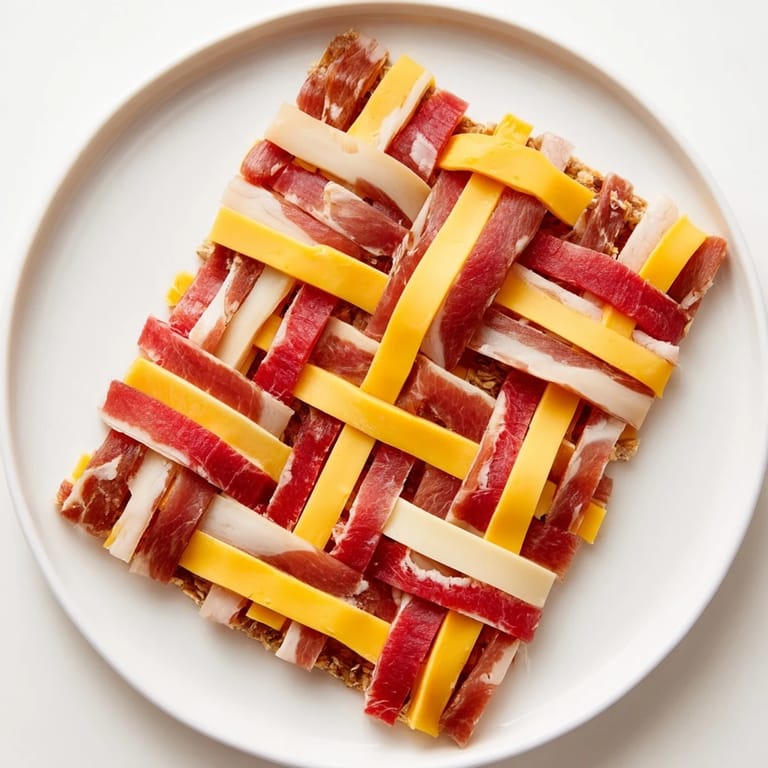
- This is where the magic happens and where patience pays off. Take a strip of cheddar and gently weave it over the first jerky strip, then under the second, then over the third, creating that over-under rhythm. It'll feel a bit fiddly at first, but your hands learn the motion quickly.
- Layer and Alternate:
- Add another horizontal cheese strip using a different cheese type—maybe Monterey Jack this time—and weave it in the opposite pattern, under-over-under, so it locks with the vertical jerky and creates that woven plaid effect. Keep alternating cheese types as you go to build visual interest.
- Fill the Grid:
- Continue adding jerky and cheese strips, always alternating which cheese goes next and paying attention to your color distribution. Step back occasionally to see if your pattern is reading as intentional or chaotic.
- Set It and Secure It:
- Once you're happy with your arrangement, gently press the whole thing together so nothing shifts when you pick it up. The cheese will grip slightly as it warms from your hands, which actually helps hold the structure.
- Finish and Serve:
- Trim any ragged edges if you want a cleaner look, sprinkle with your herbs for color and freshness, and either serve it whole for people to break off pieces or cut it into neat squares for more formal settings.
 Save
Save I'll never forget when my coworker brought The Tartan Plaid to an office potluck and three people asked if it was something from a fancy catering company before realizing she actually made it at home. There's something about breaking a food barrier like that—when people realize they can be creative with what they eat and share—that stays with you. This little appetizer became a conversation starter without trying too hard.
Why Your Guests Will Actually Eat This
Most appetizers sit on the table while people talk about them. This one gets noticed because it's visually unexpected and immediately makes sense once you see it. The weaving creates natural breaking points so people don't feel awkward grabbing a piece, and it satisfies both the meat-and-cheese crowd and the people who want something protein-forward and light. It reads as impressive without requiring any actual cooking skill.
Timing and Make-Ahead Magic
I learned the hard way that assembling this the morning of an event and keeping it refrigerated is actually the move. The cheese stays firm, the arrangement holds better, and you avoid last-minute stress. You can prep all your strips hours ahead—jerky is already shelf-stable, and sliced cheese in a container stays perfect until assembly time. Just pull everything together 30 minutes before guests arrive and you'll look completely unruffled.
Playing With Color and Flavor
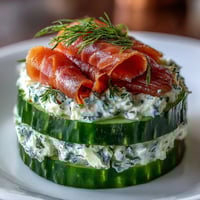
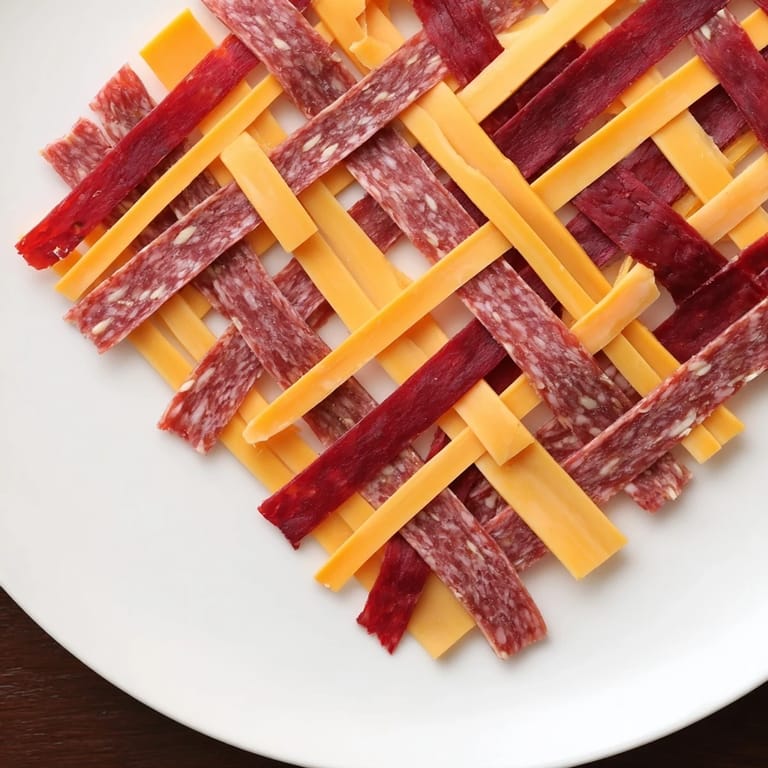
Once you nail the basic tartan, you can absolutely experiment with different jerky brands and cheese varieties depending on what's calling to you or what your guests prefer. I've done this with smoked salmon strips and cream cheese for a different vibe, and it's equally stunning and delicious. The beautiful part is that the concept works with whatever proteins and cheeses speak to you, so you can make it uniquely yours every time you recreate it.
- Try mixing in thin slices of prosciutto or smoked turkey for even more visual complexity and flavor layering.
- Aged cheddar makes the tartan taste more sophisticated if you're serving this at a slightly fancier gathering.
- Don't skip the fresh herbs at the end—they're the difference between looking intentional and looking like leftovers arranged on a board.
 Save
Save This appetizer taught me that food doesn't have to be complicated to be memorable, and honestly, half the appeal is watching people's faces when they realize what they're looking at. It's become my go-to when I want to feel creative without spending hours in the kitchen.
Common Questions
- → What types of jerky work best for this layering?
Beef, turkey, and pork jerky cut into thin strips provide a variety of flavors and colors ideal for creating the plaid effect.
- → Can I substitute the cheeses used in this dish?
Yes, try cheeses with different textures and colors such as gouda, cheddar, or Monterey Jack to enhance visual contrast and flavor.
- → How should I prepare the platter for serving?
Arrange the jerky strips vertically and weave the cheese strips horizontally over and under, pressing gently to maintain shape before serving.
- → Is this suitable for special diets?
This dish is gluten-free and low carb. For vegetarians, use plant-based jerky or smoked tofu strips as alternatives.
- → How can this layered dish be stored before serving?
If preparing ahead, cover tightly with plastic wrap and refrigerate for up to two hours to keep it fresh.