 Save
Save I discovered the snail shell spiral on a sun-drenched afternoon in a small Parisian bistro, where I watched a chef arrange paper-thin vegetable ribbons into a mesmerizing spiral that seemed to draw your eye inward like a work of art. When I finally tasted it, I realized the visual magic was only half the story—the creamy goat cheese center, the tender roasted vegetables, and the way each layer revealed itself with every bite made me determined to recreate that moment at home. Now, whenever I make this dish, I'm transported back to that kitchen, surrounded by the smell of roasting vegetables and the quiet satisfaction of creating something both beautiful and delicious.
I remember making this for my sister's engagement dinner, nervously spiraling those vegetables on the serving plate while she laughed at my concentration. When everyone gathered around the table and paused before eating to admire the spiral, I felt something shift—food had become more than sustenance, it had become the moment itself, the reason we were all present together.
Ingredients
- Eggplant, zucchini, yellow squash, and carrot (thinly sliced lengthwise): These vegetables are the soul of the spiral. I've learned that using a mandoline slicer saves your fingers and creates those perfect, gossamer-thin ribbons that drape beautifully. Slice lengthwise for the longest strips—they wrap around the spiral more elegantly than cross-cut rounds.
- Red bell pepper (seeded and thinly sliced): This brings both sweetness and visual drama with its deep crimson color. Slice it into thin strips that are easy to layer and arrange.
- Goat cheese, softened: This is your adhesive and flavor anchor. Let it sit at room temperature for at least 10 minutes before mixing—it becomes spreadable and luxurious, holding everything together with creamy elegance.
- Crème fraîche: This adds tanginess and helps lighten the texture of the goat cheese. If you can't find it, sour cream works in a pinch, though the flavor shifts slightly.
- Fresh basil and thyme: Finely chopped fresh herbs are non-negotiable here. Dried herbs taste flat and dusty compared to fresh, and these two together create that authentic European character.
- Olive oil: Use your best quality—it's not just cooking here, it's flavoring. Good olive oil transforms the simple roasted vegetables into something memorable.
- Sea salt and freshly ground black pepper: These season everything. Freshly ground pepper makes a noticeable difference in the final taste.
- Pine nuts, lightly toasted: Toast them yourself in a dry pan for just a few minutes until fragrant—store-bought toasted nuts lose their magic. They add a gentle crunch and earthy sweetness.
- Microgreens (optional): These are the final flourish, adding a peppery brightness and delicate texture that makes the dish feel finished.
Tired of Takeout? 🥡
Get 10 meals you can make faster than delivery arrives. Seriously.
One email. No spam. Unsubscribe anytime.
Instructions
- Heat your oven and prepare:
- Preheat to 200°C (400°F) and line your baking tray with parchment paper. This temperature is gentle enough to soften the vegetables without drying them out or browning their edges. I learned this after burning more than one batch.
- Oil and season your vegetables:
- Lightly brush each slice with olive oil and season with salt and pepper. Don't be heavy-handed—these vegetables will concentrate in flavor as they roast, and you want balance, not saltiness.
- Roast until pliable:
- Spread the slices in a single layer on your tray and roast for 10–12 minutes. You're aiming for that perfect moment where the vegetables are tender enough to bend without cracking, but still have body and color. They should look slightly wilted, not cooked through. Let them cool just enough to handle.
- Create your cheese base:
- Mix the softened goat cheese, crème fraîche, basil, and thyme in a bowl until completely smooth. Taste it as you stir—this should taste like your favorite bite of the finished dish, because it is the flavor foundation everything else builds upon.
- Build the spiral:
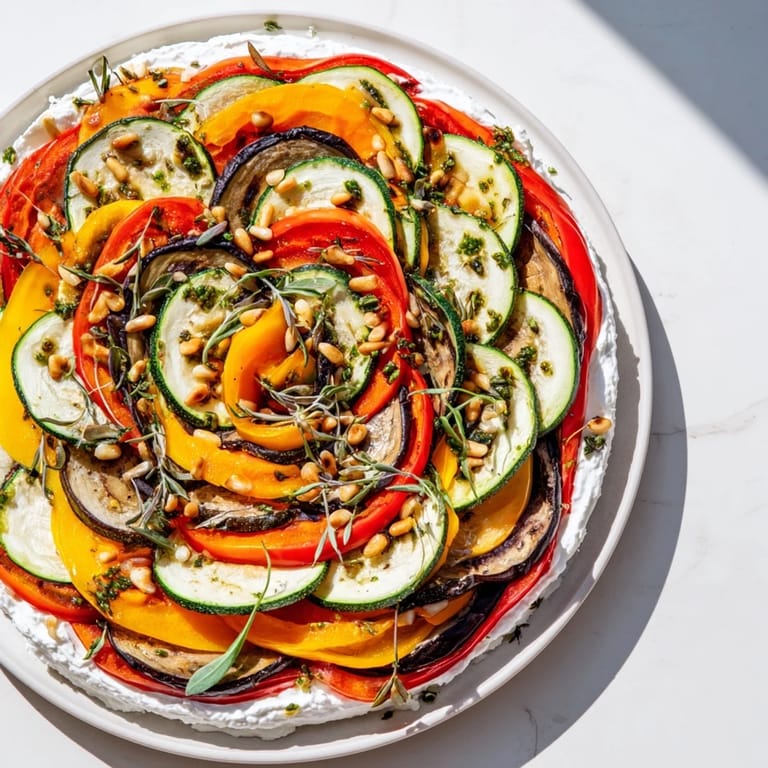
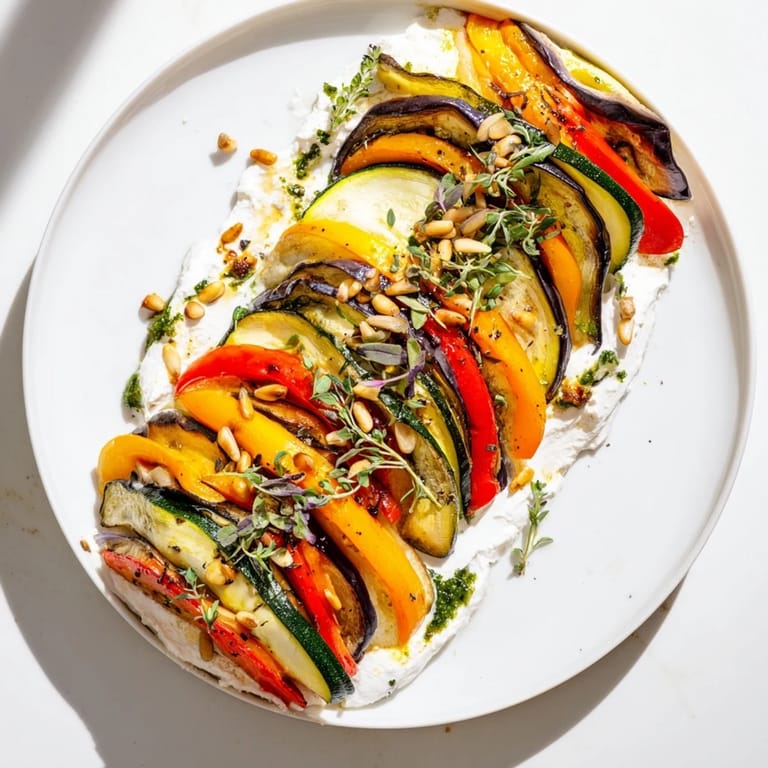
- On your serving plate, start at the very center and spread a thin, even layer of the cheese mixture in a continuous spiral that winds outward like a snail shell. Work slowly and deliberately—this is the anchoring layer that holds everything together.
- Layer your vegetables:
- Beginning at the center where your spiral started, lay down the first vegetable slice, slightly overlapping the next, continuing that spiral outward. Alternate your colors as you go—eggplant, then zucchini, then yellow squash, then carrot, then bell pepper—creating a rainbow effect that draws the eye inward. This is where patience becomes beautiful.
- Finish with garnish:
- Scatter your warm toasted pine nuts across the spiral and add microgreens if you're using them. These final touches add texture and elegance that transforms a simple vegetable arrangement into something you'll want to photograph.
- Serve at room temperature:
- Let the dish sit for 5 minutes before serving. Room temperature allows all the flavors to come alive in a way that chilled dishes never can.
 Save
Save There was a moment when I plated this dish for my closest friends, and before anyone took a bite, the table fell silent. They were just looking, absorbing the spiral of colors, the careful arrangement that seemed impossible to have created. That silence was worth every minute of slicing and arranging—it reminded me that sometimes food speaks louder than words.
The Art of the Spiral
The snail shell spiral isn't just a plating technique—it's a meditation on patience and intention. I've discovered that the slower you work, the more beautiful the result becomes. There's something almost meditative about arranging each slice, watching the colors emerge and dance together. The spiral creates movement on the plate that keeps your eye traveling, keeps you engaged with the food before you even taste it. This is why I always make it when I want to be fully present in my cooking, when I need to slow down and remember that the journey of making food is just as important as eating it.
Color Theory on Your Plate
When I arrange the vegetables, I'm thinking about color the way a painter thinks about their canvas. The deep purple of eggplant anchors the center, the pale green of zucchini provides calm, the golden yellow squash brings warmth, the orange carrot offers sweetness, and the red bell pepper provides a dramatic punctuation mark. Together, they create a visual rhythm that makes people actually want to look at their food before tasting it. I've learned that when you make something this beautiful, everyone becomes a little more present at the table.
Pairing and Serving Ideas
This elegant spiral deserves thoughtful accompaniments that let it shine without stealing its moment. Serve it with crusty bread or delicate crackers—something to provide textural contrast but not overwhelm the subtle flavors. A crisp white wine like Sauvignon Blanc or a light Pinot Grigio complements the goat cheese beautifully, and if you're not serving wine, a sparkling water with fresh lemon is refreshingly perfect. I've also found that this dish makes an excellent light lunch when paired with a simple green salad tossed in lemon vinaigrette—the acidity cuts through the richness of the cheese and keeps everything feeling balanced and elegant.
- For a vegan version, substitute the goat cheese and crème fraîche with a quality plant-based cheese spread that has real flavor—not all vegan cheeses taste the same, so experiment until you find one you love.
- Try adding thinly sliced roasted beets or sweet potatoes for extra color, depth, and a subtle earthiness that elevates the dish even further.
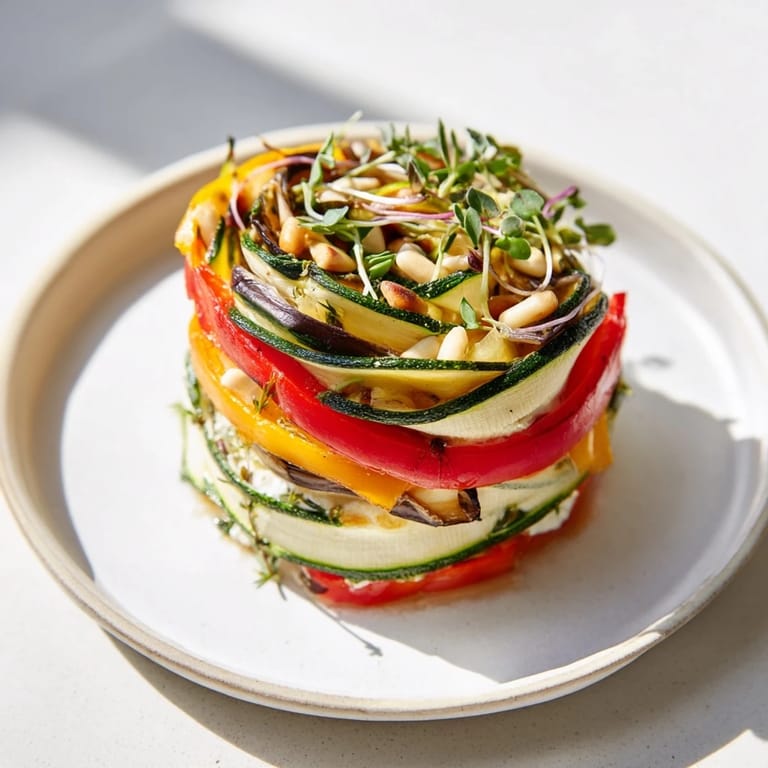
- Make this a full hour before serving—letting it sit allows all the flavors to meld together and the vegetables to soften slightly, making every bite more integrated and delicious.
 Save
Save This dish has taught me that sometimes the most elegant foods are the simplest ones—when you respect the ingredients and take time with the technique, magic happens. Make this when you want to remind yourself, and everyone at your table, that cooking is an act of love.
Common Questions
- → What vegetables are used in the spiral?
The spiral features thinly sliced eggplant, zucchini, red bell pepper, yellow squash, and carrot arranged in an overlapping pattern.
- → How are the vegetables prepared before assembling?
Vegetables are lightly brushed with olive oil, seasoned with salt and pepper, then roasted until pliable but not browned to enhance flavor and texture.
- → What cheeses complement the vegetable layers?
A creamy mixture of goat cheese blended with crème fraîche and fresh herbs serves as the flavorful base for the spiral.
- → Can this dish be made vegan?
Yes, the dairy components can be replaced with plant-based cheese spreads to create a vegan-friendly version.
- → What garnishes enhance the dish's presentation and flavor?
Toasted pine nuts add crunch and richness, while optional microgreens bring a fresh, vibrant finish.
- → Is this dish served hot or cold?
It is served at room temperature, allowing the flavors to meld while maintaining the textural contrasts.