 Save
Save I'll never forget the first time I saw a honeycomb platter at a gallery opening in Copenhagen—it wasn't just food, it was edible architecture. The way those golden hexagons caught the light while guests mingled, the soft click of cheese cubes meeting toothpicks, it all felt so intentional and beautiful. That moment stayed with me, and I've been recreating that magic ever since, turning simple cheeses and nuts into something that makes people pause before they eat.
I made this for my sister's engagement party last spring, and watching her eyes light up when she saw it arranged on the vintage brass platter—that's when I knew this wasn't just an appetizer, it was a moment maker. People actually took photos before eating, which rarely happens with food.
Ingredients
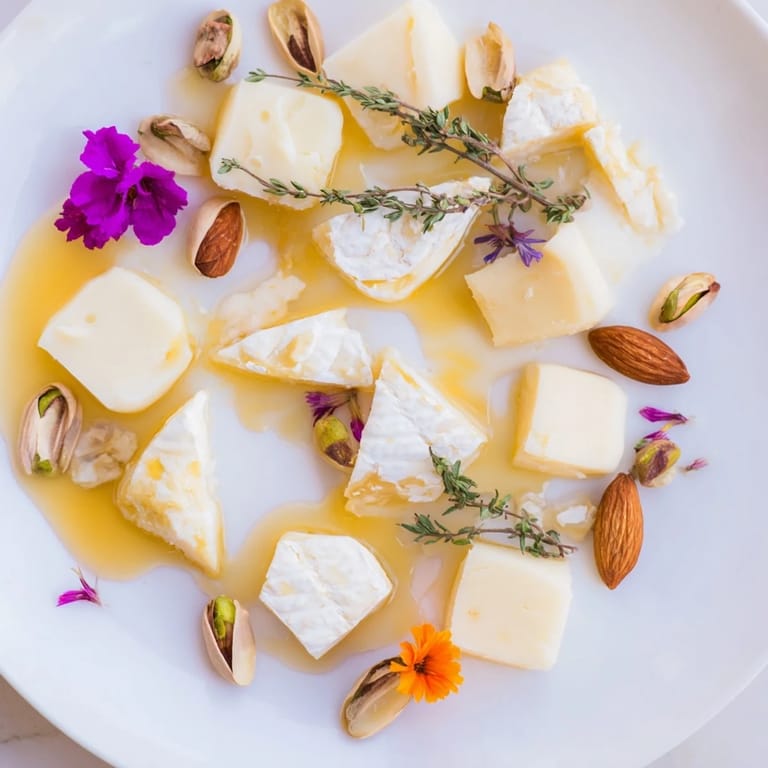
- Manchego cheese: This Spanish beauty has a firm enough texture to cut into clean hexagons without crumbling, and its slightly nutty flavor anchors the whole platter. I learned to cut it cold—straight from the fridge—so the edges stay sharp and defined.
- Cheddar cheese: The familiar friend that adds a pop of color and a bit of sharpness to balance the creamier cheeses. It holds its shape beautifully and gives you that satisfying bite people crave.
- Brie: The creamy dreamer of the group. I slice it into small wedges rather than cubes so it looks intentional, almost like flower petals nestled between the harder cheeses.
- Roasted almonds: These aren't just filler—they add textural contrast and a subtle warmth that plays beautifully with the honey. I always taste them first to make sure they're fresh and not rancid.
- Shelled pistachios: The color contrast here is everything. Their natural green brings life to the platter and their flavor is delicate enough not to compete with the cheeses.
- High-quality honey: This is where you don't skimp. A floral honey like acacia or wildflower will completely change the experience. The cheaper stuff tastes like sugar; real honey tells a story.
- Fresh thyme sprigs: Just a whisper of green and that herbal perfume that says you actually care about the details.
Tired of Takeout? 🥡
Get 10 meals you can make faster than delivery arrives. Seriously.
One email. No spam. Unsubscribe anytime.
Instructions
- Chill and Cut Your Cheese:
- Take your manchego and cheddar straight from the fridge—they should be cold enough that your knife glides through cleanly. If you have a hexagonal cookie cutter, use it; otherwise, take your time cutting small cubes with a sharp knife. Think of it like a little meditation, each cut a promise of precision.
- Create Your Honeycomb Foundation:
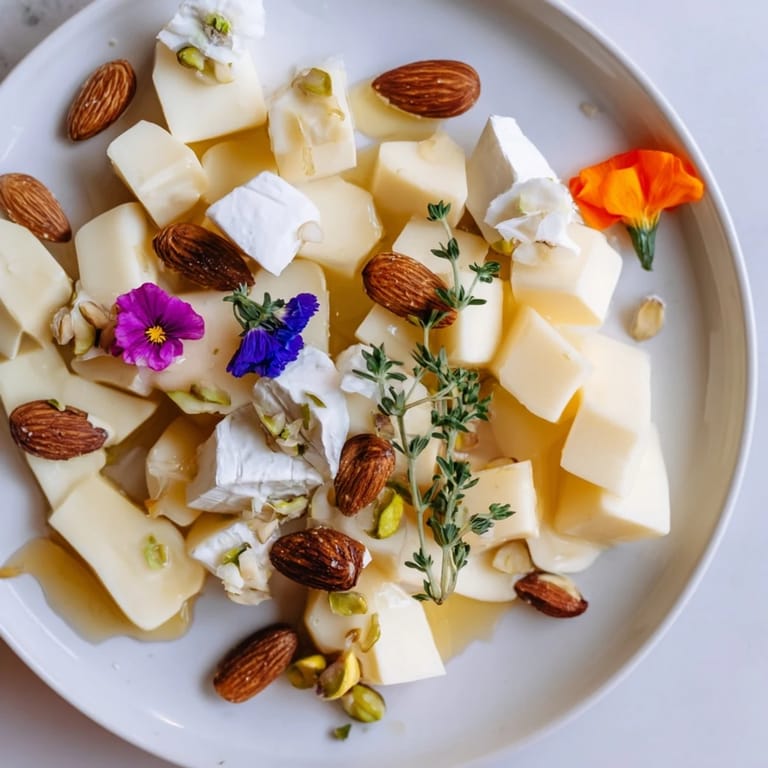
- Lay out your largest platter and start arranging your cheese hexagons in the center, working outward in an interlocking pattern. They should sit snugly together like a real honeycomb, with just tiny gaps between them. Step back and look—does it feel balanced? Trust your eye.
- Nestle the Brie:
- Place your brie wedges in the natural spaces, letting them soften slightly against the harder cheeses. This creates visual softness and gives guests an obvious starting point.
- Fill the Gaps with Nuts:
- This is where the magic happens. Scatter your almonds and pistachios into the remaining spaces, distributing colors evenly. You want pockets of gold and green peeking through, like gems in a geometric crown.
- Drizzle the Golden Thread:
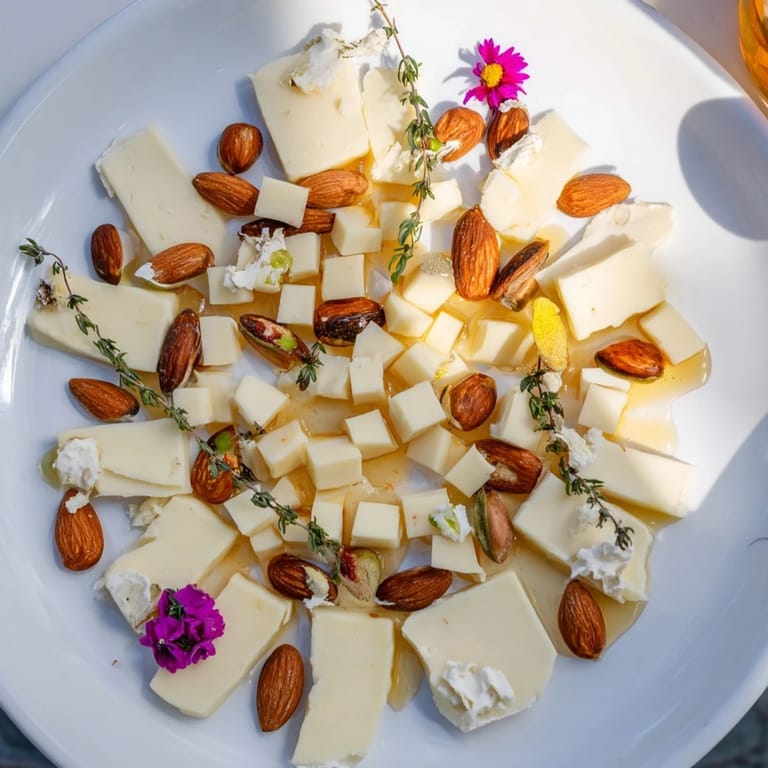
- Warm your honey slightly so it flows smoothly—not hot, just enough to make it pourable. Drizzle it generously, letting it pool slightly in the crevices and create those beautiful glossy highlights. Don't be timid here; the honey is part of the visual design.
- Final Touches:
- Scatter fresh thyme sprigs and any edible flowers across the top. Step back, admire your work, and serve immediately while everything is still at its peak temperature and visual perfection.
 Save
Save I remember my friend Marcus, who usually doesn't care much about food presentation, actually putting down his wine glass to study the pattern before eating a piece. He said it looked like something Escher would have designed if he'd been a chef. That's the moment I realized this platter transcends being just dinner—it becomes conversation.
The Art of the Pattern
There's something deeply satisfying about the hexagonal pattern—it's geometric but organic at the same time, like you're arranging nature itself. The beauty is that it doesn't have to be perfect. In fact, slight irregularities make it feel more honest, more handmade. When I'm arranging the cheeses, I'm not thinking about precision; I'm thinking about flow, about how the eye will travel across the platter. The key is ensuring that no single cheese dominates—they should all get equal visual real estate so that the platter feels balanced and generous.
Cheese Selection and Temperature
I learned through trial and error that the temperature of your cheese completely changes how this platter works. Manchego and cheddar need to be cold enough to hold their shape but not so cold that they're brittle and crack. Brie should be just slightly cool—if it's too cold, it tastes flat; if it's room temperature, it's impossible to keep arranged. The sweet spot is pulling your cheeses from the fridge about five minutes before cutting, letting them come just slightly out of their chill. This teaches them flexibility while keeping them firm enough to maintain their geometric purpose.
Honey and Serving Wisdom
The honey is more than just a flavor element—it's the glue that holds your entire vision together, literally and figuratively. I've learned that the type of honey matters tremendously. A dark, complex honey will overshadow delicate cheeses, while a light, floral honey acts like a gentle veil. Warm the honey just slightly before drizzling, and always taste it first to make sure it complements your cheese selection. One more thing I've discovered: serve this platter with good bread or crackers on the side, though truth be told, most people just eat the cheese and nuts directly with toothpicks. The geometric presentation almost demands it.
- Never refrigerate after assembly—the texture changes and the whole design softens into mediocrity
- Have small plates or napkins nearby; people will get honey on their fingers and appreciate the thoughtfulness
- Make this no more than an hour before guests arrive for maximum visual impact
 Save
Save This platter taught me that food is never just sustenance—it's an invitation to pause, to notice, to share something beautiful. Every time I make it, it reminds me why I love cooking.