 Save
Save I discovered this dish during a particularly stressful dinner party when a friend brought it to my kitchen as moral support. The moment I saw those perfect white and green squares arranged on the platter, something clicked—here was a dish that looked like it required a culinary degree but actually just needed patience and a steady hand. It became my go-to move for impressing people without spending hours in the kitchen, and honestly, watching guests' faces light up when they realize it's more than just a pretty face made it worth every careful square I'd ever slice.
The real moment this recipe became part of my rotation was serving it to my mother-in-law, who's famously hard to impress with food. She took one bite of the herb mixture and asked if I'd made it that morning, and when I casually mentioned it was fresh basil processed with olive oil, I watched her expression shift from skeptical to genuinely delighted. That's when I realized this wasn't just about looking pretty on a board—it was about delivering real, bright flavor that felt thoughtful and fresh.
Ingredients
- Fresh mozzarella: Get the soft, delicate kind—it should tear easily with your fingers, not slice like rubber. 150 grams is about the size of a small fist, and when you slice it, keep your knife wet so it doesn't stick.
- Ricotta cheese: This is your canvas for smooth, creamy squares; make sure it's cold straight from the fridge so it holds its shape when you spread it.
- Feta cheese: Use a good quality block if you can find it, sliced thin but sturdy enough to hold its square shape without crumbling into a million pieces.
- Fresh basil and flat-leaf parsley: These herbs are the soul of the dish—pick them as close to assembly time as possible, and if they look droopy, give them a quick ice bath to perk them up.
- Chives: They add a whisper of onion flavor without overpowering; chop them fine so they distribute evenly through the herb mixture.
- Extra virgin olive oil: Don't cheap out here—the oil carries so much of the herb flavor, and a really good one makes a noticeable difference.
- Garlic clove: One small clove is plenty; garlic in a food processor can turn aggressive quickly, so go easy and taste as you go.
- Lemon zest: This brightens everything and keeps the herbs from tasting one-note; a microplane is your friend for getting fine, delicate zest.
- Salt and pepper: Taste constantly—cheese is salty already, so you might need less than you think.
Tired of Takeout? 🥡
Get 10 meals you can make faster than delivery arrives. Seriously.
One email. No spam. Unsubscribe anytime.
Instructions
- Make your herb paste:
- Pulse your basil, parsley, and chives in the food processor until they start breaking down, then add the olive oil, garlic, and lemon zest. Let it blend until you get that gorgeous green paste—you want it smooth enough to spread or pipe, but still holding the vibrant color. Taste it and adjust the salt and lemon; it should taste bright and alive.
- Set up your canvas:
- Line your tray or platter with parchment paper so you can lift the whole checkerboard off cleanly later. If you're nervous about the pattern, lightly pencil some guidelines on the parchment before you start—it sounds fussy, but it actually makes the whole thing calmer.
- Cut your cheese into perfect squares:
- Slice your mozzarella and feta into roughly equal squares; a ruler or small cookie cutter keeps things looking intentional and neat. Your eye will guide you if you don't have tools—just try to make them consistent enough that the pattern reads clearly.
- Spread the ricotta squares:
- Use a small offset spatula to spread ricotta into even squares, or pipe it if you want cleaner edges. Work cold and work quickly so the ricotta doesn't warm up and get slippery.
- Build your checkerboard:
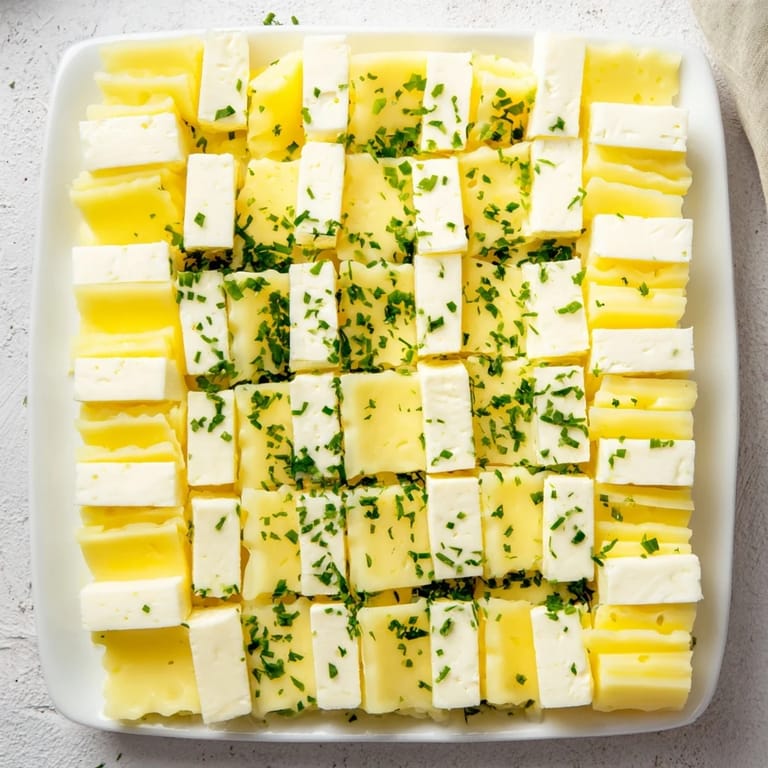
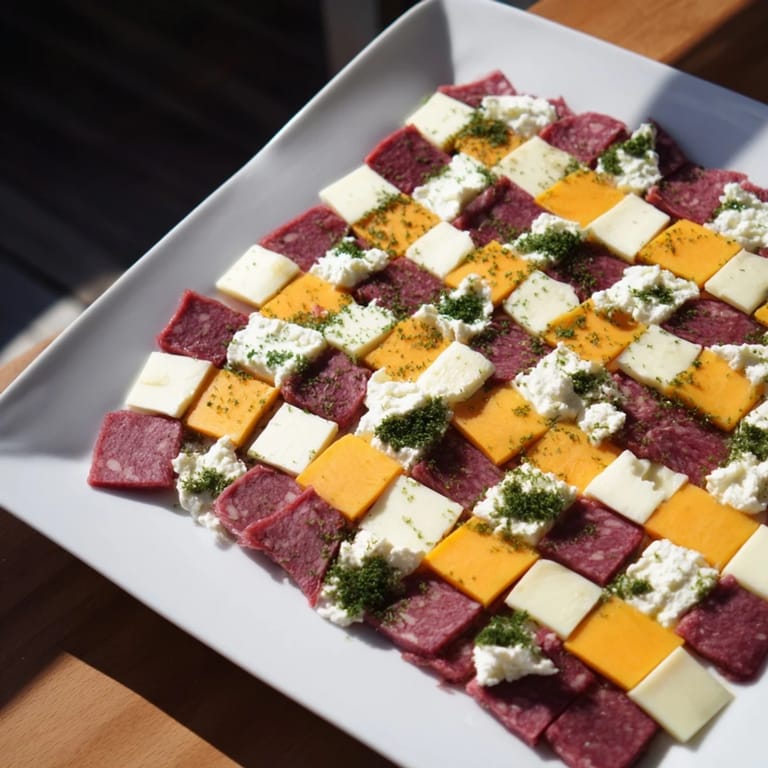
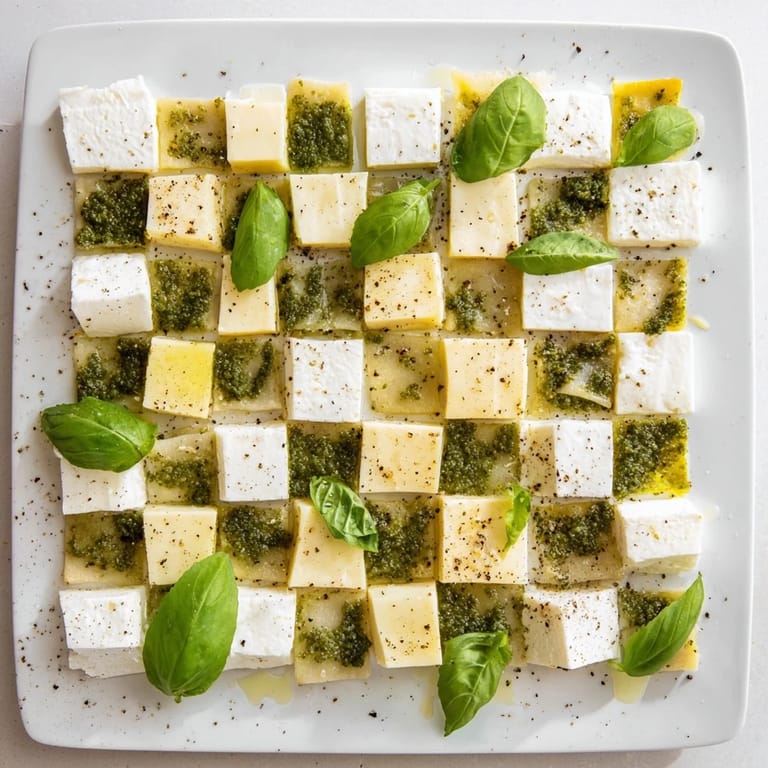
- Start from one corner and alternate between your cheeses and herb mixture, thinking like you're playing a game. The pattern should emerge naturally—white, green, white, green—creating a rhythm across the board. Use the piping bag for herb mixture if you want precision, or spread it with a small spatula for a more relaxed, rustic look.
- Add the finishing touches:
- Scatter microgreens, edible flowers, or a crack of black pepper across the top if you want to. Sometimes less is more; a single sprinkle of pepper can look more elegant than overdoing it.
- Chill and serve:
- Pop it in the fridge for at least 10 to 15 minutes so the cheeses firm up slightly and the flavors meld. Serve it with crackers, toasted bread, or fresh vegetables, and watch people's faces when they realize it's as delicious as it looks.
 Save
Save What surprised me most about this recipe was discovering that it's not actually about the individual flavors at all—it's about the contrast between them. The cool creaminess of the ricotta against the salty feta, the herb paste that tastes like summer captured in a spoon, the way a crack of black pepper ties everything together. It's a dish that taught me that sometimes the most impressive meals aren't complicated; they're just thoughtful.
The Art of the Pattern
I used to think a checkerboard pattern had to be mathematically perfect to work, but I've learned it's more about the intention behind it. Whether you go for a strict 4x4 grid or a more organic alternating pattern, what matters is that your eye can follow the rhythm. The pattern is really your way of showing that you cared enough to arrange it deliberately—and that's what people notice when they look at the board, not whether your squares are exactly one inch or one-point-one inches.
Make It Your Own
This recipe is begging for variations once you master the base. I've swapped ricotta for whipped goat cheese when I wanted tanginess, added thin cucumber slices under the white cheese squares for a cooling effect, and even layered in paper-thin radishes for a peppery crunch. The structure stays the same; the flavor story changes completely based on what you reach for in your fridge. The joy of this dish is that it gives you a framework flexible enough to make it feel like your own invention.
Pairing and Serving
I've learned that this appetizer shines when you pair it with something crisp and light—a Sauvignon Blanc cuts through the richness beautifully, or a Pinot Grigio if you want something a touch rounder. Beyond wine, it works as part of a larger spread where you want something visual that doesn't compete for attention; it can sit alongside cured meats, olives, and fresh bread without stealing the show. One more thing that changed everything: serve it straight from the fridge, and let people pick at it—it's more of a grazing kind of appetizer than something you plate formally.
- Make it the day of for the brightest herb color, though you can assemble it up to 8 hours ahead and keep it covered.
- If your herb mixture looks watery, you can drain it through cheesecloth for a bit to remove excess moisture.
- Always taste your herb mixture before spreading it—that's your chance to dial in the lemon and salt to your preference.
 Save
Save This recipe proved to me that food doesn't have to be complicated to be memorable. It's one of those dishes that sits at the intersection of impressive and easy, and somehow that's the sweetest spot to cook from.
Common Questions
- → What cheeses are used in this dish?
Fresh mozzarella, ricotta, and feta cheeses combine to create a creamy texture and varied flavors.
- → How is the herb mixture prepared?
Basil, parsley, chives, garlic, lemon zest, olive oil, salt, and pepper are blended into a smooth, vibrant green paste.
- → How can I make neat squares for the checkerboard?
Slice cheeses evenly with a knife or use a square cutter. Spread ricotta or herb paste with a piping bag or offset spatula for clean edges.
- → Can I prepare this dish ahead of time?
Yes, chilling for 10-15 minutes before serving ensures the squares set nicely and enhances the visual appeal.
- → What garnishes work best?
Microgreens, edible flowers, or a sprinkle of freshly ground black pepper add fresh, decorative finishing touches.
- → Are there any suggested pairings?
Serve with crackers, toasted bread, or crudités. Light white wines like Sauvignon Blanc or Pinot Grigio complement the flavors well.