 Save
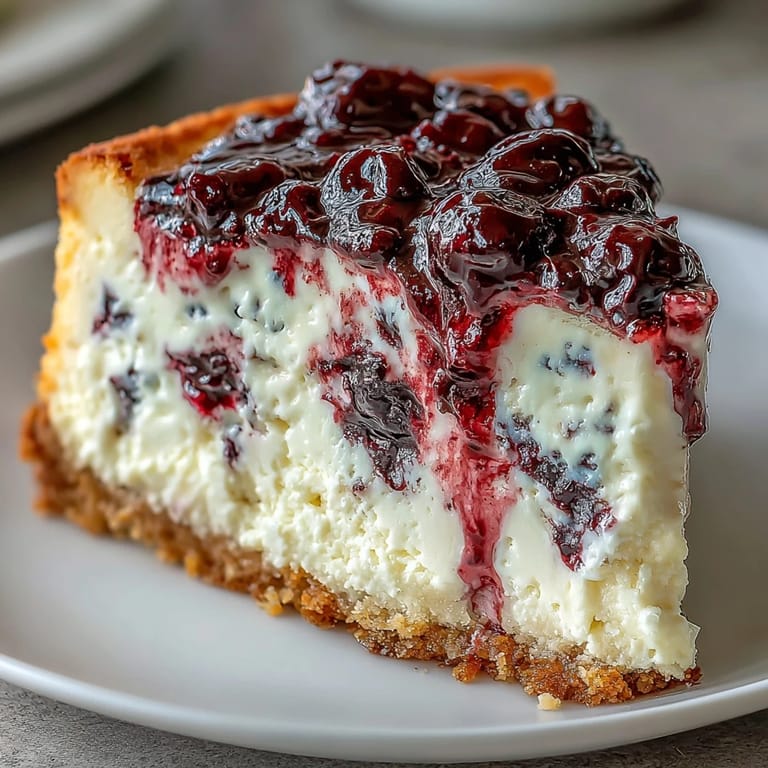
Save The first time I made this cheesecake, I was standing in a fancy restaurant's kitchen, watching the pastry chef fold black currant compote into cream cheese with the precision of someone painting a masterpiece. I went home that night determined to recreate it, and after a few failed attempts and a kitchen that smelled like burnt sugar, I finally nailed it. There's something about that deep purple swirl against the creamy filling that makes you feel like you've accomplished something grand, even if it's just dessert.
I'll never forget bringing this to my partner's parents' anniversary dinner—their faces when they tasted that first bite, catching the tartness of the black currants before the creamy richness took over, felt like the highest compliment. Someone asked for the recipe before dessert was even finished, which is always the moment you know you've done something right.
Ingredients
- Digestive biscuits or graham crackers, 200 g crushed: These form your foundation and need to be pressed firmly—I learned the hard way that a loose crust will shift when you fill it, ruining your marbling effect.
- Unsalted butter, 80 g melted: Use real butter here; it binds the crust and adds flavor that margarine simply can't match.
- Granulated sugar for crust, 2 tbsp: This small amount sweetens the base without overpowering the tartness of the compote.
- Salt, pinch: A tiny pinch in both crust and filling enhances the flavors and prevents that one-dimensional sweetness.
- Black currants, 250 g fresh or frozen: These are the star—their deep berry flavor is distinct and tart in the best way, though frozen works beautifully if fresh aren't available.
- Granulated sugar for compote, 70 g: This amount balances the currants' natural tartness without making the compote cloying.
- Lemon juice, 1 tbsp: It brightens the compote and adds complexity that makes people wonder what the secret ingredient is.
- Cornstarch slurry, 1 tsp cornstarch mixed with 1 tbsp water: This thickens the compote just enough so it stays where you swirl it instead of bleeding everywhere.
- Cream cheese, 700 g at room temperature: Room temperature is non-negotiable—cold cream cheese creates lumps and overmixing, which leads to cracks.
- Granulated sugar for filling, 200 g: Beat this with the cream cheese until it's silky and pale; rushing this step changes everything.
- Large eggs, 3 at room temperature: Cold eggs won't blend smoothly, and you'll end up with tiny flecks of white throughout the filling.
- Sour cream, 180 ml: This adds tang that plays beautifully against the black currants and keeps the cheesecake tender rather than dense.
- All-purpose flour, 1 tbsp: Just enough to stabilize the filling without making it heavy or tough.
- Pure vanilla extract, 2 tsp: Don't skimp on quality here—the vanilla should be a whisper beneath the other flavors, not a scream.
- Lemon zest, 1 lemon: This echoes the tartness of the compote and ties the whole thing together into one coherent flavor story.
Tired of Takeout? 🥡
Get 10 meals you can make faster than delivery arrives. Seriously.
One email. No spam. Unsubscribe anytime.
Instructions
- Prep your pan and preheat:
- Set your oven to 160°C and line your springform pan with parchment on the bottom—this matters because it makes releasing the cheesecake later feel like a magic trick. A dry oven is key; if it's not fully preheated, your crust will bake unevenly.
- Make the crust:
- Crush your biscuits until they're fine but still have tiny bits of texture, then mix with melted butter and sugar until everything feels like wet sand. Press it into the pan with the bottom of a measuring cup, bake for 10 minutes until it's golden and smells nutty, then let it cool while you move on.
- Simmer the black currant compote:
- Combine the currants, sugar, and lemon juice in a small saucepan and watch as the berries release their deep purple juice and softened skin—this takes about 5 minutes and the smell is intoxicating. Stir your cornstarch slurry into the simmering berries until the juice thickens to the consistency of jam, then set it aside to cool completely so it doesn't cook the cheesecake filling.
- Beat the cream cheese and sugar:
- This is where patience matters: beat your room-temperature cream cheese with sugar until it's pale, smooth, and fluffy, about 3-4 minutes. Scrape down the bowl constantly because lumps hiding in the corners will cause trouble later.
- Add eggs carefully:
- Add one egg at a time, beating well after each one until it disappears into the filling before adding the next. This prevents overmixing once all the eggs are in, which would introduce too much air and cause cracks.
- Fold in the remaining ingredients:
- Gently mix in sour cream, flour, vanilla, lemon zest, and salt until just combined—you're looking for no streaks of white, but you want to stop the moment it looks homogeneous. Overmixing at this stage is the quickest path to a cracked cheesecake.
- Create the swirl:
- Pour the filling over the cooled crust, then spoon dollops of cooled compote across the surface in a loose pattern. Use a skewer or thin knife to drag through the compote in gentle curves, creating that signature marbled effect without going back and forth too many times.
- Water bath and bake:
- Place your springform pan inside a larger roasting tin and pour hot water around it until it reaches halfway up the sides—this gentle, humid heat ensures even cooking and a creamy texture throughout. Bake for 50-60 minutes; the edges should be set but the center should have a slight jiggle, like a barely-set custard.
- Cool gradually:
- Turn off the oven, crack the door open just a bit, and let the cheesecake sit inside for an hour—this gradual cooling prevents the dramatic temperature change that causes cracks. Remove it to room temperature, then refrigerate for at least 4 hours or overnight before slicing.
 Save
Save There was one afternoon when my sister called me mid-bake, panicking about dessert for a dinner party, and I talked her through this recipe while it was in my own oven. Somehow watching someone else succeed with your recipe, even over the phone, felt like the cheesecake was doing something bigger than just tasting good.
The Magic of the Swirl
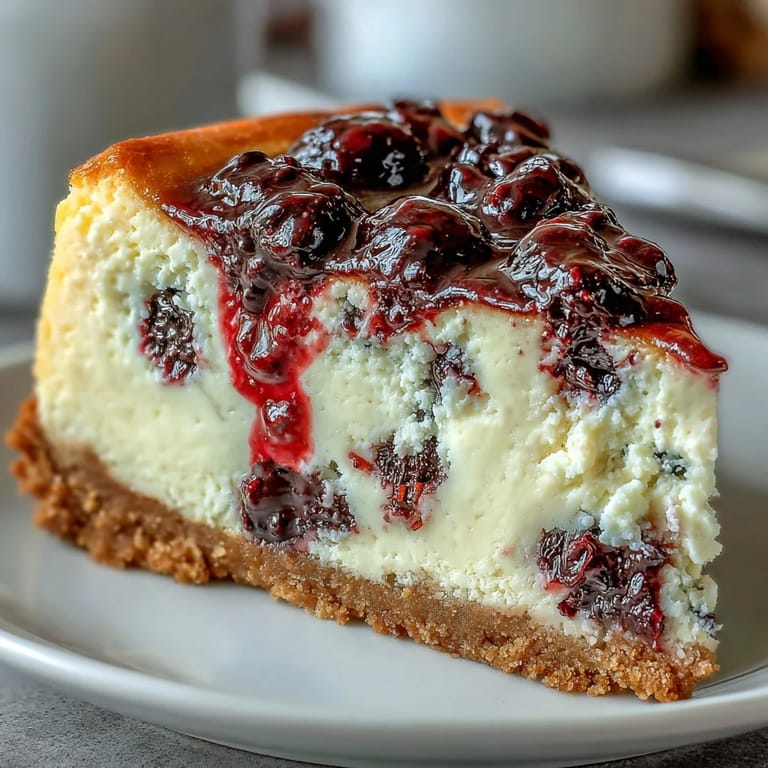
The moment you drag that skewer through the purple compote and watch it create those organic, marble-like patterns is genuinely satisfying. I've found that less is more with the swirling—just three or four gentle drags creates a beautiful effect, whereas going back and forth too many times muddles the colors into an indistinct purple blur. Trust your instincts and don't overthink it; the compote will naturally blend where it wants to.
Troubleshooting Common Cracks
Cracks usually come from one of three things: overmixing the filling, which introduces too much air, shocking the cheesecake with sudden temperature changes, or baking it too fast at too high a temperature. I've learned that a low oven temperature, a water bath, and resisting the urge to open the oven door to peek all make the difference between a pristine top and one that looks like it survived an earthquake. The gradual cooling inside a cracked-open oven is truly the secret weapon.
Serving and Storage Secrets
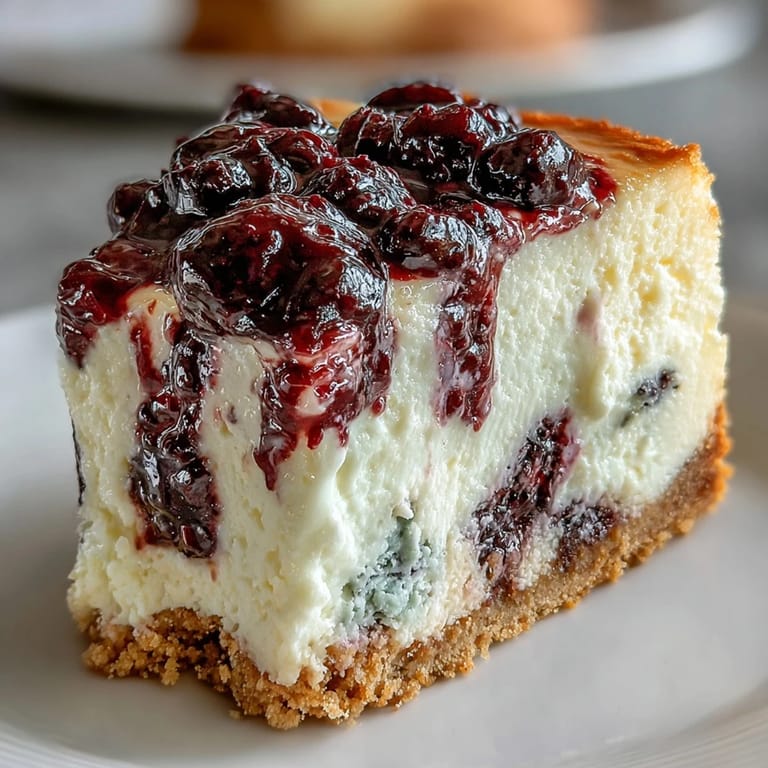
Cold cheesecake is beautiful, but this one actually benefits from being left on the counter for 15-20 minutes before serving, which lets the creaminess fully express itself and the flavors soften slightly. A sharp, warm knife dipped in hot water between each slice gives you clean edges instead of dragged, messy cuts that ruin the presentation.
- Store leftovers covered in the refrigerator for up to 5 days, though honestly it rarely lasts that long.
- You can make this up to 2 days ahead, which makes it perfect for entertaining because one major component is already done.
- If you want extra drama, serve it with a dollop of whipped cream and an extra spoonful of black currant compote on the side.
 Save
Save This cheesecake has a way of turning an ordinary dinner into something you'll talk about for months. It's the kind of dessert that reminds you why cooking for people matters.
Common Questions
- → How do I prevent cracks in the cheesecake?
Avoid overmixing the filling and use a water bath while baking. Allow it to cool gradually with the oven door slightly open before refrigeration.
- → Can I use frozen black currants for the compote?
Yes, frozen black currants work well and produce a flavorful compote when cooked properly with sugar and lemon juice.
- → What alternatives can substitute black currants?
Blueberries or raspberries can be used in place of black currants for a similar sweet and tart compote.
- → Is there a gluten-free option for the crust?
Use gluten-free biscuits or crackers instead of digestive biscuits to make the crust gluten-free.
- → How long should the cheesecake chill before serving?
Chill for at least 4 hours or overnight to allow the flavors to meld and the texture to set properly.